

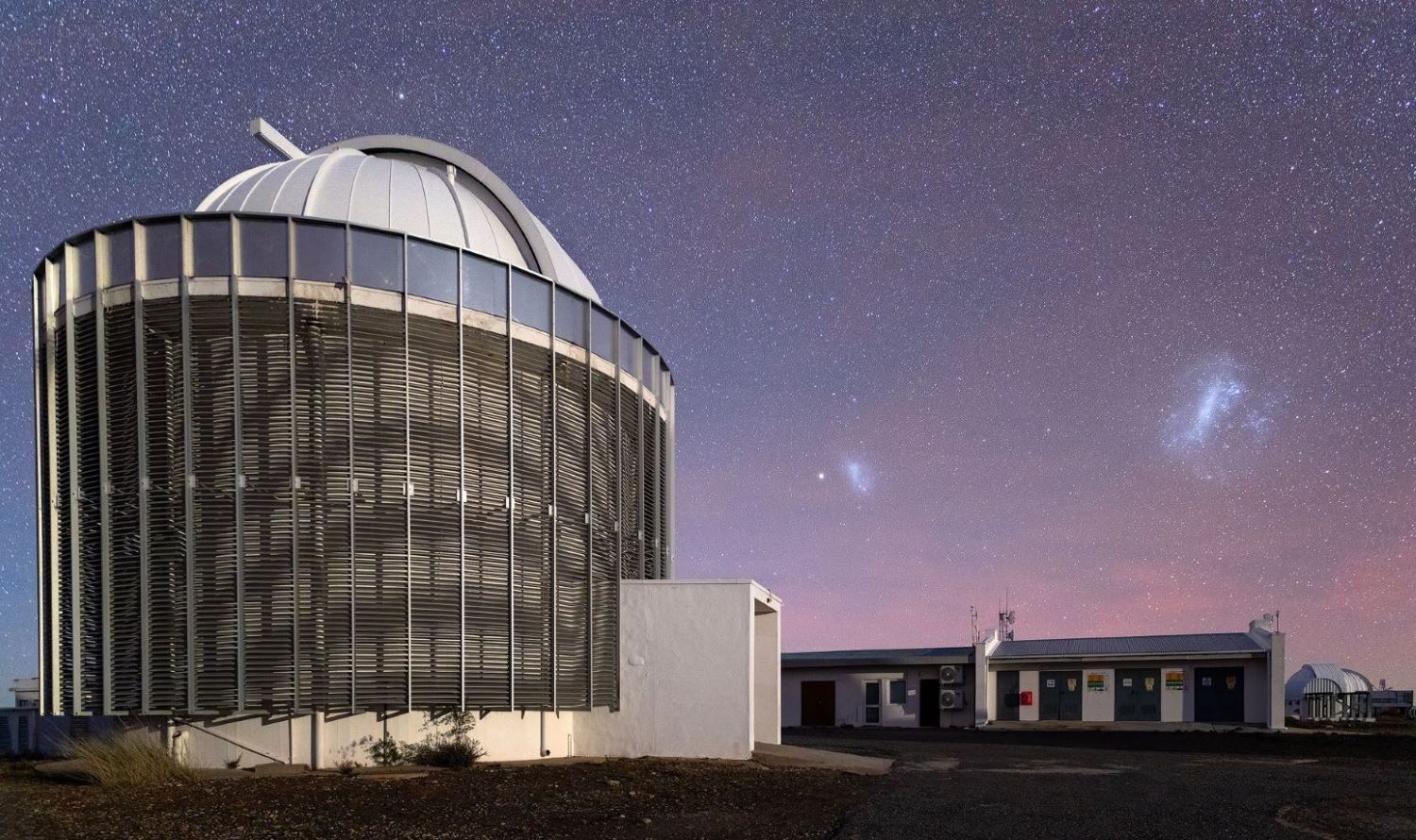
A new collaboration between the UK and South Africa is using artificial intelligence (AI) to automate telescope monitoring, accelerate data analysis and improve the reliability of major observatories.
AI is beginning to reshape the way observatories operate, with new international projects aimed at automating telescope systems and accelerating analysis of astronomical data.
The initiative, known as the Intelligent Observatory Program, brings together researchers from the UK Science and Technology Facilities Council (STFC) Hartley Center and the South African Astronomical Observatory (SAAO).
The collaboration explores how AI-driven tools and digital infrastructure can help observatories operate more efficiently while enabling astronomers to rapidly detect and analyze cosmic events.
By integrating AI into astronomy, the project aims to reduce manual workload and improve the reliability of observations collected from distant regions of the universe.
International cooperation between the UK and South Africa
The initiative is funded through the UK Research and Innovation International Science Partnership Fund and brings together experts in AI, software engineering and telescope operations.
The UK’s STFC Hartley Center at the Daresbury Institute in Liverpool City Region is leading the AI development work. The center specializes in high-performance computing, data analytics, and machine learning applications in both industry and scientific research.
At an operational level, the project is being implemented in partnership with SAAO, one of Africa’s leading optical and infrared astronomy centres.
AI researchers participating in the collaboration include Dr. Adriano Agnello and Dr. Rob Firth of the Hartley Center, both of whom previously worked as astronomers. Their telescope operations experience helped shape the project’s technical design.
Dr. Agnello commented: “We are very excited to be working with SAAO on the Intelligent Observatory program, which shows how advanced AI can transform scientific discovery, making telescopes smarter and freeing astronomers to focus on exploration and breakthrough discoveries.
“These tools represent an important step forward in the application of AI to observatory operations, expanding access to major scientific facilities and supporting translational research that can also be applied to industrial settings.”
Automation of observatory operations
Observatories generate vast amounts of data each night, relying on highly sensitive instruments that must function in constantly changing conditions.
Weather changes, equipment issues, and atmospheric turbulence can all affect the quality of observation data.
Traditionally, much of the work at observatories has required teams of scientists and engineers to manually monitor telescope systems, review instrument logs, and process raw observations.
As facilities open their telescopes to more and more international researchers, these processes become increasingly complex and time-consuming.
The Intelligent Observatory program is designed to address these challenges through AI-powered automation.
Instead of relying heavily on manual checks, telescopes equipped with advanced software can continuously monitor their condition, identify potential failures, and respond to changing conditions.
The goal is to enable observatories to collect the highest quality data possible while minimizing disruption to observation schedules.
Building a smarter telescope system
The project is developing several interconnection technologies aimed at improving observatory performance and accessibility for visiting researchers.
One component focuses on creating a connected monitoring system that tracks the status of telescope equipment in real time.
By analyzing sensor data, the system can identify patterns that indicate potential equipment failures or technical anomalies before observations are interrupted.
Another key element involves automatic data processing. Astronomical observations often require complex corrections to account for atmospheric distortions and equipment deficiencies.
AI-driven tools can automatically apply these adjustments and transform raw telescope data into high-quality scientific datasets more quickly than traditional workflows.
Researchers are also building document retrieval platforms that leverage large-scale language models. Astronomers must frequently refer to technical manuals, previous research papers, and maintenance records during observation sessions.
The new system will allow scientists to quickly retrieve relevant information through AI-assisted search, rather than manually scanning large document archives.
Real-time analysis of astronomical data
One of the main benefits of AI in astronomy is the ability to quickly analyze large datasets. Modern telescopes can generate vast amounts of observational data during an overnight observation.
The Intelligent Observatory tool is designed to process this information as it is collected. AI models can flag unusual signals or transient events, such as supernova explosions or other short-lived cosmic phenomena, so astronomers can respond quickly.
Predictive models are also used to predict changes in the weather and identify early signs of equipment problems. These features help maintain consistent observation quality and minimize downtime.
Expansion of the system to major telescope facilities
The project team plans to expand the AI search platform by incorporating additional documents from major research facilities such as the South African Large Telescope.
As the system grows, researchers aim to improve its ability to interpret complex technical information while reducing errors in the responses the AI generates.
Feedback mechanisms are also built into the platform, allowing astronomers to refine the system’s output over time.
These developments are aimed at increasing the reliability of the technology during busy observation sessions, when scientists often need quick access to operational guidance and historical data.
Widespread impact beyond astronomy
Although this project focuses on observatories, the technology being developed may have applications in other fields that rely on complex scientific infrastructure.
The observatory provides a controlled environment for testing technologies such as predictive maintenance, sensor networks, and automated data pipelines. Similar systems could eventually be applied across industries such as energy, transportation, and advanced manufacturing.
There is also an educational aspect to this program. By making AI-driven tools available within the observatory environment, the researchers hope to provide students, including those from historically disadvantaged institutions, with hands-on experience in AI and data science.
As AI in astronomy continues to evolve, initiatives like the Intelligent Observatory Program are demonstrating how advanced computing technologies can transform the way scientific facilities operate and accelerate the pace of discovery across the universe.
Source link
