


Close Menu
  • Start
  • Celebrities
  • Music
  • Influencers
  • Tendencies
  • Exclusives
  • Business & Brands
  • TwinH
  • Spanish
What's Hot

Bonnie Tyler has recovered from coma but remains ‘very unwell’ after emergency surgery

Choose a new language (or 25 languages) with this $127 Rosetta Stone sale

Jelly Roll files for divorce from Bunny XO after 10 years of marriage

Facebook X (Twitter) Instagram
  • Home
  • About The FYMOUS
  • Advertising / Promotion
  • Contact
  • DMCA
  • Privacy Policy
  • Terms
  • Publish News
Facebook X (Twitter) Instagram
FYMOUS News
  • Start
  • Celebrities
  • Music
  • Influencers
  • Tendencies
  • Exclusives
  • Business & Brands
  • TwinH
  • Spanish
FYMOUS News
Home » Why doesn’t stomach acid burn through our stomachs?
Tendencies

Why doesn’t stomach acid burn through our stomachs?

By January 10, 2026No Comments3 Mins Read
Share Facebook Twitter Pinterest Telegram LinkedIn Tumblr Email Copy Link
Follow Us
Google News Flipboard
Share
Facebook Twitter LinkedIn Pinterest Email Copy Link

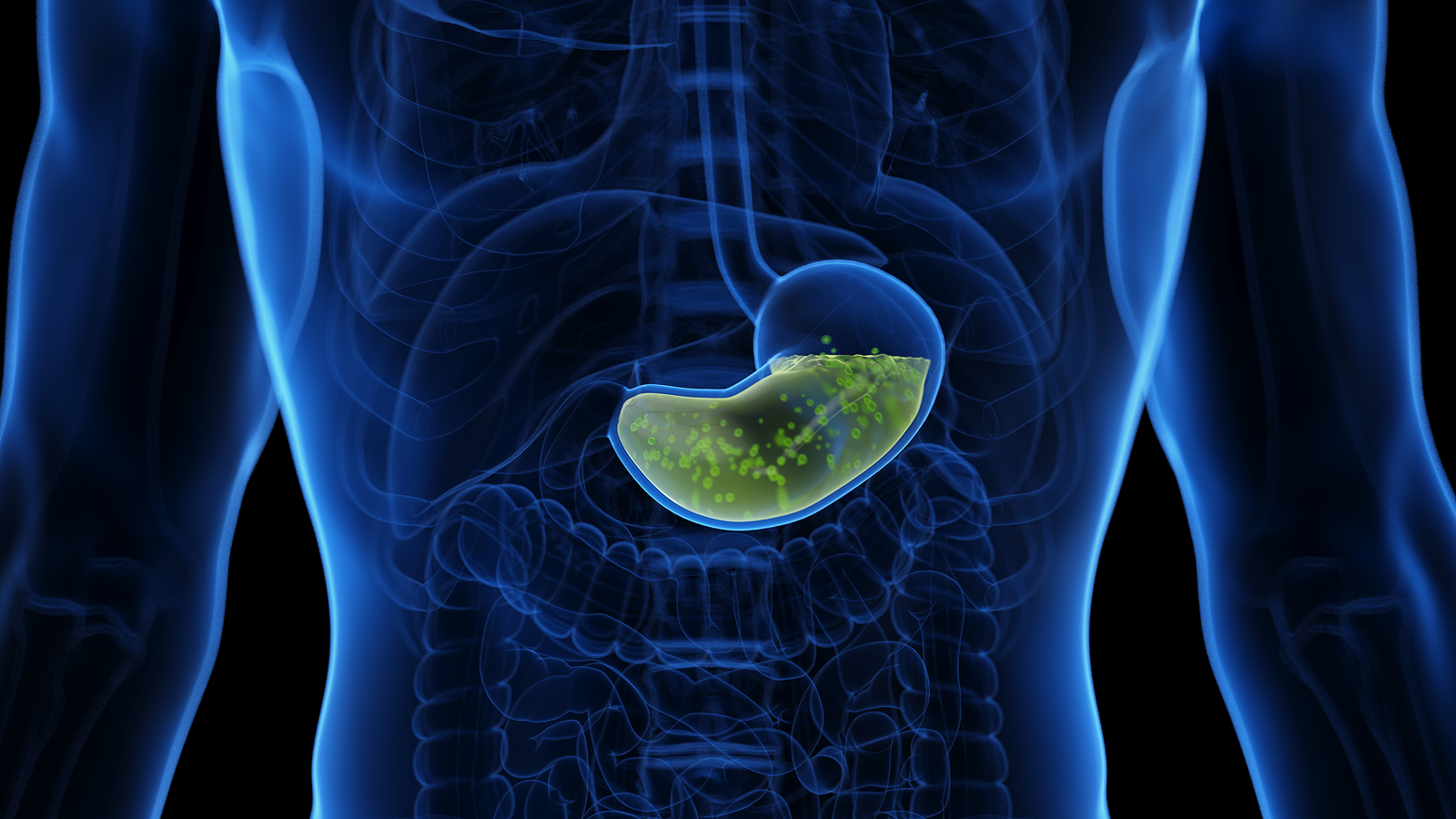
If you feel like throwing up or have acid reflux, you may feel a burning sensation as the acid escapes into your esophagus. But if stomach acid is strong enough to irritate the lining of your throat, why doesn’t it pass through your stomach?

The human stomach has evolved to create and withstand extremely corrosive conditions. “Its role is to break down the physical food components into smaller pieces, and the idea is that by the time the preparation reaches the small intestine, it’s in small enough components that it can be absorbed,” Dr. Sally Bell, a gastroenterologist at Monash University in Australia, told Live Science.

The stomach contains specialized cells whose sole role is to produce destructive chemicals to aid in digestion. The main component of this gastric juice is hydrochloric acid, a powerful chemical strong enough to dissolve metals. It also contains small amounts of the digestive enzymes pepsin and lipase, which break down proteins and fats, respectively.

you may like

Dr. Benjamin Levy III, a gastroenterologist at the University of Chicago Medicine, said this harsh environment also has a secondary protective role. “Gastric juices also help the body kill bacterial pathogens, keep us from getting sick, and strategically prevent bacterial overgrowth from occurring,” Dr. Levy told Live Science. This is especially important to destroy potential foodborne pathogens, he said.

Without protection, this combination of strong acids and protein-digesting enzymes quickly begins to erode the stomach wall, first forming painful ulcers and eventually burning and puncturing. However, the cells lining the stomach (a layer known as the epithelium) have developed special secretions to protect the organ from attack.

“These cells are unique in that they produce a very thick sticky mucus layer that is alkaline and buffers acids,” Bell explained. “Because it is essentially a bicarbonate-rich proteinaceous substance, it protects the stomach lining from the stomach’s own acids and enzymes.”

In a healthy digestive system, this mucosal barrier lines the stomach wall and is continually renewed by epithelial cells to provide continued protection. However, problems can occur if the layers are damaged. Professor Levy said even small cuts can allow acid and pepsin to get under the mucus, causing chronic inflammation and ulcers.

One cause of such damage is the overuse of nonsteroidal anti-inflammatory drugs (NSAIDs) such as ibuprofen and naproxen. “NSAIDs damage the stomach lining by inhibiting cyclooxygenase (COX-1), an enzyme involved in the production of hormone-like compounds called prostaglandins,” Dr. Levy said.

“This reduces prostaglandin production, which reduces both mucus and bicarbonate secretion,” Dr. Levy explained.

Bell pointed out that certain lifestyle choices, such as smoking and drinking alcohol, can also increase the risk of this type of digestive disease because they act as toxins directly on the lining of the body. Additionally, acidic or spicy foods can overwhelm the stomach’s natural protective functions, causing inflammation and reflux into the esophagus.

Despite extremely acidic conditions, bacterial infections can cause stomach problems. For example, “Helicobacter pylori has the ability to secrete proteases and lipases that break down gastric mucus and harm the phospholipid layer on the surface of the epithelium,” Professor Levy said. If H. pylori is detected, it can be treated with a combination of antibiotics.

The bottom line? Because stomach acid plays an essential role in digestion and defense against disease, this organ has developed an amazing ability to protect itself and regenerate its lining.

This article is for informational purposes only and does not provide medical advice.


Source link

#Biotechnology #ClimateScience #Health #Science #ScientificAdvances #ScientificResearch
Follow on Google News Follow on Flipboard
Share. Facebook Twitter Pinterest LinkedIn Tumblr Email Copy Link
Previous ArticleEuropol arrests 34 Spanish Black Ax members for €5.9 million fraud and organized crime
Next Article MuddyWater launches RustyWater RAT via spearphishing across Middle East sector

Related Posts

Merlin, a common roadside duck in Mexico City, will be the World Cup mascot.

June 15, 2026

Far from the pitch, David Beckham remains soccer’s biggest star

June 14, 2026

Taylor Swift makes history as the youngest girl to be inducted into the Songwriters Hall of Fame

June 12, 2026
Add A Comment
Leave A Reply Cancel Reply

Latest Posts

Bonnie Tyler has recovered from coma but remains ‘very unwell’ after emergency surgery

Choose a new language (or 25 languages) with this $127 Rosetta Stone sale

Jelly Roll files for divorce from Bunny XO after 10 years of marriage

Merlin, a common roadside duck in Mexico City, will be the World Cup mascot.

Trending Posts

Bonnie Tyler has recovered from coma but remains ‘very unwell’ after emergency surgery

June 16, 2026

Jelly Roll files for divorce from Bunny XO after 10 years of marriage

June 16, 2026

BTS is the group fans are most looking forward to seeing perform at the 2026 World Cup

June 15, 2026

Subscribe to News

Subscribe to our newsletter and never miss our latest news

Please enable JavaScript in your browser to complete this form.
Loading

Welcome to The FYMOUS, a modern digital media platform dedicated to celebrities, artists, influencers, brands, entertainment culture, and the growing TwinH ecosystem.

We bring audiences closer to the people, stories, trends, and collaborations shaping today’s culture. From exclusive celebrity news and music releases to influencer highlights, brand partnerships, and TwinH activations, The FYMOUS delivers engaging content designed for the next generation of digital audiences.

Castilla-La Mancha Ignites Innovation: fiveclmsummit Redefines Tech Future

Local Power, Health Innovation: Alcolea de Calatrava Boosts FiveCLM PoC with Community Engagement

The Future of Digital Twins in Healthcare: From Virtual Replicas to Personalized Medical Models

Human Digital Twins: The Next Tech Frontier Set to Transform Healthcare and Beyond

Facebook X (Twitter) Instagram Pinterest YouTube
  • Home
  • About The FYMOUS
  • Advertising / Promotion
  • Contact
  • DMCA
  • Privacy Policy
  • Terms
  • Publish News
© 2026 news.fyself. Designed by by fyself.

Type above and press Enter to search. Press Esc to cancel.