
The Business of Katseye | Vogue
Three years ago, six young women — Sophia, Lara, Manon, Daniela, Megan and Yoonchae — were catapulted into instant global fame when they appeared on the Netflix reality show, The Debut: Dream Academy, beating 100,000 other contestants to be part of the pop group Katseye.
The premise was unusual. Formed through a joint venture between the South Korean music powerhouse Hybe and American record label Geffen Records, Katseye pioneered a unique cross-market model that applied Korea’s notorious idol bootcamp infrastructure with Western mainstream pop production. Their unique heritage was an added draw — the six members come from diverse countries including the US, Switzerland, the Philippines, and South Korea.
Also crucial to the group’s image-building was the insider fashion knowledge procured from close collaborators including creative director Humberto Leon, co-founder of the once-cult shopping destination Opening Ceremony and former co-designer at Kenzo, alongside stylist Katie Qian, whose clients include Tyla, Conan Gray, Camila Cabello, and Tinashe.
Read More
How to make an It-girl
In an age where fame feels more accessible than ever, only a select few manage to break through the noise. Here’s what sets them apart.

Before long, Katseye earned rare, early-career recognition, featuring on the cover of i-D, Teen Vogue, InStyle, Allure, and Nylon magazines, as well as securing billboard chart placements and two Grammy nominations. Brands such as Fendi, Pandora, Lush, and Glossier soon came knocking.
In 2024, Katseye made their first fashion week appearance, attending Coach’s Spring/Summer 2025 runway show in New York. In 2025, the group featured in a Gap campaign dancing in low-rise denim to the 2003 Kelis song “Milkshake”. The ad — reported to have generated eight billion media impressions and over 500 million cross-platform views, making it Gap’s most viral and highly engaged advertisement of all time — was so widely praised that it became a textbook case study for marketers and marketing professors worldwide.

It converted sales, too. Gap saw double-digit growth in the denim category and a 7% year-on-year increase in comparable sales during Q3 2025, according to the group’s earnings report, which executives partly attribute to its campaigns with Katseye and Puerto Rican rapper Young Miko. “The strength of fan communities shows up in the number of people we see coming to our stores after launch — eager not only to shop the product worn by Katseye and Young Miko, but to see how the campaign comes to life in our retail experience,” said Fabiola Torres, Gap’s global CMO, in a Vogue Business interview earlier this year.
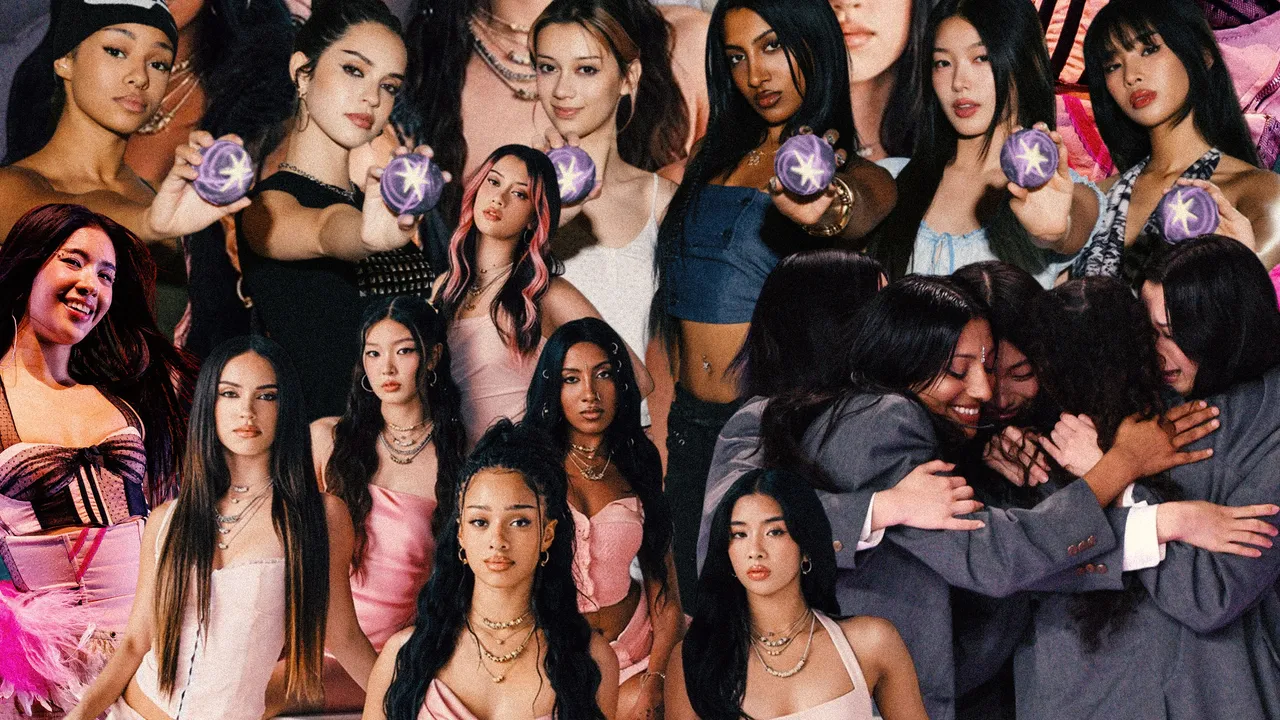
When Lush collaborated with Katseye in 2025, the beauty and lifestyle brand released a limited-edition purple and yellow star bath bomb, as well as six collectible artisan soaps representative of each member. For Lush’s head of concepts and collaborations Kalem Brinkworth, the intensity of the group’s fandom was a surprise. “I’ve never seen anything like it. We’ve obviously had lots of appreciation for other collaborations, but this was the first time we saw that real peak,” Brinkworth says. While Lush famously stepped away from social media in 2021, the brand still monitors online activity; posts and videos on the partnership with Katseye, shared by other accounts on TikTok and Instagram, generated over 25 million views, Brinkworth adds.
Source link
