
How ‘school bus yellow’ became a symbol of safety for US children
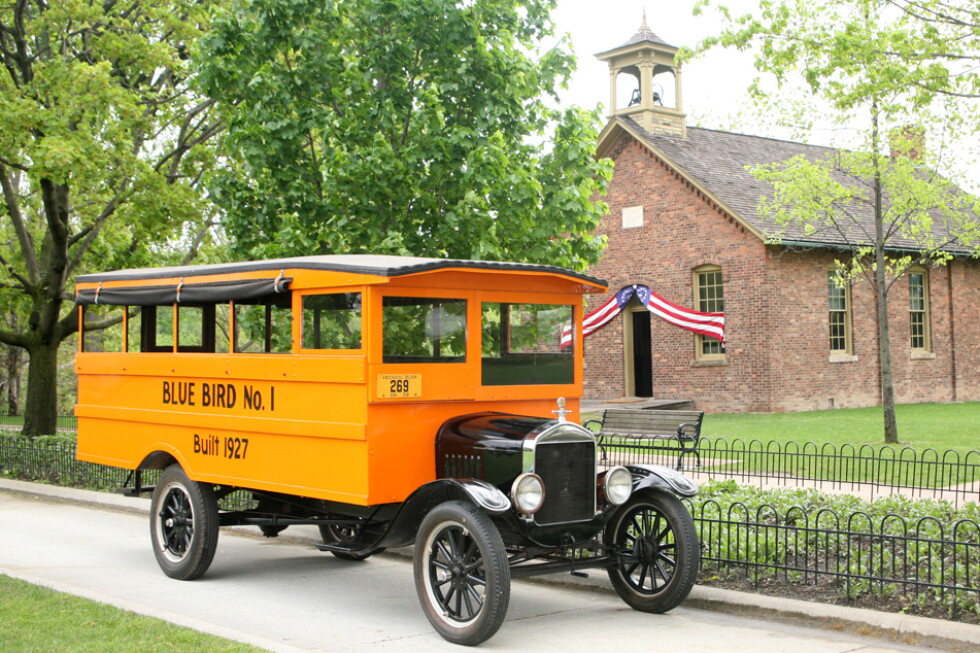
CHICAGO (AP) — They arrived in a kaleidoscope of colors, but one won. For decades, the American school bus has maintained such a standard look that “school bus yellow” is national shorthand for their deep, glossy hue.
No act of Congress mandated the color, with its slight orange tint. Rather, a 1939 conference of transportation officials from all U.S. states (then 48) chose the shade for its visibility as one of the first safety standards. At their peak in the 1980s, the yellow buses took more than 60% of U.S. students to school.
The metal-bodied school bus got its start in rural America. Georgia car dealer Albert Luce designed it to carry cement workers, then marketed it to schools when the company turned it down.
It was impeccable timing as school districts replaced one-room neighborhood schoolhouses with larger ones much farther apart. That consolidation gave rise to the school bus.
“I don’t think you could’ve had one without the other,” says Matt Anderson, head transportation curator at the Henry Ford Museum of American Innovation in Dearborn, Michigan, which houses Luce’s 1927 bus.
Decades later, buses helped desegregate schools, hauling Black and white children across the country’s racial divide. The controversial practice has mostly ended, and in much of the United States, schools have grown more segregated, not less.

Carl Fisher drove a metal school bus for two-thirds of its nearly 100-year history. With 66 years behind the wheel, Fisher retired in 2012 as the longest-working driver, according to the Guinness Book of World Records. His first model was a Dodge truck that his dad’s friend converted, adding benches and small stools to haul 20 children in Pleasant Hope, Missouri.
“He put windows in it and everything, really made it nice,” Fisher says.
The basics became industry standard and more safety upgrades followed, including padded seats and a flip-out stop sign.
“It’s the safest form of on-road transportation per passenger, per mile, bar none — without seat belts,” says Brad Beauchamp, who is with the electric vehicles team at Blue Bird, the yellow school bus maker Luce reputedly named after the bird his wife spotted on a fence post.
Due to driver shortages and other factors, a yellow school bus is no longeravailable to take many students to school, putting pressure on families to figure out transportation.
Jim Oppegard, who drove kids for more than two decades in the Minneapolis suburb of Brooklyn Park, retired at 94 as the oldest school bus driver on record. It’s rewarding work, he says.
“You’re helping the kids and helping the overall society,” he says. “You’re doing an important job.”

Part of a recurring series, “American Objects,” marking the 250th anniversary of the United States. For more American objects, click here. For more stories on the anniversary, click here.
Source link
