
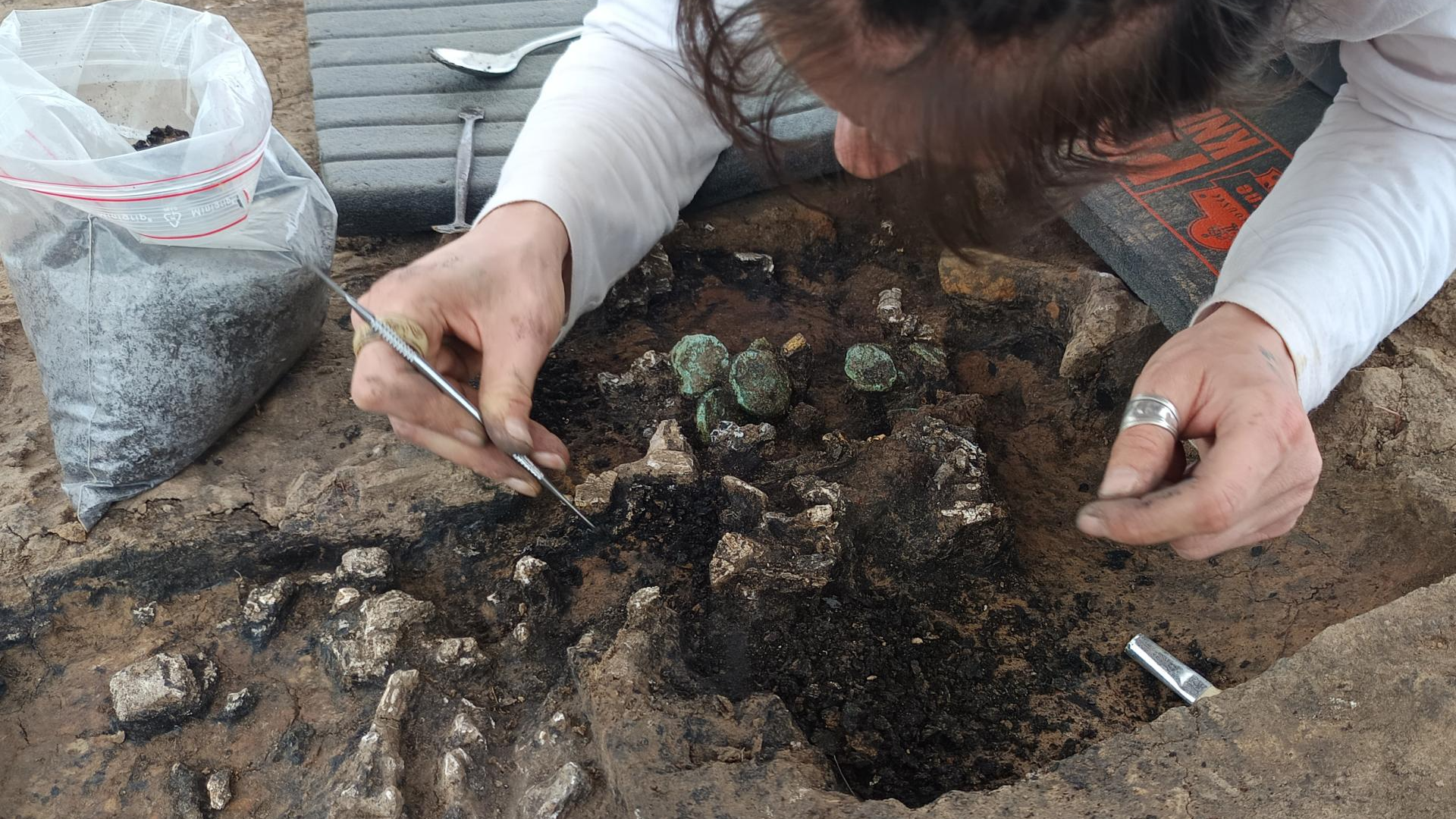
French archaeologists have discovered a Roman-era cremation tomb richly decorated with silver coins, gold jewelry and perhaps a ring inscribed with the deceased’s last name.
The tomb was discovered unexpectedly during excavations in the medieval settlement of Ramonzy-Saint-Martin, a small town in southwestern France. Archaeologists were excavating beneath a medieval silo when they noticed an unusual burial, according to a November 24 translated statement from France’s National Institute for Preventive Archeology (INRAP).
you may like
Archaeologists found a ceramic beaker and a clear glass vial in one corner of the burial site. Archaeologists found 10 silver and bronze coins in a separate set of offerings, along with small gold sheets that may have adorned the wallets or cases that held the coins. A series of diamond-shaped crystals were also found, along with the remains of a jeweled leather accessory that had probably since disintegrated, as well as a long, corroded iron object that may have been part of a horse’s bit attached to the reins.
The burial style, pottery, and coins suggest that the bust dates between the 1st and 3rd centuries.
Nearly 20 gold objects were also recovered from the burial, two of which may contain clues about the tomb’s inhabitants.
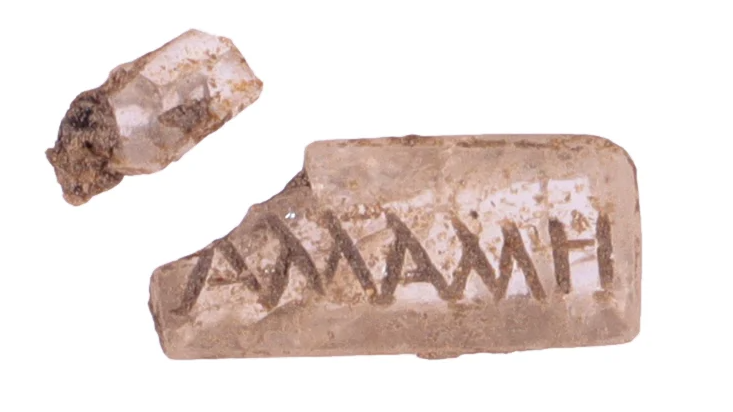
Archaeologists have unearthed a “bra” that may have been a special amulet given to ancient Roman boys at nine days old and kept with them until they became Roman citizens at around age 16. And the remains of a gold ring, distorted by the heat of cremation, appear to match small pieces of carved crystal called intaglios. The intaglio Greek inscription reads “ΑΛΛΑΛΛΗ (Allallé)”, which may be the deceased’s surname.
The rich and well-preserved cremation tombs raise many questions, which archaeologists are trying to answer through further analysis. They are studying the surviving bones and trying to determine the gender and age of the deceased. They also plan to excavate the area to look for other tombs and dwellings that could help them understand why this tomb, filled with artifacts, including some that hint at Greek heritage, was placed in this part of France.
