
Large-scale high-grade molybdenum project in New Brunswick
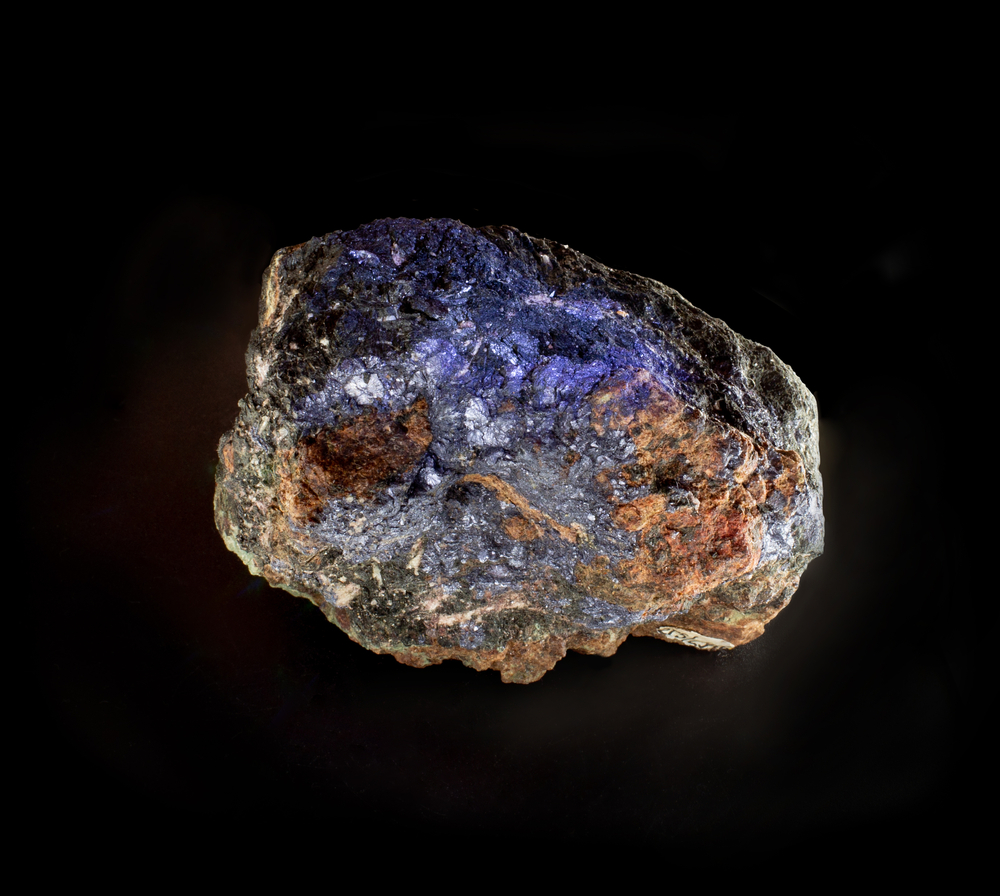
John Wightman, Managing Director of Goldfields Group of Companies, discusses the discovery of high-grade molybdenum in New Brunswick and its strategic importance for industry and critical minerals.
Molybdenum is one of the world’s most versatile and strategically important industrial metals, but it often eclipses more familiar commodities such as copper, gold and lithium.
Molybdenum is a silver-gray metal with great strength, heat resistance, and corrosion resistance, and is primarily used to strengthen steel, making it stronger, harder, and more durable. It is a critical component in the construction, automotive, aerospace, and energy industries where high-performance materials are essential.
Beyond steel, molybdenum plays an important role in modern technologies such as electronics, batteries, and catalysts used in chemical production. Their high melting point and stability under extreme conditions make them essential for demanding industrial processes. Molybdenum’s strategic importance is growing as the world’s infrastructure, renewable energy and defense sectors all become increasingly reliant on high-performance materials.
Demand for molybdenum is also shaped by its classification as a critical mineral in several countries, including Canada, the United States, and member states of the European Union. This designation reflects the importance of economic and national security, as well as the need to ensure reliable supply chains amidst increasing geopolitical and environmental pressures.
Despite widespread industrial use, primary deposits of molybdenum are relatively rare, especially outside of the western regions of North America. Therefore, discoveries in new locations can represent significant economic and strategic opportunities. In this context, exploration projects targeting high-grade molybdenum deposits are attracting attention from investors, industry experts, and governments alike.
This interview explores one such discovery, highlighting its potential and the broader importance of molybdenum in today’s industrial and strategic landscape.
We’re here to talk about the Wildcat project, a high-grade molybdenum discovery in New Brunswick. Can you explain why this discovery is important?
This is a porphyry system and is not common in eastern North America. Porphyry is commonly found in western Canada and the United States, as well as the Yukon Territory and Alaska. No other molybdenum is found as a primary mineral on the East Coast. There is another tungsten facility nearby, about an hour’s drive away, that contains small amounts of molybdenum, but is primarily a tungsten deposit.
The discovery is significant because it is located in southwestern New Brunswick, less than an hour’s drive from the U.S. border and less than 9 kilometers from the very large tungsten and tin deposits at Mount Pleasant. Most molybdenum deposits are associated with geological systems known as porphyries. Porphyry is typically found in active terrain such as the Rocky Mountains. Mineralized fluids from deep underground are pushed up under great pressure to access faults and cracks in the rock. This is called intrusion. Porphyry intrusions tend to be very large, reaching hundreds of millions of tons when fully explored, but are not necessarily of high grade. This area near Wildcat Brook is one of the porphyry intrusions.
Wildcat Brook is located approximately 40 kilometers north of St. George, New Brunswick. The grades here are unusually high, averaging about 0.4% molybdenum. By comparison, most molybdenum mines around the world are economical at 0.1% to 0.2%. Molybdenum is a strategic metal used to strengthen steel. Wildcat is a strategically important discovery close to the US market, given that countries such as the UK, EU, US, Canada and Australia are currently eyeing the critical mineral.
Porphyry deposits typically contain a combination of copper and gold, gold and molybdenum, copper and molybdenum, or tungsten and molybdenum. However, the Wildcat deposit is primarily molybdenum. It forms in what is called a dyke, a narrow vein or band about 20 meters thick, within an intrusion that penetrates the surrounding rock.
You can think of this like a tree. The main trunk is the central intrusion, which branches vertically and horizontally. Many similar deposits in Western Canada are hundreds of millions of tonnes, and the Wildcat deposit is one of these deposits with very high molybdenum content. We are working hard to explore major intrusions at depth where large amounts of tungsten-bearing minerals may be present.
It is not only the high grade that is important, but also the resilience. We sent samples to SGS Canada, a leading laboratory in this field, to test how much molybdenum could be recovered. Molybdenum recovery varies from 60% to 80%, but rarely exceeds 90%. Our tests have shown a 98% recovery rate, which is exceptional.
Is there evidence of other minerals associated with the deposit?
The zone we drilled mainly contains molybdenum. However, deeper excavations intersected the zinc and lead zones. At surface, trench sampling of the mineralized zone revealed an exceptional sample with a zinc content of 22%.
In addition, the porphyry felsic dykes are intruded by subsequent pulses of mineralization. This is a sheet-like quartz system that carries up to 13% very high grade tungsten over 0.5 meters. This tungsten alone is not economical, but if molybdenum dikes are mined, it becomes even more reliable. More importantly, this indicates that deeper mineralization from below is rich in tungsten.
Geophysical surveys suggest that a larger porphyry intrusion exists below the molybdenum zone, potentially approximately 800 meters below. Further excavation is required to investigate the trunk of this tree.
We are currently looking for partners to develop this opportunity. This is in the same area as the Mount Pleasant mine, which is a very large tin-tungsten deposit, and we expect to find a similar type of porphyry intrusion at Wildcat Brook.
Does the site of the mineral deposit face environmental or human conflict?
Canada has a vast territory, most of which is separated from cities and consists of government-owned land. The Wildcat deposit is approximately 10 km from the nearest human settlement, and there are no rivers flowing through the mineralized area. This increases the likelihood that permission will be easier.
The deposit was discovered by prospectors and geologists who noticed mineralization along a forest access road. Over the years, we have conducted follow-up studies to define the surface expression of porphyry. The area is easily accessible via all-weather gravel roads and connects to major highways approximately 9 km to the west. We expect that environmental permits should be straightforward.
How will the Canadian government’s designation of molybdenum as a critical mineral affect development?
Developing mineral deposits discovered by prospectors requires significant investment, including drilling, sampling, and environmental studies. Canada has strict environmental regulations, but once a mineral deposit reaches a certain level of knowledge, permits can take two to three years.
The proximity of this deposit to skilled labor is a major advantage. Workers can commute to work every day, avoiding costs associated with remote camps such as housing, material transportation, and infrastructure. This significantly reduces operational costs.
You said you were looking for a partner. What are the next steps towards production?
To date, several individuals have contributed approximately $2 million in funding to the project. Over the next three years, $10 million to $20 million may be needed to reach a profitable feasibility study, and production will need to raise $200 million to $300 million. Phased spending could be $2 million in the first year, $4 million in the second year, $4 million in the third year, and approximately $20 million in the fourth year.
The Government of Canada offers a significant 80% tax incentive to qualified investors for investment in exploration and development expenditures for molybdenum deposits such as Wildcat.
The funding covers third-party mining engineering work for diamond drilling, analysis, environmental studies and feasibility studies. Production decisions will likely take about four years. Start with a partner through a joint venture arrangement. So we provide the property and our partners provide the financing.
Source link

