
Uncovering soil health through precision mapping
With the advent of digital agriculture, information about soil health remains in the dark. SQAT offers a cost-effective solution, leading to lower agricultural costs and a reduced environmental footprint.
The ground beneath our feet is changing.
The EU Soil Observatory found that 89% of Europe’s agricultural soils are degraded. Industrial agricultural practices such as intensive use of mineral fertilizers and intensive tillage are deteriorating soil health and threatening long-term fertility.
As the primary medium for food production, healthy soil is critical to long-term food security. These are also important to farmers’ profits and directly impact agricultural productivity.
As the need for sustainable agriculture increases, knowing about soil is essential for farmers to understand and manage it. Soil Quality Analysis Tools: Implementing Smart Agriculture Applications Using EO Data, Soil Sensors and Robotics (SQAT) – is an EU-funded initiative that brings together advanced technologies to provide high-resolution soil insights and smarter agricultural practices.
Soil health management
Healthy soil is a valuable resource for farmers. It has an excellent structure that allows air to reach the roots of plants. Absorbs water and maintains moisture. Together with beneficial microorganisms, they store and release nutrients necessary for plant growth.
Soils are important not only for nitrogen and carbon cycling, including their role as large-scale carbon sinks, but also for water filtration and water body regulation. Soil contains 25% of the Earth’s biodiversity, with one teaspoon of healthy soil containing 1 billion microorganisms.
Currently, farmers’ soil treatments are calculated at the level of the whole field. This is much like using the team’s average height to tailor soccer uniforms. It may not be a perfect fit for any player. Similarly, for farms, it means providing too much or too little treatment to nearly every point in the field.
Modern farms are increasingly integrated into the digital economy, with data-driven approaches shaping production, but the digital realm has not yet fully penetrated the surface. Detailed data on soil health undulations remains largely “in the dark.”
Traditional soil analysis relies on laboratory work and manual sampling and generally provides point values to farmers. Again, adjust the team’s uniform based on the height of several players. More accurate alternatives are often prohibitively expensive. As a result, soil variability is not fully assessed, preventing accurate management that can restore soil health, optimize input use, and reduce environmental impacts.
SQAT method
The SQAT project addresses these challenges by delivering a multi-level, multi-technology soil mapping service that integrates Earth observation, robotics, sensors, and smart data to provide detailed and accurate maps of field soil properties at a unique and affordable cost.
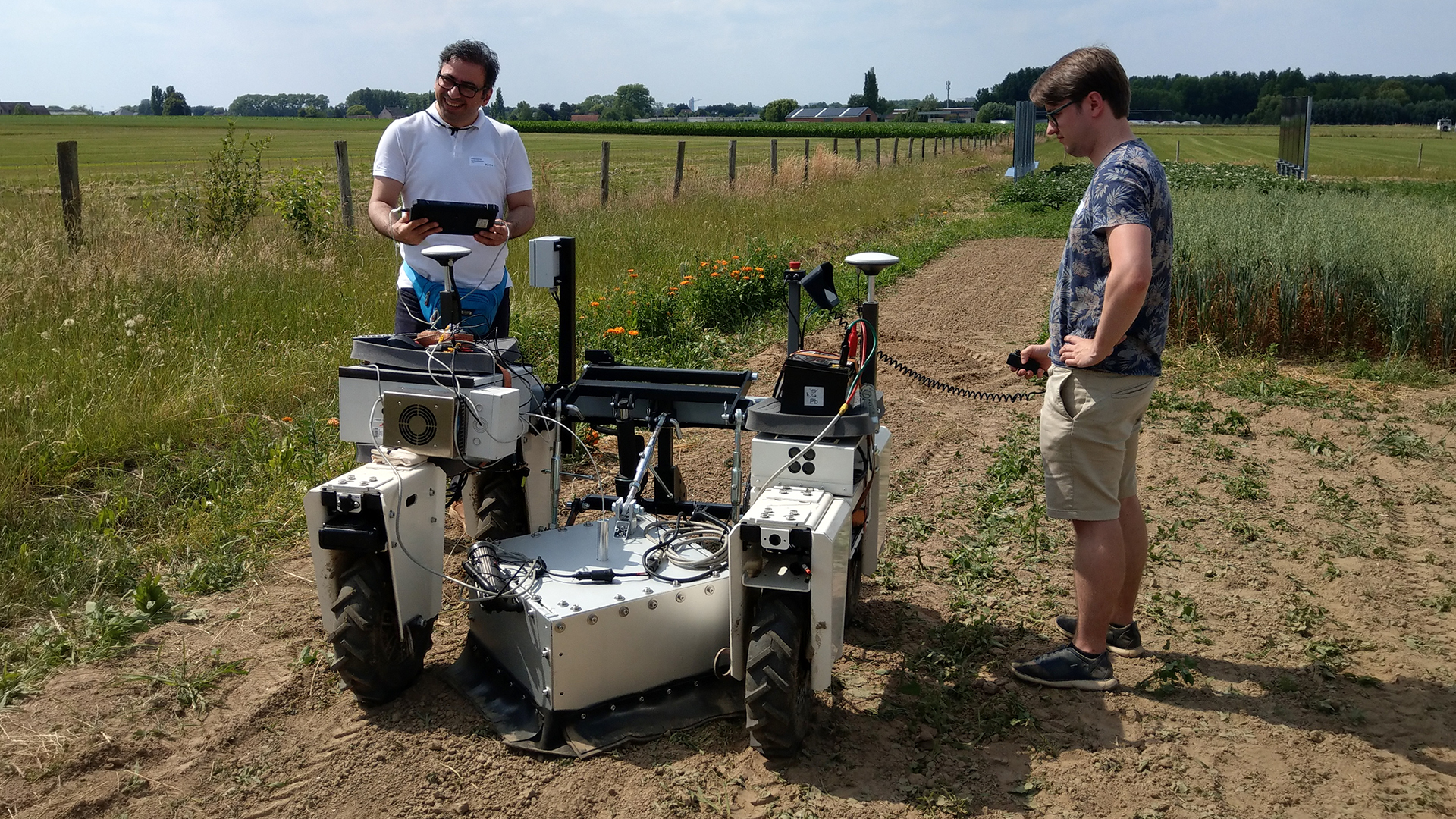
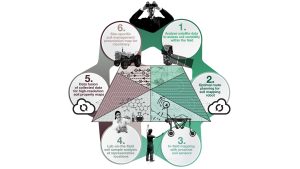
The core of the system is an autonomous, robot-mounted sensor powered by GNSS, an automated sampling drill, a penetrator, and an innovative “in-situ lab” chamber for performing wet chemical soil analysis in the field. SQAT combines satellite data (particularly data from the Copernicus program) with AI-driven processing to produce high-resolution maps detailing soil properties across fields.
In Belgium, the SQAT robot was exhibited at Werktuigendagen 2025, one of the region’s largest agricultural machinery trade fairs. Demonstrations of automated sampling and field analysis attracted strong interest from farmers, cooperatives, and agricultural service companies. This is an early sign of commercial appetite for precision soil mapping. SQAT’s approach aims to demonstrate that high-resolution soil intelligence is accessible, scalable, and economically viable across all pilot sites, even for medium-sized and smaller farms.
SQAT is not just about creating maps, it’s about turning maps into practical agricultural decisions. Affordable soil property maps improve on-farm variability management and provide important cost savings for farmers. To prove this fact, SQAT is directly developing five smart agriculture applications (variable rate lime, variable rate seeding, variable depth tillage, and variable rate macronutrient fertilization) that save fuel, seed, fertilizer, and lime. It also monitors carbon for carbon sequestration and soil organic matter restoration.
The project established seven real-world use cases across Europe, demonstrating its ability to adapt to different soils, climates and farming systems.
long term effects
By providing tools to monitor and protect soil health, dangerous trends in soil degradation can be reversed. Reversing these trends is key to long-term food security, as soil degradation reduces future food production capacity.
Similarly, maintaining soil health is key to maintaining highly valuable ecosystem services such as water filtration, flood control, air quality regulation, and carbon storage. These services are becoming increasingly important due to increasing urbanization and extreme weather patterns due to climate change.
From a farmer’s perspective, fluctuations in input/output prices and sudden changes in weather patterns impact finances and require new tools at their disposal. Affordable soil property mapping that supports precision soil processing can help reduce costs and increase (or at least maintain) yields, improving the financial resilience of farms.
Better soil intelligence can inform soil management and make soils more resilient in the face of climate change and extreme weather events such as droughts and floods.
Why SQAT matters – for farmers, the environment and the climate
This project demonstrated that lowering the cost barrier for soil analysis makes precision farming tools available, allowing even small farms to adapt their practices to their actual needs and soil conditions.
Informed use of inputs is essentially an environmentally friendly measure. Reduce the impact of food on the environment and climate by using less lime, fertilizer and fuel. Variable macronutrient fertilization will reduce currently significant river runoff and associated pollution.
SQAT contributes to climate change mitigation and long-term fertility through improved soil management and support for carbon agriculture. It also provides new tools for efficient use of inputs, helping farmers comply with the Nitrate Directive without sacrificing yields. This will enable farmers to participate in the digital and green transition envisioned by the EU Green Deal.
For farmers across Europe, especially those facing soil degradation and resource pressure, SQAT could be a game-changer. It’s worth watching closely as the project progresses towards commercial deployment by 2027.
SQAT is co-funded by the EU and the Swiss Confederation
This article will be published in an upcoming issue of Special Focus Publication.
Source link

