Close Menu
  • Start
  • Celebrities
  • Music
  • Influencers
  • Tendencies
  • Exclusives
  • Business & Brands
  • TwinH
  • Spanish
What's Hot

Bonnie Tyler has recovered from coma but remains ‘very unwell’ after emergency surgery

Choose a new language (or 25 languages) with this $127 Rosetta Stone sale

Jelly Roll files for divorce from Bunny XO after 10 years of marriage

Facebook X (Twitter) Instagram
  • Home
  • About The FYMOUS
  • Advertising / Promotion
  • Contact
  • DMCA
  • Privacy Policy
  • Terms
  • Publish News
Facebook X (Twitter) Instagram
FYMOUS News
  • Start
  • Celebrities
  • Music
  • Influencers
  • Tendencies
  • Exclusives
  • Business & Brands
  • TwinH
  • Spanish
FYMOUS News
Home » Ancient cheetah mummy discovered in Saudi Arabia contains long-lost cheetah DNA
Tendencies

Ancient cheetah mummy discovered in Saudi Arabia contains long-lost cheetah DNA

By January 16, 2026No Comments5 Mins Read
Share Facebook Twitter Pinterest Telegram LinkedIn Tumblr Email Copy Link
Follow Us
Google News Flipboard
Share
Facebook Twitter LinkedIn Pinterest Email Copy Link

Scientists have successfully extracted DNA from an ancient cheetah mummy found in a cave in Saudi Arabia. Researchers say this is the first time they have been able to extract genetic information from a naturally mummified ancient big cat, which could lead to the reintroduction of cats to the region.

In 2022 and 2023, researchers discovered the desiccated skeletal remains of seven cheetahs and 54 other cheetahs in the Lauga cave network in northern Saudi Arabia’s Aral region. The ruins are between 100 and 4,000 years old.

In a new study published Thursday (January 15) in the journal Communication, Earth and Environment, scientists analyzed the genetic data of the big cats and found that the ancient cats are most closely related to the modern cheetah of West Africa, rather than the Asian cheetah.

you may like

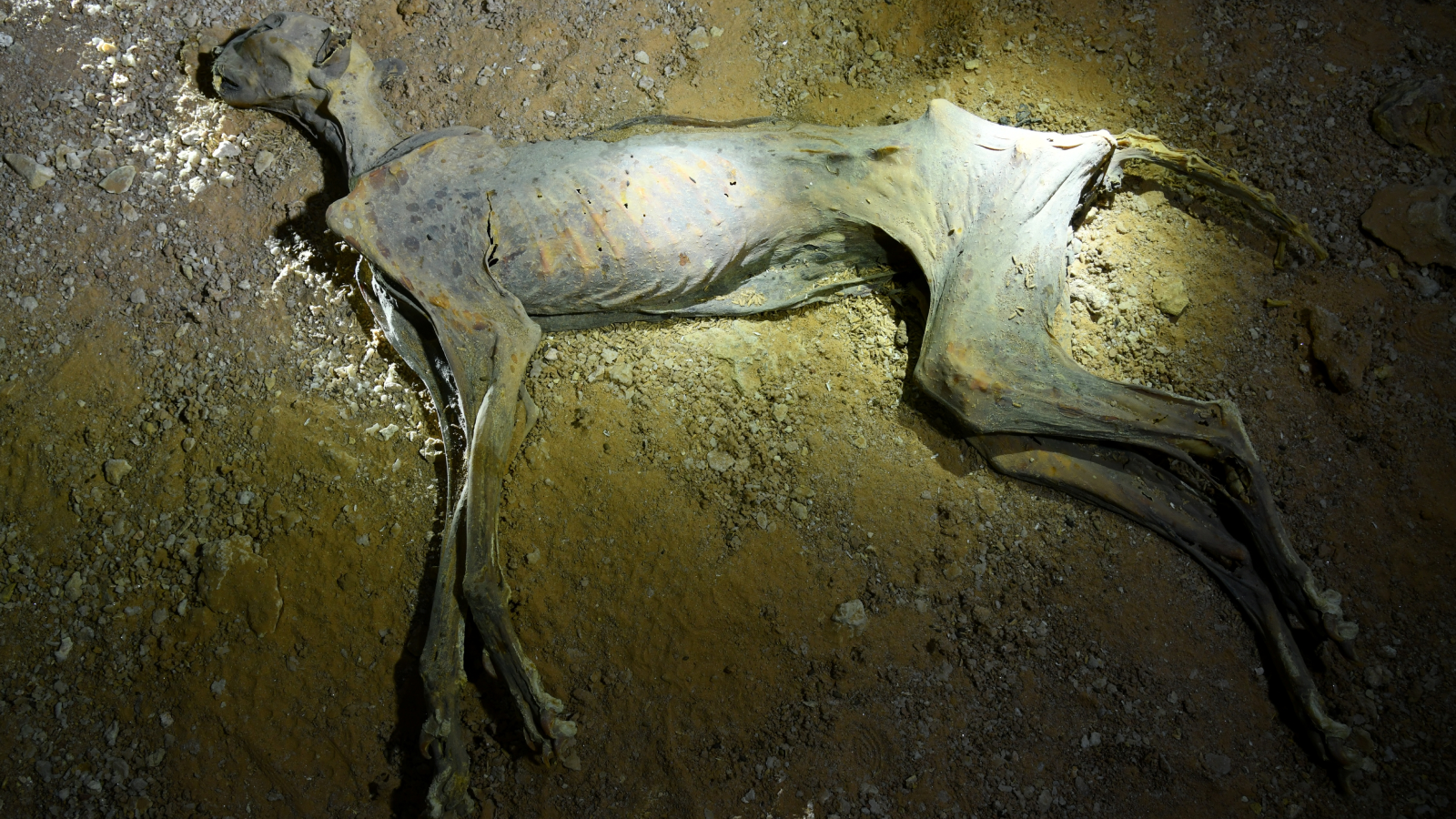
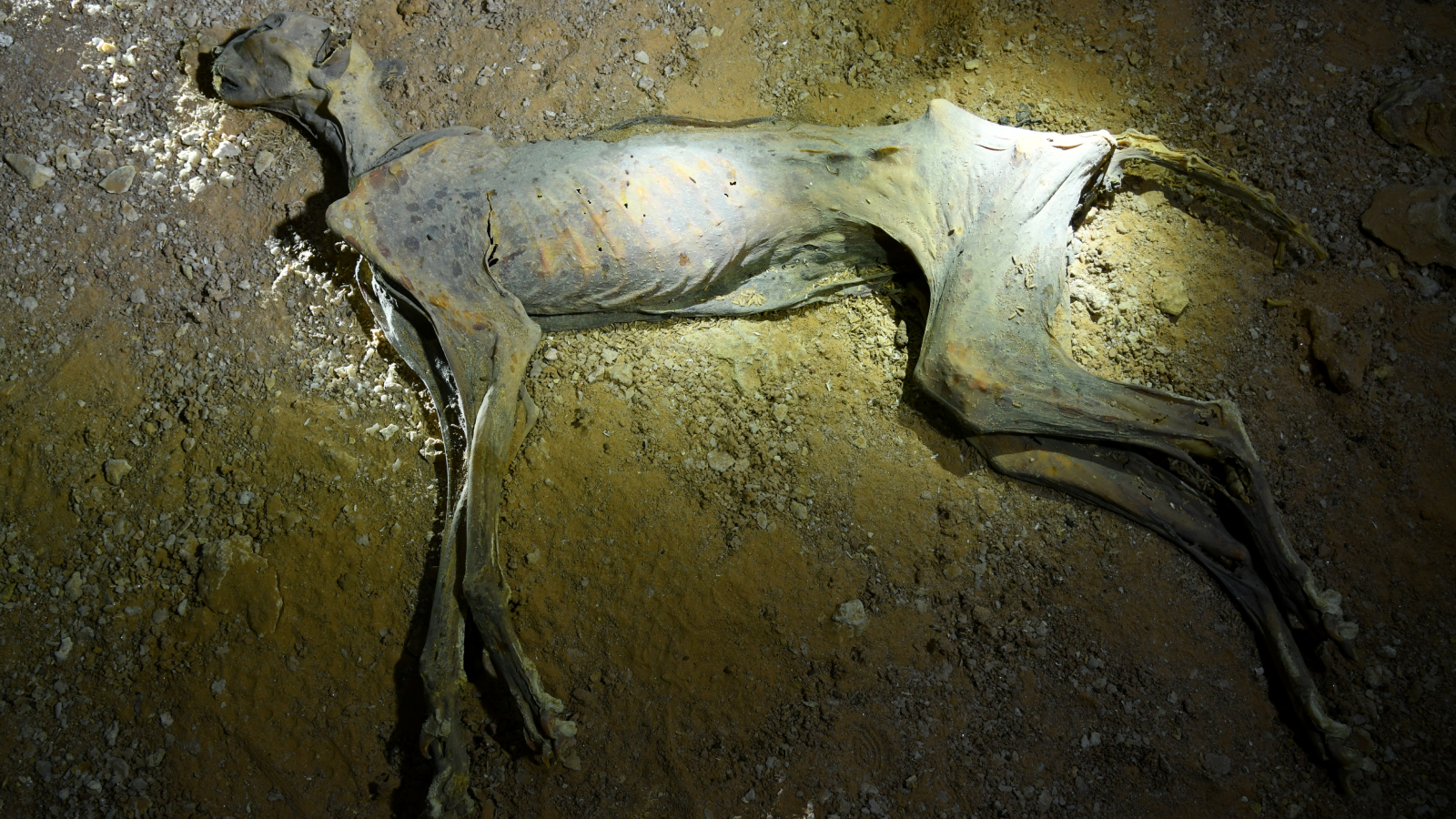
A mummified cheetah found in situ in a cave in northern Saudi Arabia.

A mummified cheetah found in situ in a cave in northern Saudi Arabia. (Image source: Saudi Arabia National Wildlife Center)

Cheetahs (Acinonyx jubatus) are threatened worldwide. Their population has declined dramatically, with only about 7,100 cheetahs remaining. The world’s fastest land mammal, the big cat once roamed across much of Africa and Asia from the Arabian Peninsula to India, but now spans about 9% of its historic range.

There are currently five recognized subspecies of cheetah, four of which live in Africa and one (A. j. venaticus) in Asia. This Asian population is limited to a small group of Iranian cheetahs.

No one knows how many cheetahs once roamed the Arabian Peninsula, or how widespread they were. Similarly, there is little evidence as to when or why they disappeared. Scholars speculate that it was a combination of habitat loss and fragmentation, hunting, and human-wildlife conflict.

But the discovery of a trove of ancient cheetah carcasses, some of them young and some adults, proves they once roamed the region and could provide a blueprint for their return.
Get the world’s most fascinating discoveries delivered straight to your inbox.

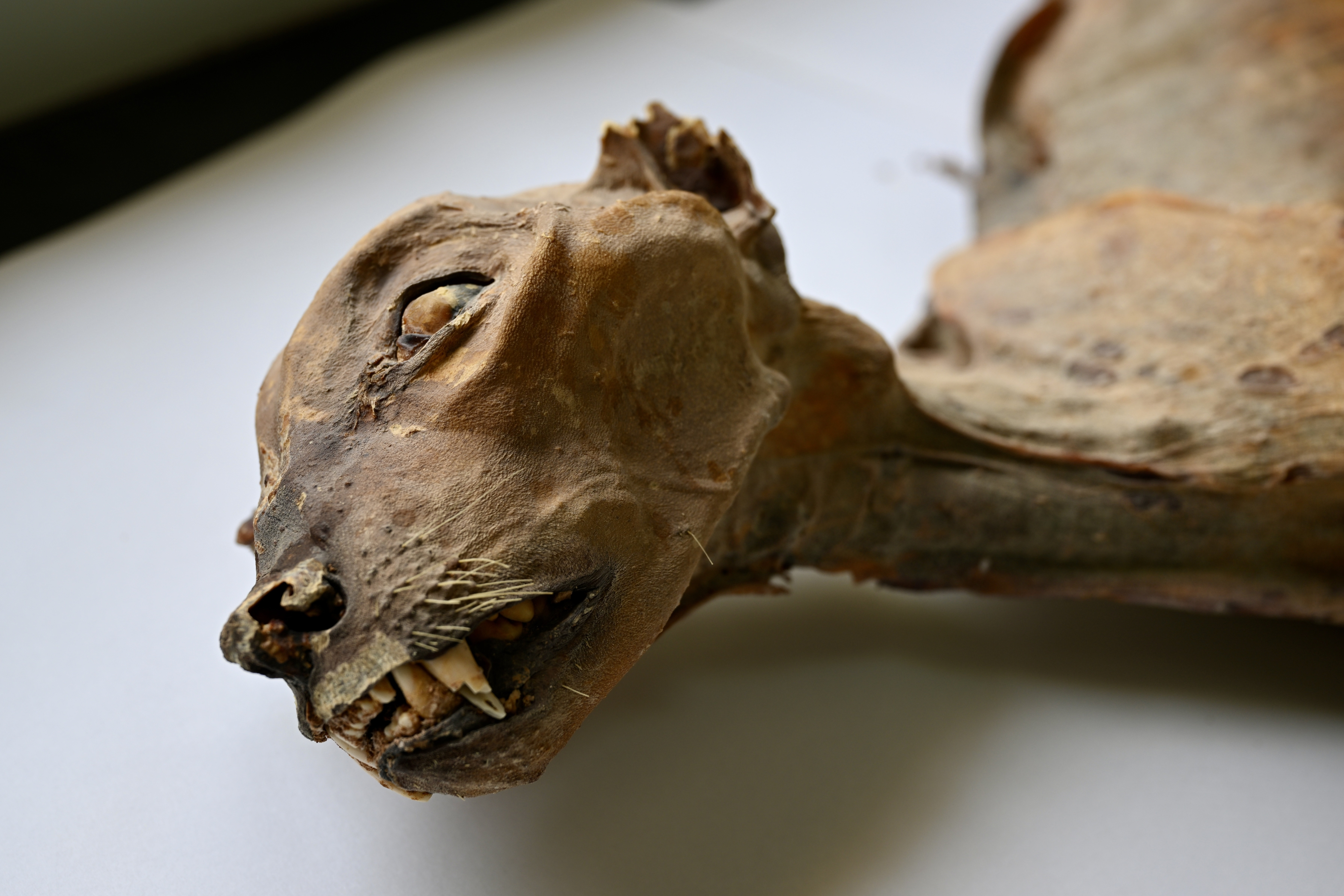
An enlarged image of a mummified cheetah's face preserved in a laboratory.

A mummified cheetah preserved in a laboratory. (Image credit: Ahmed Boug et al./Communications Earth & Environmental)

“This study provides strong evidence of the historical presence of cheetahs in Saudi Arabia and supports the potential for rewilding in the region to expand their current range and restore some of their former distribution,” Desire Dalton, a forensic scientist at Britain’s Teesside University who studies the use of genomic tools to inform conservation, told Live Science.

In the study, researchers dated samples taken from two mummified cheetahs and five human bones. The oldest skeleton is from a cheetah that died about 4,000 years ago, and the two desiccated cheetahs are 130 and 1,870 years old, respectively.

The research team found evidence that prehistoric cheetahs from Saudi Arabia are most genetically similar to West African Aj cheetahs. Hecky subspecies. Only the youngest specimen analyzed had a closer relationship to the Asian subspecies A. j. Venaticus.

you may like

“Using advanced archaeological, radiological and genomic techniques, the authors demonstrated that there are two lineages of mummified cheetahs,” Kumarasamy Thangaraj, a forensic geneticist at the CSIR Center for Cellular and Molecular Biology in Hyderabad, India, told Live Science.

Image 1/2
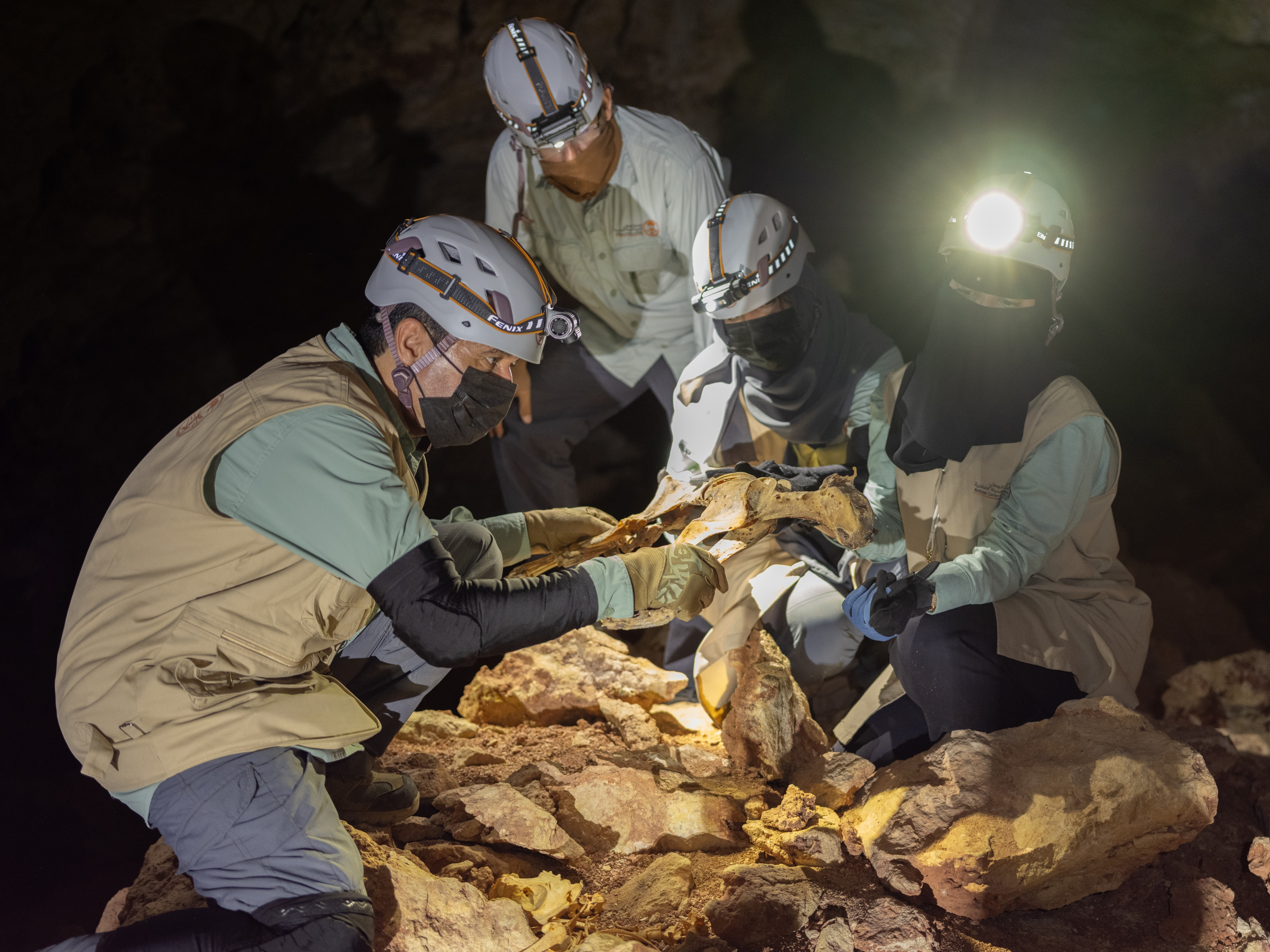
Researchers recover one of the mummified cheetahs from the site where it was discovered.
(Image credit: David Chancellor/Ahmed Boug et al./Communications Earth & Environmental)

Researchers recover one of the mummified cheetahs from the site where it was discovered.

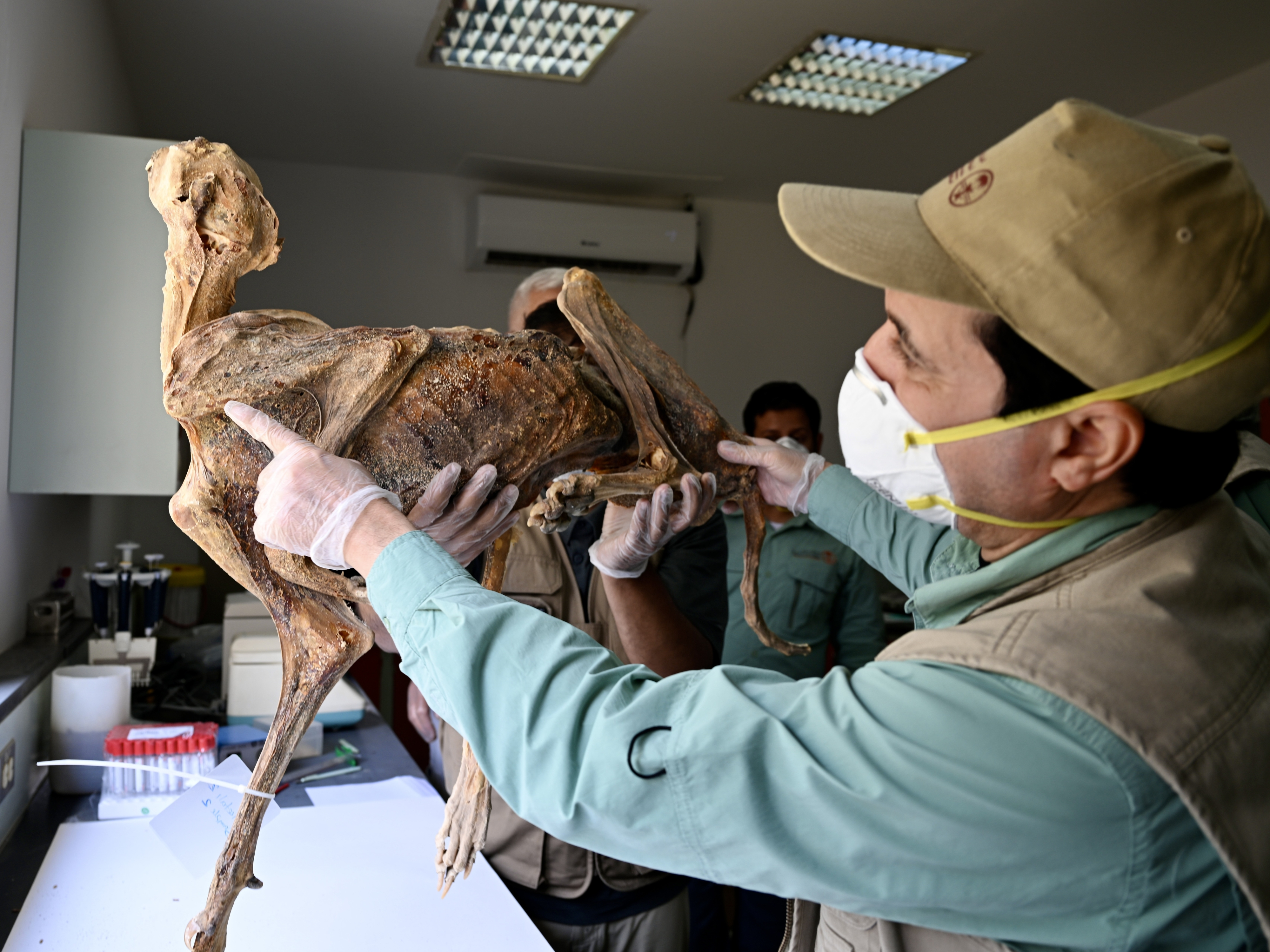
A researcher holds one of the mummified cheetahs in the lab.
(Image credit: Ahmed Boug et al./Communications Earth & Environmental)

A researcher examines a mummified cheetah in a laboratory.

Dalton said the identification of these unique lineages suggests the loss of cheetah diversity may have been greater than scientists previously thought.

But the study provides conservationists with a starting point for potentially reintroducing cheetahs to Saudi Arabia. The authors argue that rewilding cheetahs in the Arabian Peninsula can be sourced from the closest subspecies of cheetah found. Hecki — much more abundant than the Asian subspecies.

The DNA discovery could prove useful in ongoing rewilding efforts. In 2023, Saudi Arabia began a program to reintroduce the Arabian cheetah. A year later, the National Wildlife Center reported the birth of four cheetah cubs and the start of a national cheetah conservation strategy that included the creation of a specialized breeding facility and the establishment of a wild breeding population.

The idea of ​​reintroducing animals using ancient DNA isn’t far-fetched, Dalton says. “Genetic research has led to several successful rewilding projects.” For example, genetic data on the European bison (Bison bonasus) is influencing the breeding and migration strategies of these animals. This reduced the risk that the animals would struggle to adapt to their new environment, she said. She said a project is also underway to conduct ancient DNA analysis of European wolves (Canis lupus lupus) in order to develop targeted management strategies to conserve European wolf biodiversity.

The study authors believe that caves around the world may hold further secrets about ancient species. Caves in arid environments such as Saudi Arabia create hot, dry microclimates perfect for drying animal remains, potentially leading to mummification.

“Additional important insights may yet remain in the arid cave environments of Saudi Arabia and elsewhere that can inform ecological history, evolutionary insights, and practical information for rewilding and conservation,” the authors write.


Source link

#Biotechnology #ClimateScience #Health #Science #ScientificAdvances #ScientificResearch
Follow on Google News Follow on Flipboard
Share. Facebook Twitter Pinterest LinkedIn Tumblr Email Copy Link
Previous ArticleWith Canada’s tariff cuts, China’s EVs gradually move closer to the US
Next Article Forced closure of major US weather modeling laboratory could put millions of Americans at risk

Related Posts

Merlin, a common roadside duck in Mexico City, will be the World Cup mascot.

June 15, 2026

Far from the pitch, David Beckham remains soccer’s biggest star

June 14, 2026

Taylor Swift makes history as the youngest girl to be inducted into the Songwriters Hall of Fame

June 12, 2026
Add A Comment
Leave A Reply Cancel Reply

Latest Posts

Bonnie Tyler has recovered from coma but remains ‘very unwell’ after emergency surgery

Choose a new language (or 25 languages) with this $127 Rosetta Stone sale

Jelly Roll files for divorce from Bunny XO after 10 years of marriage

Merlin, a common roadside duck in Mexico City, will be the World Cup mascot.

Trending Posts

Bonnie Tyler has recovered from coma but remains ‘very unwell’ after emergency surgery

June 16, 2026

Jelly Roll files for divorce from Bunny XO after 10 years of marriage

June 16, 2026

BTS is the group fans are most looking forward to seeing perform at the 2026 World Cup

June 15, 2026

Subscribe to News

Subscribe to our newsletter and never miss our latest news

Please enable JavaScript in your browser to complete this form.
Loading

Welcome to The FYMOUS, a modern digital media platform dedicated to celebrities, artists, influencers, brands, entertainment culture, and the growing TwinH ecosystem.

We bring audiences closer to the people, stories, trends, and collaborations shaping today’s culture. From exclusive celebrity news and music releases to influencer highlights, brand partnerships, and TwinH activations, The FYMOUS delivers engaging content designed for the next generation of digital audiences.

Castilla-La Mancha Ignites Innovation: fiveclmsummit Redefines Tech Future

Local Power, Health Innovation: Alcolea de Calatrava Boosts FiveCLM PoC with Community Engagement

The Future of Digital Twins in Healthcare: From Virtual Replicas to Personalized Medical Models

Human Digital Twins: The Next Tech Frontier Set to Transform Healthcare and Beyond

Facebook X (Twitter) Instagram Pinterest YouTube
  • Home
  • About The FYMOUS
  • Advertising / Promotion
  • Contact
  • DMCA
  • Privacy Policy
  • Terms
  • Publish News
© 2026 news.fyself. Designed by by fyself.

Type above and press Enter to search. Press Esc to cancel.