
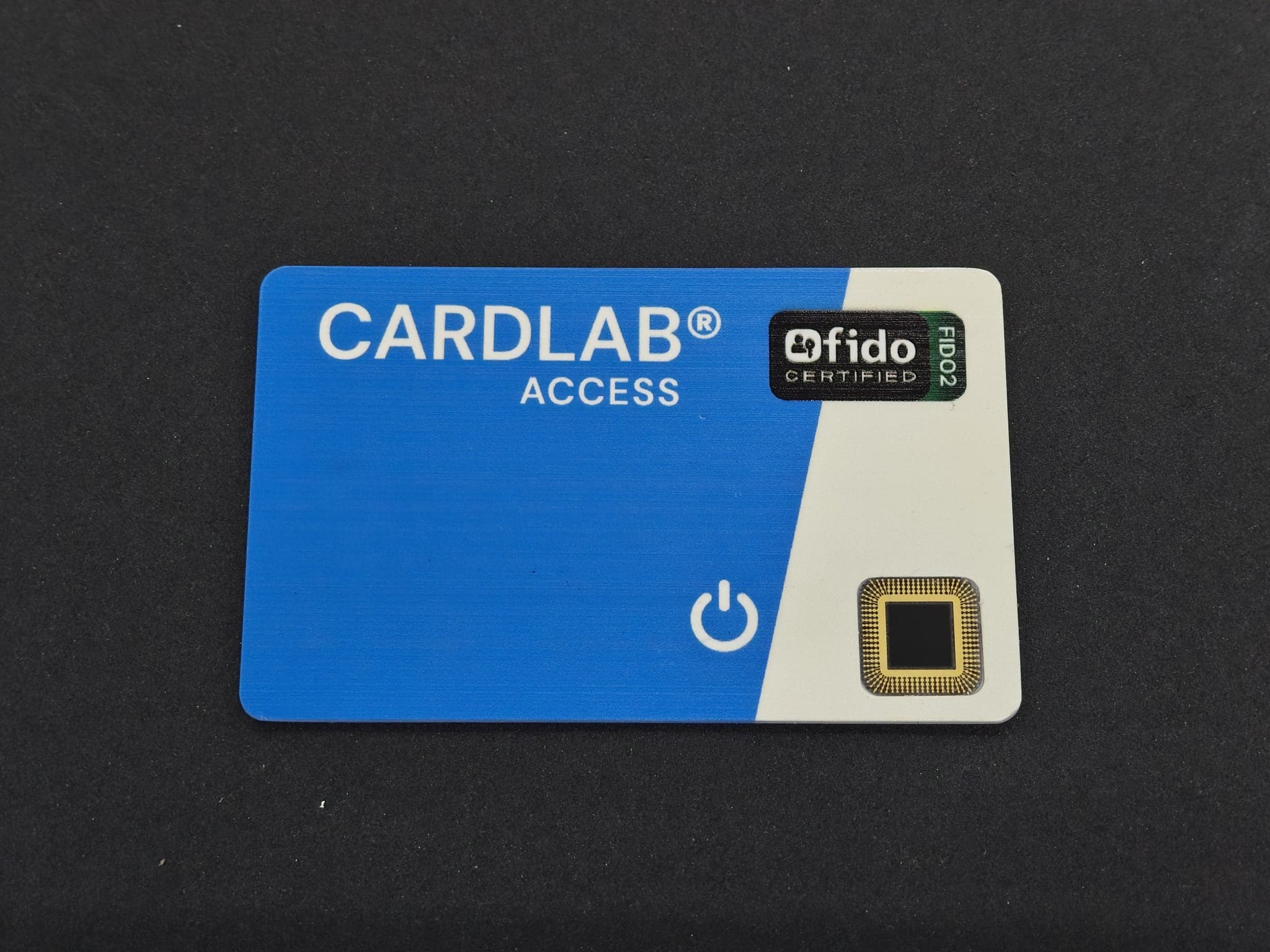
CardLab launches world’s first FIDO authenticated biometric card
Billions of dollars and work time are lost each year, and that number is growing rapidly, as employees spend significant amounts of time updating, changing, and replacing lost or forgotten passwords and PIN codes.
Unfortunately, it becomes a necessary task as fraudsters become increasingly active and skilled at hacking, card skimming, electronic device pickpocketing, and identity theft. While we try to make our digital lives more secure with complex passwords and access procedures, workarounds for remembering forgotten passwords are also rapidly increasing, creating new data theft risks. Digital life is complex, and protecting against the loss of critical corporate, financial, and personal data is costly.
CardLab introduces biometric FIDO solution
Several years ago, CardLab took on the challenge of making digital life easier and more cost-effective. That’s why we’re excited to release a FIDO-certified biometric card solution that saves businesses significant time and resources, as the CardLab solution being released today replaces the need for passwords in logical access solutions while also acting as a physical contactless biometric access card.
Combination of logical and physical access
It is the first solution to combine logical and physical access on a single card, meeting customer demands for a single system that combines asset management and IT management for employees. FIDO-certified biometric cards and FIDO-certified backend servers make this combination possible and offer several benefits to businesses and organizations.
Critical biometric data is only stored offline and on the card, so there is no risk of loss Significant savings in access management costs (up to 60%) Savings from being able to unify IT and facility management on one platform Time saved on ongoing password management and more employees Reduced risk of data breaches when moving to dynamic passwordless biometric logon.
Eliminate centralized biometric databases
All biometric data is stored on the card to verify the true cardholder, so no more hackable biometric databases are needed. Biometric cards are registered with a backend authentication system and all data can be tokenized or created as fully ciphertext. This makes card skimming and transaction copying worthless, eliminating identity theft and trespassing. The combined solution protects unique user IDs while ensuring complete privacy. No other solution offers the same level of identification speed, convenience, security, and hacker protection.
Technology and system integration
CardLab Access FIDO cards support NFC and Bluetooth Low Energy (BLE) connectivity, ensuring seamless integration with your existing IT infrastructure. Rechargeable with contact or wireless charging, providing long-term ease of use and cost efficiency for large-scale enterprise deployments. Biometric identity verification is enabled by an integrated FPC-1300 series fingerprint sensor and highly secure authentication software from Sweden’s FPC.

Frank Sandeløv, CEO of CardLab Innovation ApS, said: “We have been working with the access control industry for years to solve their pain points, and here Access FIDO represents a major step forward in enterprise authentication, combining convenience, security, and cost-effectiveness in one solution.”
“With FPC’s trusted fingerprint technology at its core, Access FIDO enables organizations to modernize and integrate access and IT systems with minimal integration effort, delivering significant savings while providing a frictionless and secure experience for employees. This is the first of its kind to go beyond a clean technology solution, but was developed to provide businesses with an efficient, cost-saving solution.”
Prepare for rising demand for cybersecurity
The release of the complete FIDO-certified system marks an important milestone as Card Lab enters an important consolidation phase to meet the rapidly growing demand for such solutions in a world where cyber warfare has become part of everyday life. This solution can be implemented in essentially all business areas and significantly increases data and identity protection.
Source link

