
UK National Cryogenic Facility Advances Quantum Technology
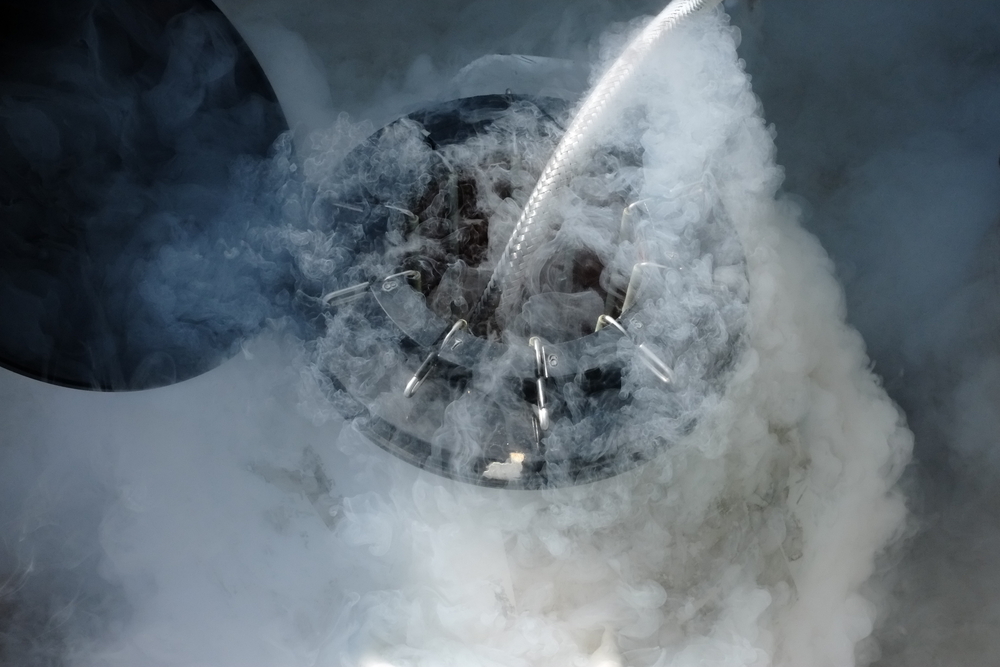
The UK government has pledged more than £51 million to establish a national cryogenic facility, a move aimed at strengthening the country’s position in quantum technology and advanced materials research.
The investment, made through the UK Research and Innovation (UKRI) Infrastructure Fund, will support the development of a large-scale test environment capable of operating at temperatures lower than deep space.
The national cryogenic facility, located within the Science and Technology Facilities Council (STFC) Daresbury Laboratory in Liverpool City Region, is expected to significantly expand the UK’s cryogenic testing capacity.
Officials say the site will allow both academic researchers and industry to test materials and systems at temperatures ranging from 2 Kelvin to 20 Kelvin.
Paul Vernon, Director of STFC’s Daresbury Institute, commented:
“A truly transformative infrastructure, the National Cryogenic Facility is likely the first user facility of its kind. It will unleash quantum computing at scale and be a major stepping stone to breakthroughs in renewable energy, healthcare, security, and other technologies that will shape our future.”
“As the first national facility to be located here since SRS closed in 2008, this ground-breaking investment will usher in a bold new era, accelerating innovation, attracting world-class talent and investment and placing the North West and the UK at the heart of transformative science.”
Extending quantum technology through infrastructure
Access to cryogenic conditions is known to be a bottleneck in the development of quantum technologies, especially for companies looking to expand beyond laboratory prototypes.
The new facility aims to address this gap by providing large-scale liquid helium cooling infrastructure that is essential to the operation of many quantum systems.
The project is expected to increase the UK’s cryogenic testing capacity by around six times.
This expansion is particularly relevant for quantum computing companies looking to move towards commercial deployment, where maintaining stable ultra-cold environments at scale remains a major technical challenge.
Beyond computing, the facility will support research into high-temperature superconductors and other advanced materials. Both rely on precise thermal control during testing and validation.
Applications beyond quantum computing
While quantum technology is the main driver of investment, the scope of the National Cryogenic Facility spans multiple sectors.
The researchers anticipate applications in the healthcare, energy, and transportation fields, reflecting the interdisciplinary nature of cryogenic science.
In medical technology, cryogenic testing could improve MRI systems by allowing the use of better performing materials.
In the energy sector, the facility could play a role in advancing fusion research by enabling testing of superconducting magnets under realistic operating conditions.
Meanwhile, aerospace and clean aviation efforts are investigating how cryogenic systems can support hydrogen-powered flight.
These applications are consistent with broader policy objectives around energy security, decarbonization and industrial innovation.
Skills and talent development
The National Cryogenic Facility is also expected to serve as a training and skills hub.
The UK recognizes that it lacks expertise in cryogenics, system design and operations. These areas are becoming increasingly important as quantum technologies mature.
Industry forecasts suggest rapid employment growth in this sector. A recent quantum workforce analysis predicts that global employment in quantum computing could reach 250,000 roles by 2030 and rise to more than 800,000 by the middle of the next decade.
The new facility is positioned to meet this demand by developing specialist technical skills within the UK.
Part of wider UKRI strategy
Funding for the National Cryogenic Facility forms part of a wider package of £156.6m allocated to four major infrastructure projects.
These include efforts focused on next-generation bioimaging, tidal energy innovations, and plant and crop research systems.
The wider UKRI Infrastructure Fund currently supports a portfolio of just over £2 billion targeted at areas where large-scale scientific infrastructure is needed to unlock research and commercial potential.
Pending final approval, the National Cryogenic Facility is expected to become a central element of the UK’s strategy to remain competitive in quantum technology, while enabling progress across adjacent scientific and industrial sectors.
Source link

