
ESA funding appeal targets space technology to fight European wildfires
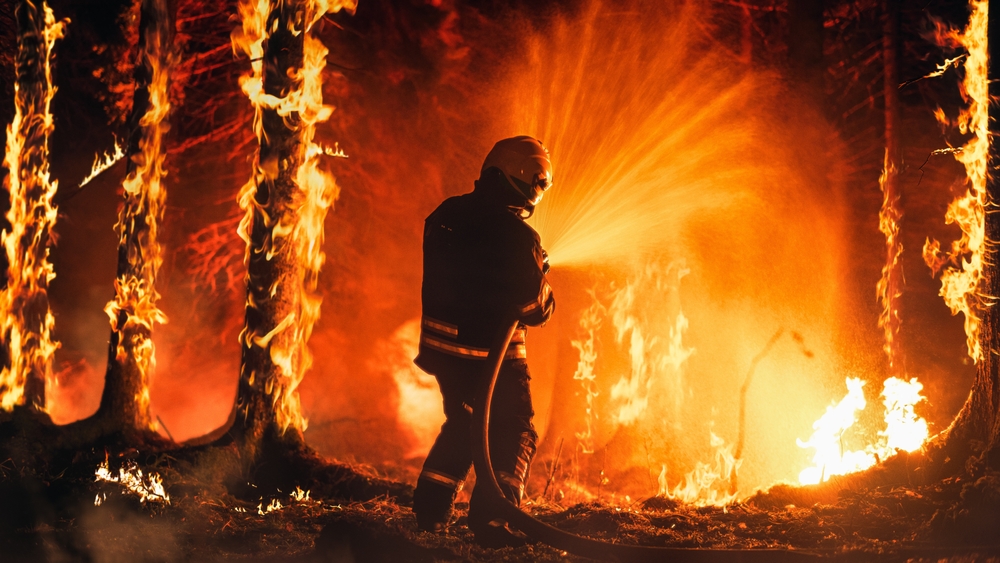
As wildfire activity intensifies across Europe, the European Space Agency (ESA) is exploring new technology to detect and track fires in near real time.
Wildfires in Europe are large and frequent, and ESA is now calling on industry to help respond by building tools that rely heavily on satellite data to detect, monitor and predict fire outbreaks.
A sudden increase in fire activity
Wildfires across Europe are becoming more frequent and destructive, especially in southern Mediterranean countries and parts of central and eastern Europe.
Recent data shows a sharp increase, with the total area burned in EU member states in 2025 more than double the long-term average recorded between 2006 and 2024.
Fire has long played a natural role in maintaining ecosystems, but its current trajectory reflects change. Human activities combined with environmental conditions such as prolonged drought and rising temperatures are increasing both the risk of ignition and the spread of fire.
One important factor is the expansion of urban forest boundaries where residential areas meet flammable vegetation, amplifying both exposure and damage.
Increased economic and environmental costs
The effects of these fires extend far beyond immediate destruction. Wildfires in Europe are putting pressure on public health systems, local economies and ecosystems.
Air pollution from biomass burning introduces particulates and toxic compounds into the atmosphere, with documented long-term health effects.
Economically, regions dependent on tourism are particularly vulnerable, while rural areas face depopulation and disruption of trade networks due to repeated fires.
Environmental degradation is equally severe, eroding biodiversity, soil quality and carbon storage capacity. The cumulative effects are increasing policy and technological challenges across the continent.
EU-backed initiative aims to innovate wildfire response
In response, a new ESA funding call under the broader Wildfire Safety Initiative is seeking proposals to leverage space-based technologies to improve wildfire response capabilities.
The current consultation has a particular focus on operational responses, with priority areas including:
Early detection system that identifies fires at the ignition stage Near real-time monitoring of fire occurrence Predictive modeling of fire behavior and spread
Another round of funding later this year will address prevention and preparedness, including risk assessment, vegetation management and mitigation strategies.
The initiative was formed in collaboration with the Fire Department, Civil Protection Authorities and the Forest Service, reflecting operational needs on the ground.
Satellite technology at the core of the solution
A core requirement of this program is the integration of space-derived data and infrastructure. Satellite capabilities are increasingly seen as essential for managing large-scale wildfires.
Main uses include:
Earth Observation: Monitoring ongoing fires, mapping burned areas, and assessing vegetation health and hazard status Satellite Navigation: Supporting drone and aircraft operations and enabling precise geolocation of fire fronts and sensor data Satellite Communications: Providing connectivity in remote or fire-affected areas where terrestrial networks are unreliable
These technologies are expected to support faster decision-making and more coordinated firefighting efforts.
Focus on commercially viable and technically reliable projects
This funding call is open to teams that can demonstrate both technical feasibility and a viable route to market. Proposals are expected to demonstrate clear demand from end-users such as emergency services and land management authorities, along with a realistic implementation pathway.
Projects are evaluated based on several criteria.
Evidence of user engagement and clear operational needs Market potential for scalable services Technical robustness and feasibility Clear added value from space-based components
Selected teams will receive a portion of funding covering 50% to 80% of project costs, as well as technical guidance and access to a broader partner network, depending on company status and country approvals.
The urgency for a coordinated European response increases
As Europe’s wildfires continue to intensify, the focus is shifting from reactive firefighting to integrated, technology-driven management systems.
The latest funding initiatives signal a broader recognition that space infrastructure can play a critical role in addressing one of the region’s most persistent and escalating environmental threats.
The closing date for funding applications is June 2, 2026. Click here for details on how to apply.
Source link

