
Interviews with women in the Japanese music world
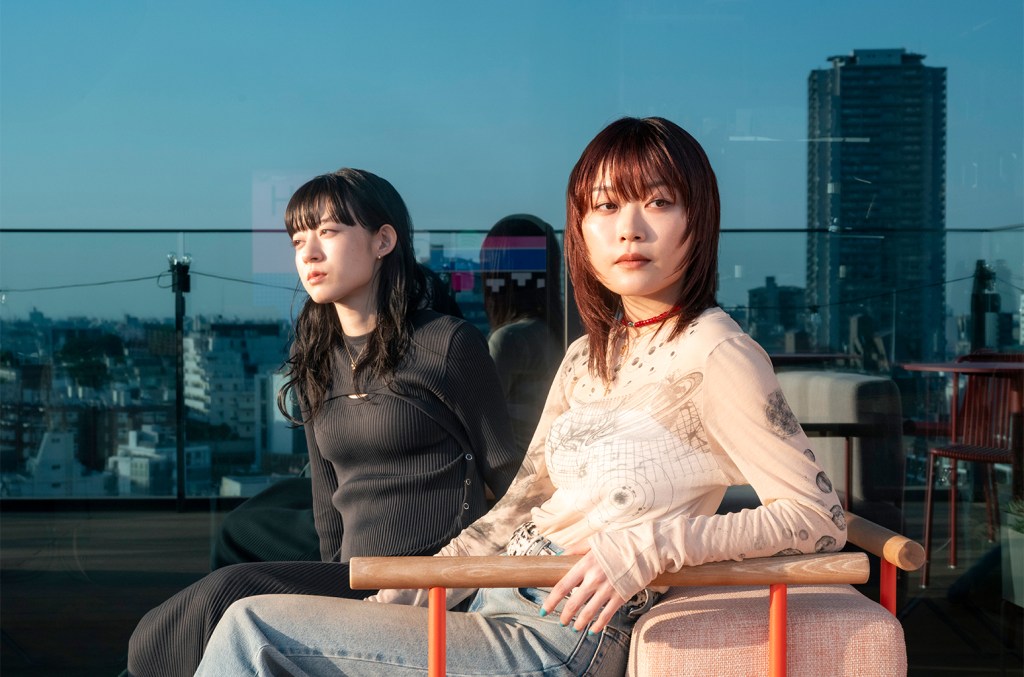
Hitsuji Bungaku spoke with Billboard Japan for the latest installment of the “Women in Music” interview series. The initiative was launched in 2022 in the footsteps of Billboard’s annual Women in Music honors, which celebrate artists, producers and executives who have made significant contributions to music and entertainment and inspired other women through their work. This series featuring female players in the Japanese entertainment industry is one of the highlights of the Japanese WIM project.
explore

Check out the latest videos, charts and news
The duo’s latest interview marks the occasion of the one-night-only special live event “Women in Music – EQUAL STAGE” being held by Billboard Japan and Spotify on June 9th. Although the band’s lineup has changed to the end of 2025, Moeka Shiozuka and Yurika Kasai have not slowed down. The first two-night concert at the historic Nippon Budokan and a seven-city European tour will take place in 2025, with a release already scheduled for 2026. “Dogs” is the theme song for the Netflix drama “Kujo no Sin”. Appearing for the second time in this interview series, the pair discuss the essence of their new single and how their thinking has changed over the past three years.
The theme song “Dogs” for the Netflix drama “Kujo no Sin” is attracting a lot of attention. It’s a hard-edged rock song that’s different from before. How did it all come together?
Shiozuka: I think “Kujo no Sin” had a big influence. The rawness of ‘Dogs’ is a sound that has always been within us, but we haven’t had the chance to express for a while.
What did you think after going there?
Shiozuka: It was really good. We’ve performed it many times live and on TV, and we feel it’s the perfect fit for us now. There’s no pretense there. I never felt like I was being dishonest when I was creating more sophisticated work, but there was a slight sense of disconnect between it and certain parts of my actual life and thinking. If you can let out the dark parts of yourself, the good parts will come alive as well.
Kasai: I always feel that when we play this kind of music, we can play our most vulnerable selves.
Since it’s the theme song for a Netflix series, I’m looking forward to seeing the reactions overseas. In the music video, you co-starred with director Gakuryu Ishii for the first time.
Shiozuka: At first, I was also imagining a more rough image, but Mr. Ishii came up with a concept that resembled a “magician from another world.” He also said, “This song has a prayer in it,” and although I didn’t consciously include it, I thought that was the case when he said that. He clearly had fun on set and the trust we had with his crew made it a really special team to be part of.
Kasai: The flexibility of his thinking not only exceeded my imagination, but was incomparable. This master filmmaker has the mind of someone who is just beginning to create. It was a learning experience for me and I felt like I saw what it was like to continue such a long career.
In the previous interview, you said that by changing to a pants-based stage look, you were able to express yourself more as a band. It’s been three years and what else has changed?
Shiozuka: The theme of our live shows has always been to be ourselves and breathe deeply. The desire to relax never goes away. This year, I switched to denim for my stage costume, and it liberated me a lot. I felt even more strongly that I didn’t need to dress up too much. This was in part due to suggestions from HUG, the creative team I worked with on my spring tour, and with their help I was able to find a denim style that I had always wanted to try but couldn’t imagine.
Kasai: That would be easier. Rather than relying on our costumes to convey a strong message, we let our clothes be who we are. Rather than using what we wear to make a statement, we think we’ve found the simple things that most define us.
Does the return to a simpler style reflect a change within you?
Shiozuka: The work I’ve done so far has accumulated, and I’ve gotten older, so I think I’ve gained a firmer footing than before. In a good way, I feel less hopeless, and I think I’m starting to enjoy the moment little by little. My Pilates instructor told me that I had a lot of tension in my shoulders and that being nervous wasn’t doing me any good and that I should try to relax. It was about Pilates, but I realized it applies to a lot of things in general.
In other words, taking care of your body also affects your mental state. Mr. Kasai, what has changed in the past three years?
Kasai: Nowadays, when I encounter something for the first time, I concentrate on discovering it. I can look at it from a distance without feeling nervous and think, “This is how a stage like this is created.” Three years ago, I might not have thought about that at all. Lately, I’ve started waking up earlier, and once I have a stable start to the day, I feel more relaxed and able to tackle everything that follows. I started to think that rhythm is important.
Shiozuka: In the past, whenever a new opportunity presented itself, I would become stiff with the feeling that I had to do it. Currently, I take the stance that “Even if things don’t go well, it’s not the end,” and that laxity is leading to results. My approach to self-care hasn’t changed much, but I think I’ve found a less draining way of living. My time is really important to me. Taking care of your body is also important.
In our last interview, we spoke candidly about what it’s like to be a woman in the music industry. Three years have passed, has your awareness of the gender gap changed?
Shiozuka: I used to think about it a lot, but now I feel that the only way to do it is to continue making music every day so that people will think it’s cool regardless of gender. I would be most happy if someone saw it and thought, “I want to try it too.” Maybe we can finally become the musicians we always imagined ourselves to be. Now that I’m older and have traveled overseas, I’m able to do it with confidence because of the things I’ve accumulated over the years.
Have you made any new discoveries as your international presence increases?
Shiozuka: When thinking about what to wear in Japan, you have to think about a lot of things, like “Does this look good on you?” However, when I think about what to wear overseas, I feel that the range of expression expands greatly. I feel like I’m being accepted as a whole person. Performing shows overseas is a blank slate for us, so we wanted to do it overseas when we wanted to create a new version of ourselves. It freed us from feeling like we had to show off a certain kind of cuteness and charm, not just through clothes. Once we started stripping off everything for live shows overseas, it naturally spread to Japan and had a very positive impact on the band.
Kasai: Being in a foreign country makes everything feel like a challenge. All we have to do is put out everything we want to do first. That may also be part of the reason why we have established such a strong foothold.
Shiozuka: And it felt like the space welcomed what we were doing.
In the previous interview, you said, “Before being a musician, I want to value being a human being.” How does that relate to you now?
Shiozuka: I’ve come to believe that myself as a musician and myself as an individual don’t have to be 100% the same. I’m not acting or being dishonest, but there was a time when I felt like I had to be the perfect version of myself, living up to every ideal and expectation people had of me. Now I can draw clearer boundaries around my time and feel more free.
Kasai: My feeling is that it is best to create your own ideal self.
What is most important to you at the moment in terms of maintaining a long career?
Shiozuka: I started thinking more specifically about the changes that occur at each stage of life. There are still things I want to do, and I want to grow old in good health. I would like to aim for a deeper expression than just youth and energy. It’s not about being a woman in particular, but about growing as a musician and an artist. We’ve been talking about this a lot lately. What more can you do with music?
Kasai: The most important thing is to have a balance with daily life. When that balance is disrupted, everything quickly falls apart. I think as I get more experienced and older, I’m getting better at managing it myself.
At Women in Music – EQUAL STAGE on June 9th, she will perform with Shinko Gakko!, Awich, and LANA. What are you most looking forward to?
Shiozuka: First of all, I will be able to see the performances of the other three groups. I’ve been listening to all of them, and they’re very powerful and cool. And as I said earlier, it’s cool that transcends gender. At rock festivals, the majority of musicians are often male, and it is rare to see an event where many cool women gather. And that’s really cool and even wholesome in the right sense. I think that’s really something.
Kasai: I am also looking forward to sharing the stage with artists from various genres. They all have a life force-like quality to them that makes them seem destined to be what they are. I’m really looking forward to it.
Shiozuka: Mr. Awich is raising his daughter while making music, so I’d like to hear more about that.
Do you have any advice for people who want to start playing music?
Shiozuka: I want you to start a band. If you look at festivals, there are more and more people doing amazing things, but bands made up entirely of women are still rare. It’s not without its challenges, but it’s also a lot of fun, so I’d like to share the rock festival stage with more people.
Kasai: Bands play live music, and when you rock with your bandmates, a chemical reaction occurs, and sounds you’ve never heard before come out. That’s the best part yet.
Does music empower you personally?
Shiozuka: When I walk while listening to music, I sometimes find it very beautiful because it matches the scenery around me. Those moments are therapeutic for me. And when you go to a show and see someone do something unexpected on stage, it’s a reminder of how much potential there is still. Just seeing someone singing at their best gives me energy.
Kasai: When the atmosphere of a live venue and my physical condition are completely synchronized, I feel like I really get a boost of energy. It’s like something inside me is released.
—This interview with Rio Hirai first appeared on Billboard Japan
Source link

