
‘Medicare for All’ Message Attracts Voters Buckling Under Medical Bills
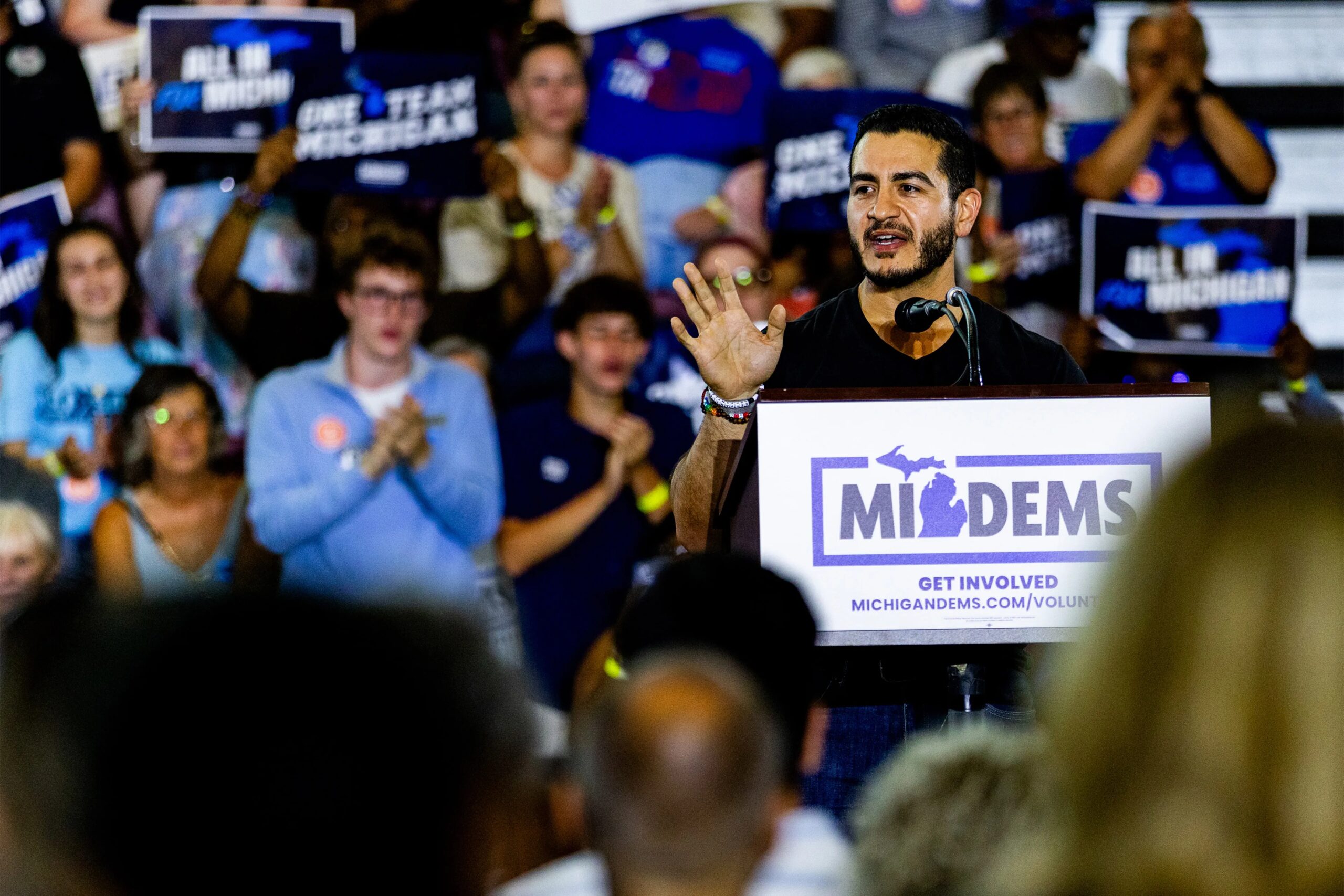
LANSING, Mich. — Christina Starks-Clay doesn’t know how “Medicare for All” would work exactly, but she’s willing to bet it’d be better than what she has now.
Standing in line for U.S. Senate candidate Abdul El-Sayed’s town hall in the state’s capital in September, she whipped out her phone to pull up a screenshot. It was of the $1,000 cashier’s check she’d picked up at the bank that day to pay down a chunk of her son’s dental bills. An early childhood special education paraprofessional, she still owed $389, even with good dental insurance. Her own cleaning a few weeks before cost $600.
She tried to talk herself down at the bank, to focus on being grateful for what she could afford.
“I’m like, ‘Tina, OK, you were in a position for this moment to do this,’” she said. “A lot of people couldn’t do what I had to do today. I couldn’t do it. But I did it. So I need to hear, how are you going to make this better for everyone?”
Many who waited in the hot sun that afternoon in a line stretching blocks through downtown Lansing shared similar anxieties. A man ahead of Starks-Clay talked about watching his brother rack up thousands of dollars in medical debt. A professor emeritus at nearby Michigan State University worried aloud about his grandkids’ medical care, because his adult kids were struggling to meet a $9,000 insurance deductible. Healthcare workers who’d turned up for the event described patients choosing between affording medication or food, or how they themselves had been financially devastated by a medical crisis.
They all knew Michigan Democrat El-Sayed’s rallying cry by heart, chanting it when the candidate took the stage: “Money out of politics! Money in your pocket! Medicare for All!”
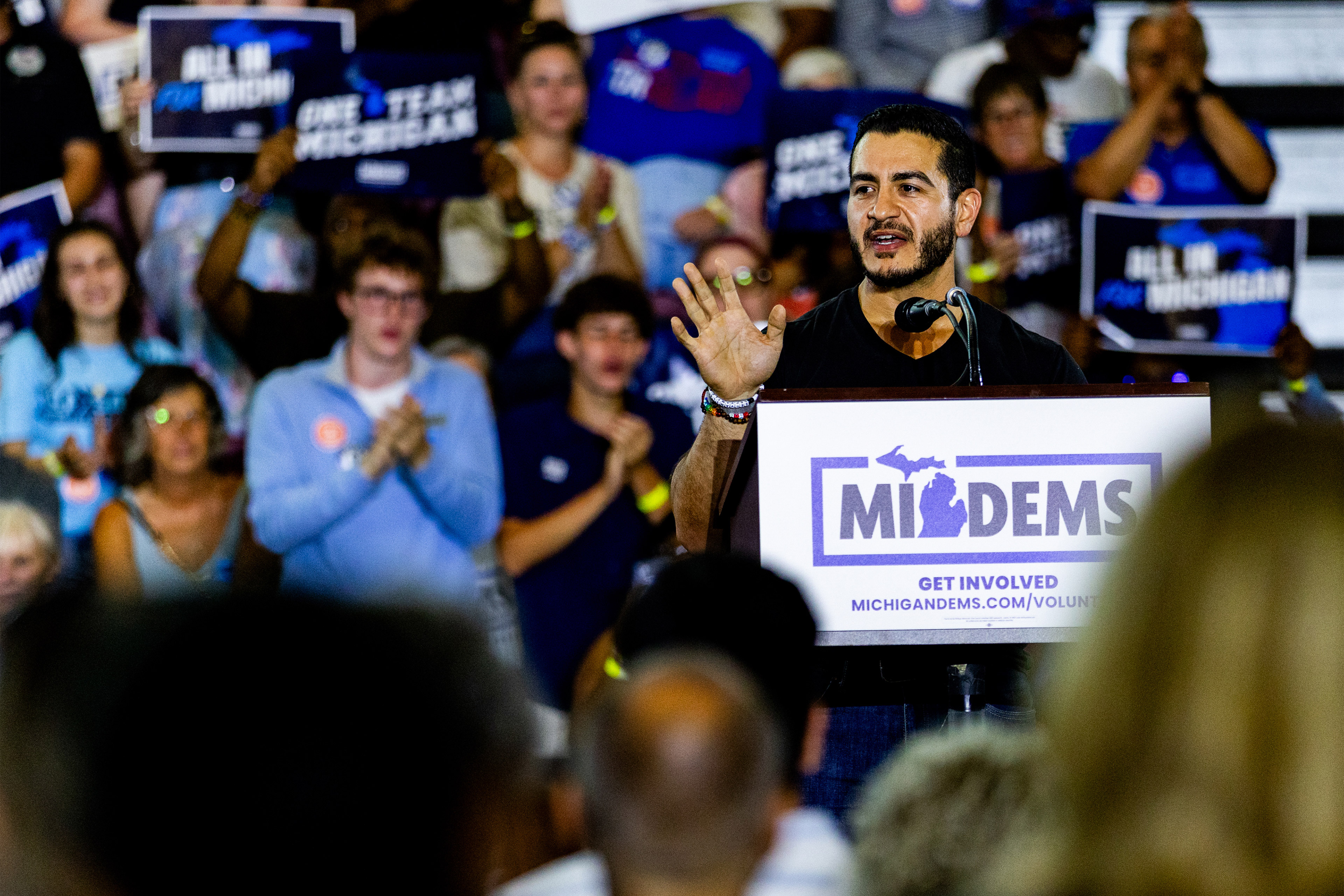
Support for Medicare for All is at its highest in at least a decade, according to a new KFF poll. The survey found two-thirds of Americans now favor expanding the government health program that largely covers seniors (about half of whom are enrolled in private plans through Medicare Advantage).
But many people don’t actually know how to define Medicare for All. Traditionally, the idea has been to establish a single health insurance program, run by the federal government, that would guarantee coverage for Americans and minimize or even eliminate private insurance. How much people like the idea depends on what they’re told about it, pollsters have found.
Still, at a time when fewer than half of Americans say they can afford their healthcare, Medicare for All has become a progressive shorthand for radical, systemic change.
“Too many people don’t have health insurance, too many people who do have insurance can’t afford medical care, and many people are terrified about the costs of being sick,” said Jonathan Oberlander, a professor at the University of North Carolina-Chapel Hill who specializes in the politics of healthcare reform.
“And in an electorate that wants change, that is disenchanted with the status quo, Medicare for All is an important symbol,” he said.
That’s why Democrats running for Senate seats in the midterm elections in such states as Maine, Minnesota, and Florida tout their support for scrapping the current health insurance system in favor of broad Medicare coverage. But nowhere is the issue as central to a race as in Michigan, where Medicare for All has become synonymous with El-Sayed.
El-Sayed, who trained as a doctor and served as Detroit’s top public health official, has campaigned on Medicare for All since his unsuccessful bid for governor in 2018. To Starks-Clay, that means he has a plan and will “stick to it,” she said.
That’s appealing to voters right now, said Ashley Kirzinger, director of survey methodology at KFF, a health information nonprofit that includes KFF Health News. “When we ask people what do they want to hear from candidates in regards to healthcare, it’s a plan to bring down healthcare costs.”

American Dream or Pipe Dream?
Medicare for All has been the shiny object of progressive politics in previous campaigns, including Vermont Sen. Bernie Sanders’ 2016 presidential bid and the 2020 Democratic presidential primary. Its popularity rises and falls in cycles, Oberlander said. And today people are painfully aware their care is getting more expensive and harder to access.
In the first decade or so after the passage of the Affordable Care Act in 2010, the nation’s uninsured rate was cut nearly in half. Insurance companies could no longer deny people coverage based on preexisting conditions. Since then, to cover more people, 40 states plus Washington, D.C., have expanded Medicaid, the government health program for those with low incomes or disabilities.
Now it feels as if we’re moving backward, Oberlander said. “We are now, in the past two years, in an era where the Trump administration and congressional Republicans have reversed that progress.”
Michigan, a battleground state that President Donald Trump won in 2024, saw some of the steepest ACA plan enrollment drops after the GOP-controlled Congress allowed enhanced tax subsidies, which helped people afford their premiums, to expire at the end of last year. Insurance companies in Michigan hiked individual marketplace rates by an average of 20%. And up to 355,000 Michiganders are expected to lose their Medicaid coverage in 2028 because of cuts included in Trump’s signature law, the One Big Beautiful Bill Act, according to estimates from the Urban Institute, a left-leaning think tank.
At El-Sayed’s town hall in Lansing, Darleana Ash said patients at the medical diagnostics lab where she works are increasingly skipping tests because they can’t afford them. Others drive hours from rural areas because their local labs have closed or are no longer in their insurance networks. She worries about the patients who must choose between their medications and groceries some months.
“If you got somebody that’s 75, 80 years old, guess what? They’re going to go without the medication, because they got to eat,” she said.
Packed in near the front of the crowded town hall was Cindy Lou Coolich, a boisterous retiree wearing a campaign T-shirt and cowboy hat. She spent years working for a company that helped uninsured people enroll in coverage, until she got sick herself. A bout of sepsis nearly killed her and left her disabled. Suddenly, she was the one enrolling in Medicaid and living on $900 a month from Social Security.
She lost the 15-acre horse farm she’d owned, and then everything else, she said. “Except my car.” The saving grace, oddly, was the death of her ex-husband. Because they’d been married for more than 10 years, she could benefit from his Social Security benefits. “So now I’m doing quite well!” she laughed. But to her, it hardly seemed like the mark of a functioning healthcare system that someone had to die for things to get better.
A Universal Response
Democrats aren’t the only ones responding to voters’ healthcare discontent. Republican Mike Rogers, a former Michigan congressman and El-Sayed’s opponent, recently released a brief healthcare plan.
“I just can’t think of a more important issue to the people of Michigan than healthcare and costs, the rising costs,” he said. At a press conference announcing his health platform, he broadly attacked El-Sayed and Medicare for All.
“[If] the government’s going to give you something, they have to take it away from someone else,” Rogers said.
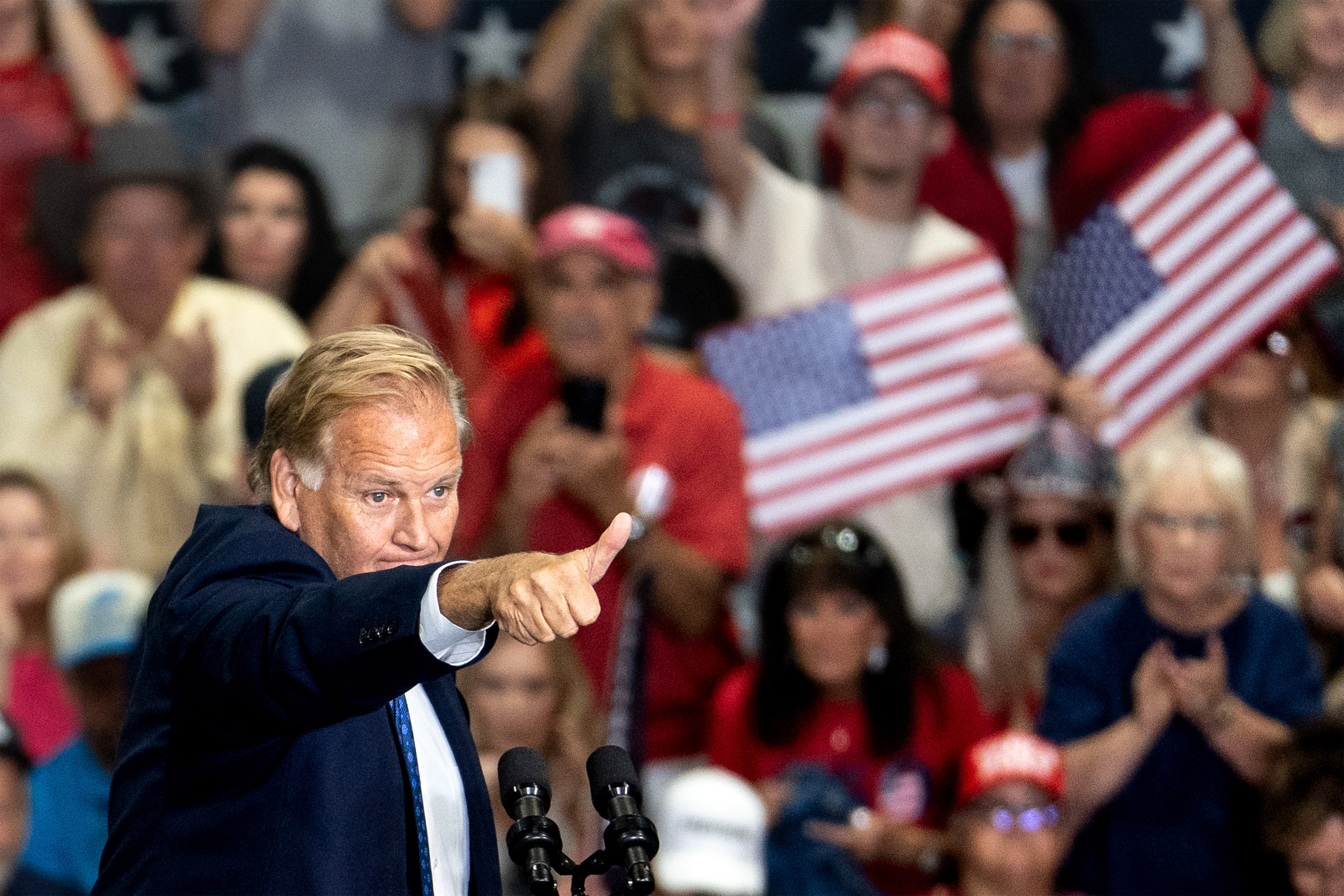
Under Medicare for All, millions of Michiganders with private health insurance would lose that coverage, he said. Pointing to estimates that Medicare for All would cost some $4 trillion per year, he said, “Guess what? People pay for that.” (A recent preprint study from Yale researchers found that the cost of implementing Medicare for All, estimated at $4.2 trillion, would save about $1 trillion in healthcare spending.) Rogers’ campaign declined an interview request from KFF Health News.
Concerns about increased taxation, disruption to the current system, and reduced access to services can make Medicare for All a political liability in a close election, Oberlander said. “It doesn’t matter if the fears that they’re spreading are actually accurate,” he said. “Politically, what matters is if they can scare people.”
But even if El-Sayed wins in November, the chances of Medicare for All replacing the current system “remain very remote in the short to medium term,” Oberlander said.
Given the staunch opposition from Republicans and many moderate Democrats, not to mention the lobbying power of the healthcare industry, massively overhauling the U.S. health system won’t suddenly be achievable because of a single Senate candidate.
Thomas “Jermaine” Carey knows this. A self-described activist, he attended a recent El-Sayed town hall in Detroit feeling “kind of sold out” by what he calls the “straight-ticket” Democratic Party. Medicare for All sounds good, he said. “Do I believe it?” He shrugged.
“It’s still America,” he said. “You still have super PACs, the lobbyists that control everything.”
Source link

