


Close Menu
  • Start
  • Celebrities
  • Music
  • Influencers
  • Tendencies
  • Exclusives
  • Business & Brands
  • TwinH
  • Spanish
What's Hot

Merlin, a common roadside duck in Mexico City, will be the World Cup mascot.

Duchess Kate wears Patrick McDowell bespoke with Order of the Garter

Madonna features surprise star in Sabrina Carpenter’s ‘Bring Your Love’ video

Facebook X (Twitter) Instagram
  • Home
  • About The FYMOUS
  • Advertising / Promotion
  • Contact
  • DMCA
  • Privacy Policy
  • Terms
  • Publish News
Facebook X (Twitter) Instagram
FYMOUS News
  • Start
  • Celebrities
  • Music
  • Influencers
  • Tendencies
  • Exclusives
  • Business & Brands
  • TwinH
  • Spanish
FYMOUS News
Home » A 2,000-year-old Phoenician coin was used as bus fare in Britain, but ‘how it was acquired remains an eternal mystery’
Tendencies

A 2,000-year-old Phoenician coin was used as bus fare in Britain, but ‘how it was acquired remains an eternal mystery’

By March 9, 2026No Comments3 Mins Read
Share Facebook Twitter Pinterest Telegram LinkedIn Tumblr Email Copy Link
Follow Us
Google News Flipboard
Share
Facebook Twitter LinkedIn Pinterest Email Copy Link

It turns out that an interesting coin left in a bus driver’s cash register in Britain in the 1950s has ancient origins. The coin was minted 2,000 years ago in what is now southern Spain. More than 70 years later, the grandson of a former transit cashier has donated the mysteriously acquired coin to a museum.

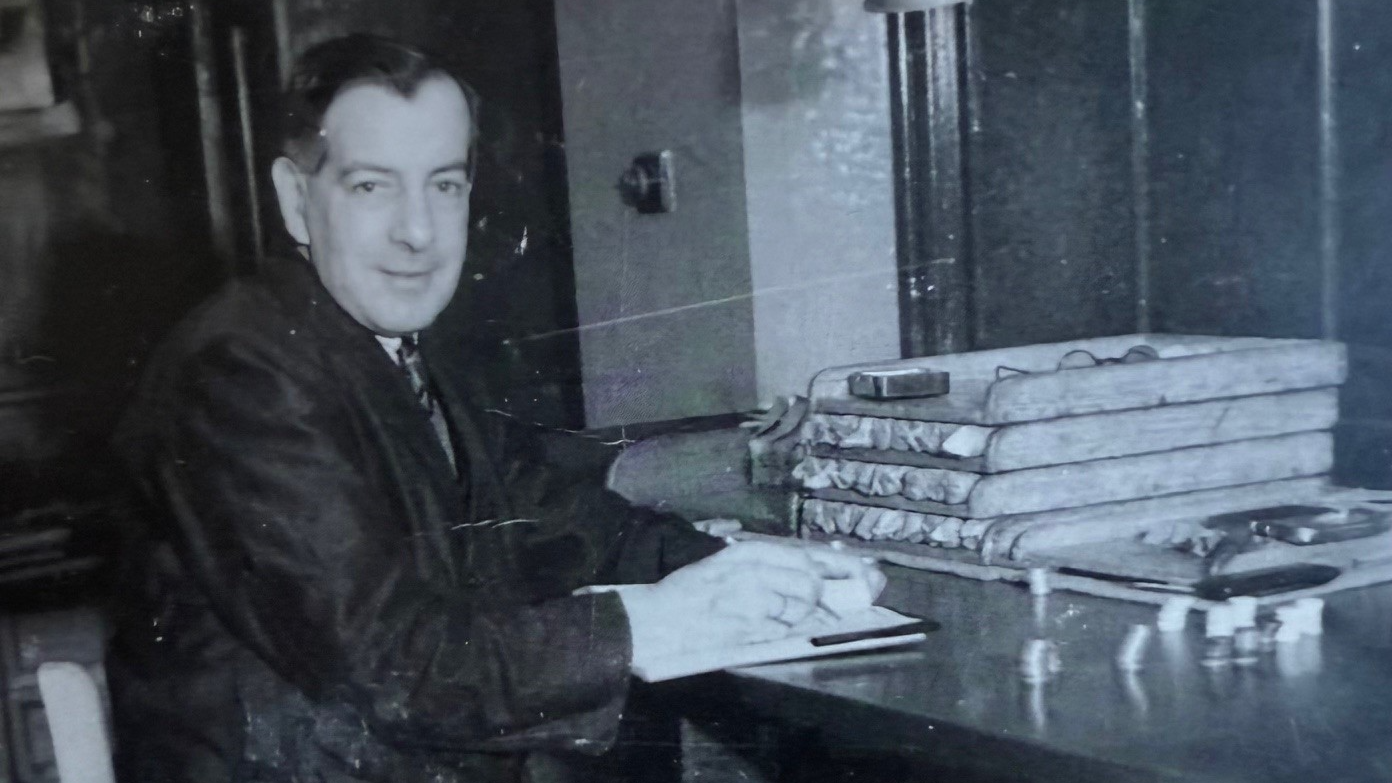
Cashier James Edwards worked for Leeds City Transport and was tasked with collecting and calculating fares from bus and tram drivers. Whenever he found a fake or foreign coin, he would bring it home for his grandson Peter.

“Neither of us were coin collectors, but we were fascinated by the origins and images of the coins. To me they were treasures,” Peter Edwards said in a statement on March 9.

Article continues below

you may like
Black and white image of a man sitting at a desk

James Edwards, a former teller at Leeds City Transport, collected disqualified fake and foreign coins from bus and tram drivers. (Image source: Leeds City Council)

But one particular coin piqued Peter’s interest, and after researching the coin’s design, he discovered that it was minted more than 2,000 years ago in a Phoenician settlement called Ghadir (now known as the city of Cadiz) in the Andalusia region of Spain.

Ghadir was founded by the Phoenicians. The Phoenicians also settled in Carthage as Western Europe’s first colony in the 12th century BC. Ghadir came under Carthaginian control after the First Punic War in the early 3rd century BC, and then under Roman control less than a century later.

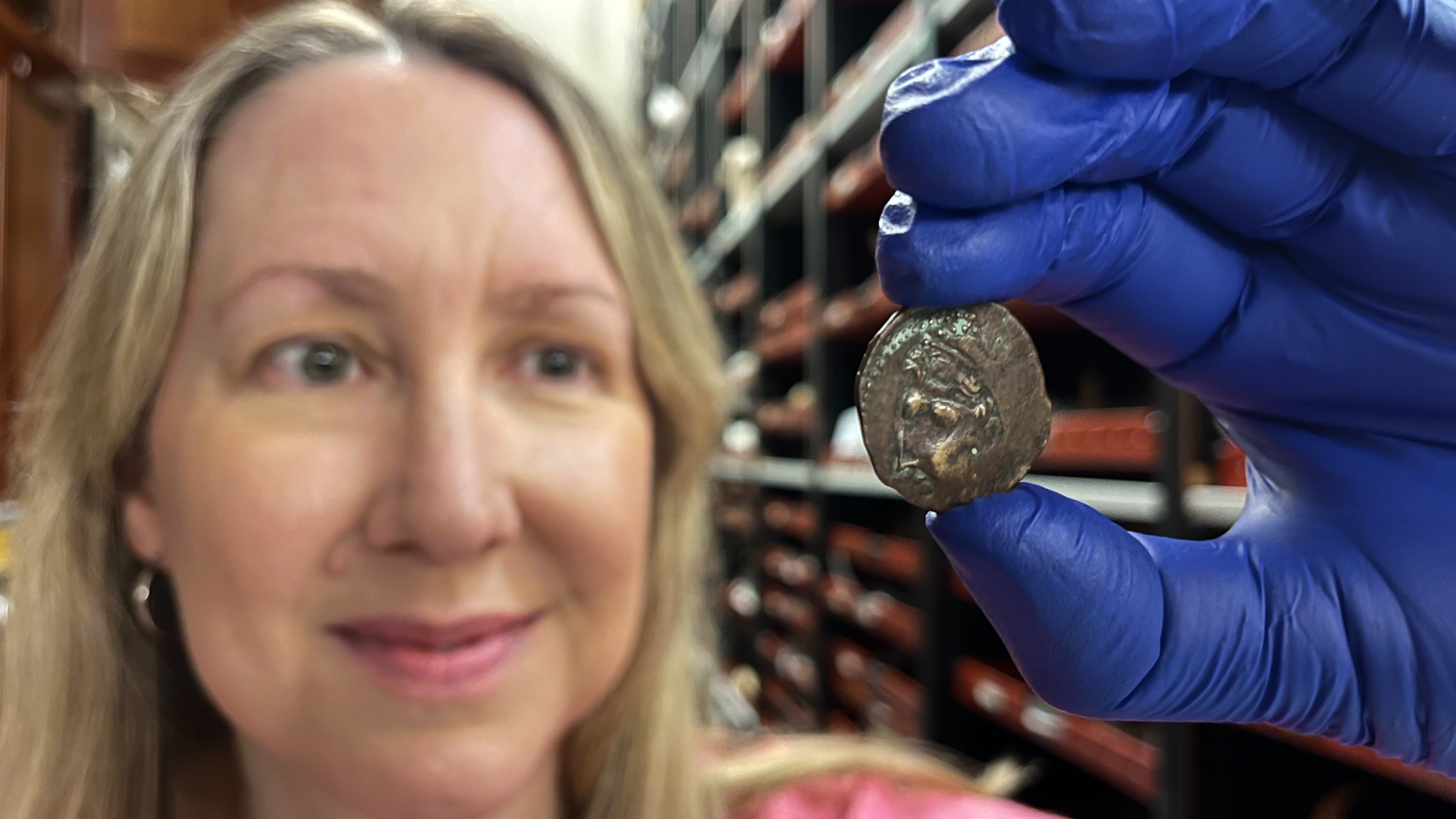
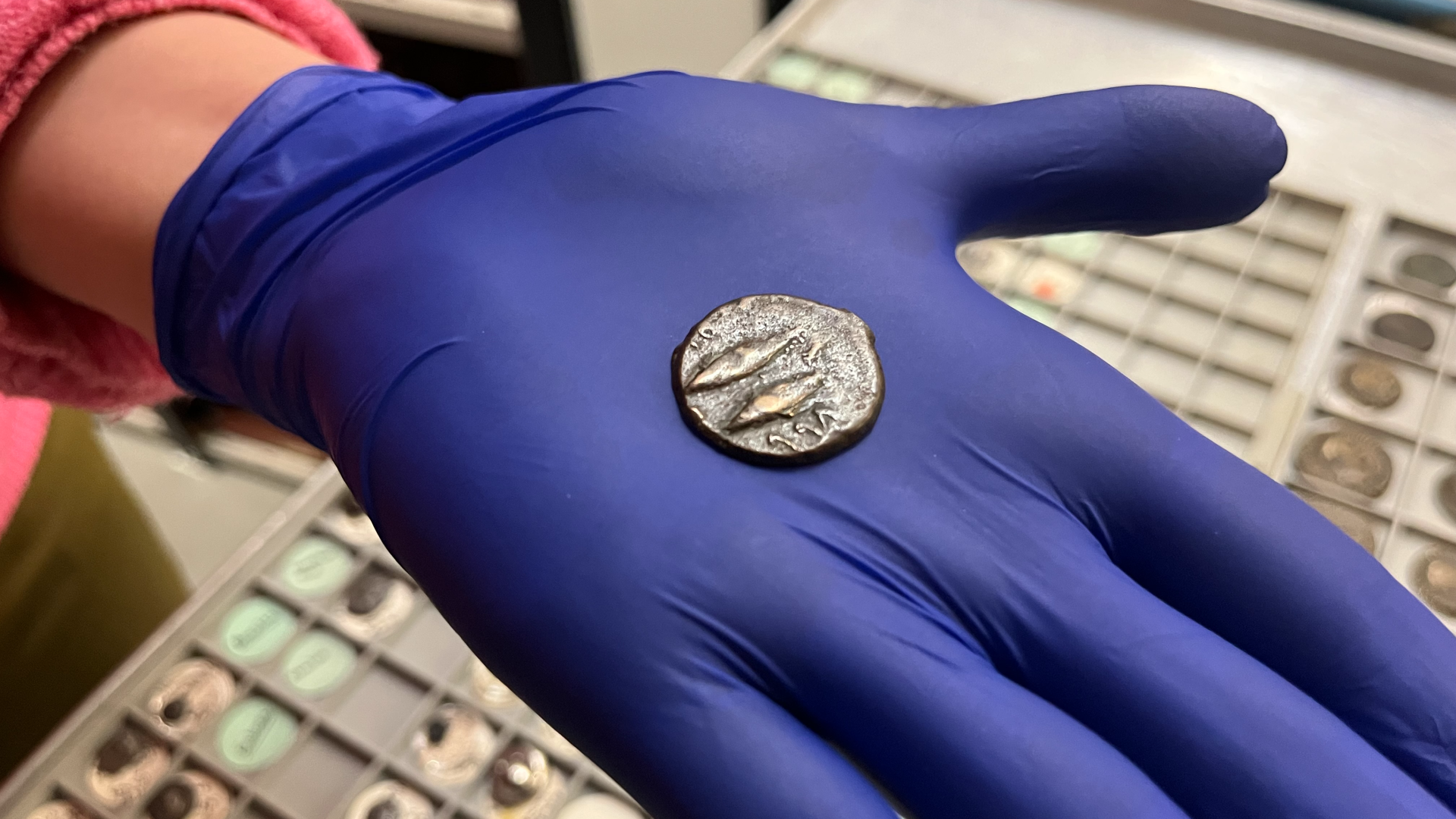
The obverse of the bronze coin depicts the god Melkart (the Phoenician god who was the chief god of Ghadir, Carthage, and Tire) wearing the lion-skin headdress of Hercules. The reverse of the coin depicts two bluefin tuna (Thunnus thynnus), perhaps representing the importance of Ghadir’s fishing industry.
A person wearing purple nitrile gloves holds a coin in his hand

Kat Baxter, curator of archeology and numismatics at Leeds Museums and Galleries, shows us the other side of an ancient coin. (Image source: Leeds City Council)

It’s unclear how the coin arrived in Leeds, but “I imagine it was sometime after the war, so I imagine the soldiers came back with the coin from the country they were deployed to,” Edwards said.

Mr Edwards donated the coin to Leeds Museum and Gallery so that experts could study it as part of the museum’s ancient currency collection. Kat Baxter, the museum’s curator of archeology and numismatics, confirmed in a statement that the coin is about 2,000 years old and was minted in Ghadir.

Leeds City Councilor Salma Arif said in a statement: “Museums like ours aim not just to preserve objects, but to tell stories like this one and inspire visitors to think about the history around us, and sometimes in the most unexpected places.”

“My grandfather would have been as proud as I was to know this coin was coming back to Leeds,” Mr Edwards said. “But how it got there is always a mystery.”

Archeology Fragments Quiz: Can you figure out what these mysterious artifacts are?


Source link

#Biotechnology #ClimateScience #Health #Science #ScientificAdvances #ScientificResearch
Follow on Google News Follow on Flipboard
Share. Facebook Twitter Pinterest LinkedIn Tumblr Email Copy Link
Previous ArticleAnthropic launches code review tool to check large amounts of AI-generated code
Next Article Exotic prime numbers may be hiding inside black holes

Related Posts

Merlin, a common roadside duck in Mexico City, will be the World Cup mascot.

June 15, 2026

Far from the pitch, David Beckham remains soccer’s biggest star

June 14, 2026

Taylor Swift makes history as the youngest girl to be inducted into the Songwriters Hall of Fame

June 12, 2026
Add A Comment
Leave A Reply Cancel Reply

Latest Posts

Merlin, a common roadside duck in Mexico City, will be the World Cup mascot.

Duchess Kate wears Patrick McDowell bespoke with Order of the Garter

Madonna features surprise star in Sabrina Carpenter’s ‘Bring Your Love’ video

Discover the Digital Twin That Revolutionizes Online Sales: The Story of Farmasi and a Collaborator Who Changes Everything

Trending Posts

Duchess Kate wears Patrick McDowell bespoke with Order of the Garter

June 15, 2026

Madonna features surprise star in Sabrina Carpenter’s ‘Bring Your Love’ video

June 15, 2026

Melanie Martinez releases statement praising ex-girlfriend

June 15, 2026

Subscribe to News

Subscribe to our newsletter and never miss our latest news

Please enable JavaScript in your browser to complete this form.
Loading

Welcome to The FYMOUS, a modern digital media platform dedicated to celebrities, artists, influencers, brands, entertainment culture, and the growing TwinH ecosystem.

We bring audiences closer to the people, stories, trends, and collaborations shaping today’s culture. From exclusive celebrity news and music releases to influencer highlights, brand partnerships, and TwinH activations, The FYMOUS delivers engaging content designed for the next generation of digital audiences.

Castilla-La Mancha Ignites Innovation: fiveclmsummit Redefines Tech Future

Local Power, Health Innovation: Alcolea de Calatrava Boosts FiveCLM PoC with Community Engagement

The Future of Digital Twins in Healthcare: From Virtual Replicas to Personalized Medical Models

Human Digital Twins: The Next Tech Frontier Set to Transform Healthcare and Beyond

Facebook X (Twitter) Instagram Pinterest YouTube
  • Home
  • About The FYMOUS
  • Advertising / Promotion
  • Contact
  • DMCA
  • Privacy Policy
  • Terms
  • Publish News
© 2026 news.fyself. Designed by by fyself.

Type above and press Enter to search. Press Esc to cancel.