
Andrew Scott Talks, ‘Heated Rivalry,’ Queer Joy and AIDS Stigma
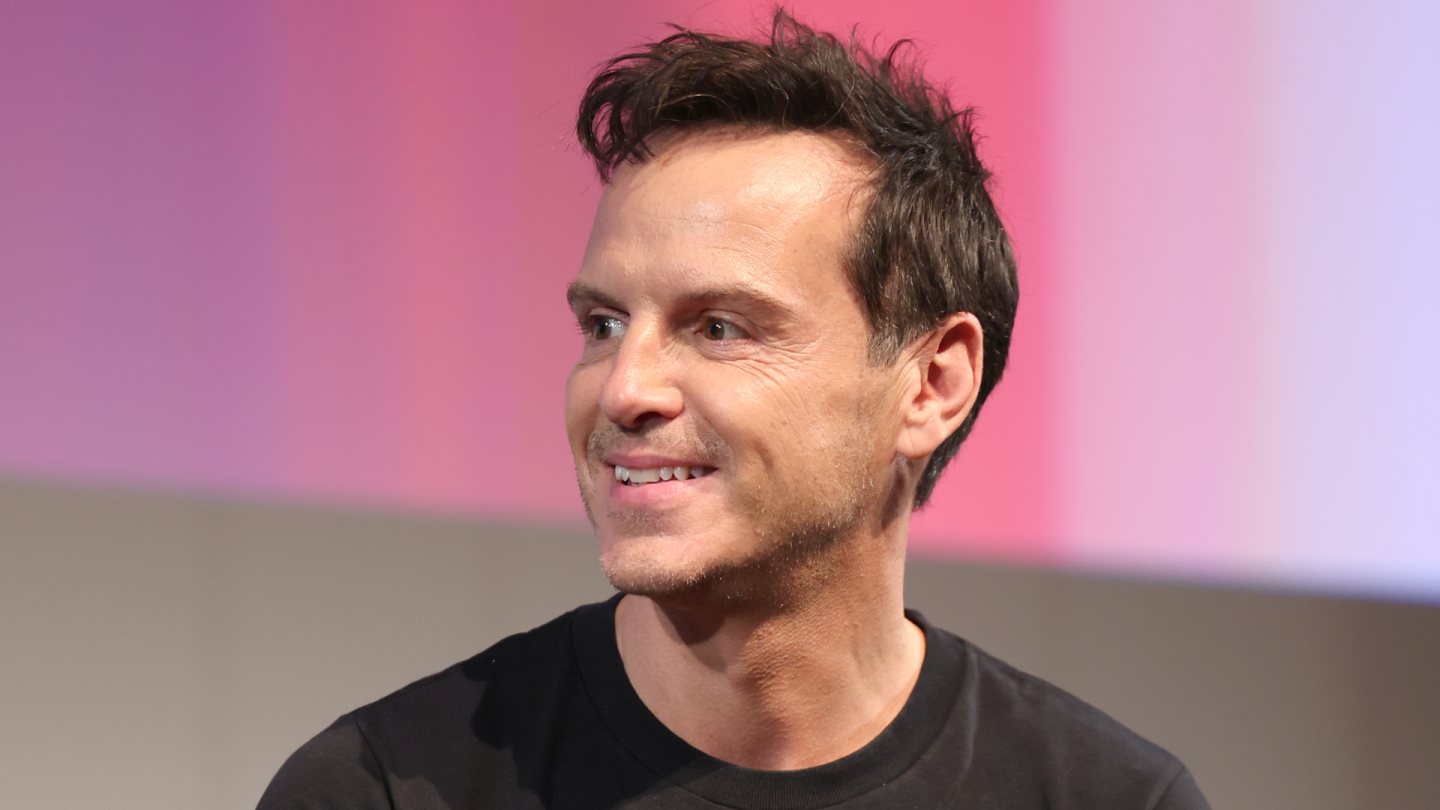
Hot on the heels of the European premiere of Elsinore, lead actor — and definitive awards frontrunner — Andrew Scott sat down for a career-spanning conversation at London’s BFI Southbank Thursday afternoon.
Scott’s tearjerker opened the 70th BFI London Film Festival Wednesday night, as the Irishman was joined by co-stars Olivia Colman, Billie Piper, Johnny Flynn, Luke Thompson and Joe Locke on the red carpet. He was emotional on stage following the feature’s screening and brought out the real-life people who inspired particular Elsinore characters, including Colman’s Professor Margaret Johnson, a pioneer of HIV/AIDS treatment in the late ’80s, as well as the National Theatre’s stage door keeper of 46 years Linda Tolhurst, and Ian Charleson’s sister, Lizzie.
Simon Stone’s Elsinore, from Pride‘s Stephen Beresford, follows the late Ian Charleson’s final weeks before his death from AIDS playing Hamlet at London’s National Theatre in 1989. The gala at this year’s London Film Fest was especially poignant for audiences, with the Royal Festival Hall just a stone’s throw from the NT.
Scott covered all bases in Thursday’s Screen Talk session, from playing James Moriarty in the BBC’s contemporary Sherlock revival to solidifying himself as an undeniably magnetic lead presence with his role as the Hot Priest in Phoebe Waller-Bridge’s Fleabag. His recent credits include All of Us Strangers (2023), Blue Moon (2025), Wake Up Dead Man (2025) and Pressure (2026), some of which he also spoke about in depth.
One of the session’s most memorable moments was when Scott, who is openly gay, was probed on the discourse that queer joy is dominating cinematic storytelling. He said: “I welcome things like Heartstopper and Heated Rivalry and Red, White, and Royal Blue and all those things that are joyful. I really, really, really do. And I think the fact that there’s lots of different types of gay drama, so to speak, on film [and] television is extraordinary.”
He continued about those who lament the return to “sad gays” with a project like Elsinore: “It troubles me a little bit because I think people perhaps don’t want to go back to a time when you’re talking about the AIDS crisis, or you’re talking about [a time] when it was incredibly difficult for gay people. I think that sometimes comes from a place of shame. You go, ‘I don’t want to go back there. I don’t want to see that anymore.’ There’s something a little troubling about that for me, to say: ‘I don’t want to go and see something that was a difficult time.’ Because the shame does not lie with the gay people. The shame lies with the governments who ignored the AIDS crisis and the stigma that was around people and the innate prejudice that was in society. That’s someone else’s shame,” said the actor defiantly as the room applauded.
Scott was beaming about Wednesday night’s premiere and described it as a “very, very, very special evening.” It is a surprisingly personal project for Scott, who is also a producer on Elsinore. He famously played Hamlet for 150 shows at London’s Almeida Theatre in 2017, and found the process grueling. “Everybody knows this, but [Hamlet] is three hours and 45 minutes long. We do it twice on a Wednesday and twice on a Saturday. I’ve played the part myself,” he said. “It absolutely knocks the stuffing out of you.”
He continued about the “Olympian” achievement of Charleson’s: “The idea that he did that when he had no immune system is so genuinely… the physical and psychological toll that must have taken on him. But in another way, it enlivened him, and I could sort of understand that.” Scott said one particular element he found so awful was Charleson’s swollen face from septicaemia, a common problem with AIDS patients. “I think he was concerned that people would be like, ‘Oh my god!’ because he was not recognizable necessarily at some stages, and that’s really heartbreaking and almost humiliating. I can imagine that he thinks this is going to be a humiliating experience to come out and have everybody facing the same direction — at you. The bravery of that, at a time when having that particular disease felt like there was some sort of blame attached to it,” said Scott.
Naturally, when discussing the likes of Sherlock, Fleabag and All of Us Strangers, he gushed over his co-creatives Benedict Cumberbatch, Phoebe Waller-Bridge and Paul Mescal. He felt the same working with Colman: “Not just Olivia, but seeing all those people, Phoebe and Paul and Benedict… Actors are the loves of my life in some way,” said Scott. “I love actors… They’re fun and brilliant people. If you are feeling awful when you go on stage, the actors are always there. But Ian Charleson, I know without a doubt that when he told them about [his AIDS diagnosis], the outpouring of support from the theater community, when there wasn’t a lot of support for anybody, was extraordinary. And I’m proud of that. The film sort of addresses that.”
He’s still admittedly in disbelief over how huge Sherlock was, and how it changed his career. “I’d been in lots of things before — film, theater, everything, but that was just seen across the world. It was in 230 countries across the world. It was an instantaneous hit with the public, and also the critics seemed to like it. So it certainly change things for sure.”
Scott reflected on being torn between pursuing painting or acting as a 17-year-old, and confessed to feeling like his late mother was the most influential creative presence he’s ever had. “Audiences are very discerning, and she was just an example of somebody who loved the theater, loved films, and loved everything about it, but lived a sort of so-called small life. But [she] had a giant effect on somebody who did go into the arts — her son, and my sister is in the arts too — so I guess that local theater groups and art galleries and book clubs and all that stuff matters so much because it’s inspiring and the world might get bigger, but the passion is exactly the same.” Again, the room rewarded the actor’s rallying cry with ardent applause.
Understandably, Scott was also asked about his producing aspirations — he loved the experience and plans to do it again — and his “processes” as an actor. He doesn’t consider himself a method actor, but is able to draw on his “sensitivities” and enjoys diving into a character without knowing too much. “What’s so extraordinary about Fleabag and the Priest and the Godmother and all those characters,” he explained, “[is] they don’t even have a name. We don’t know anything about them. We don’t know their backstory. I think sometimes backstory is overpraised, and sometimes I like, depending on the project, to know as much as the audience does.”
The B70th FI London Film Festival runs Oct. 7-18.
Source link

