
Close Menu
  • Start
  • Celebrities
  • Music
  • Influencers
  • Tendencies
  • Exclusives
  • Business & Brands
  • TwinH
  • Spanish
What's Hot

BTS’s “Come Over” was chosen as this week’s best new song

Laverne Cox brings back Mugler’s 2001 spider dress at Seattle Pride Gala

Far from the pitch, David Beckham remains soccer’s biggest star

Facebook X (Twitter) Instagram
  • Home
  • About The FYMOUS
  • Advertising / Promotion
  • Contact
  • DMCA
  • Privacy Policy
  • Terms
  • Publish News
Facebook X (Twitter) Instagram
FYMOUS News
  • Start
  • Celebrities
  • Music
  • Influencers
  • Tendencies
  • Exclusives
  • Business & Brands
  • TwinH
  • Spanish
FYMOUS News
Home » “Big Butt Starfish,” “Small Sweet Potatoes,” and dozens of unprecedented species recorded during deep sea expeditions off the coast of Argentina are recorded.
Tendencies

“Big Butt Starfish,” “Small Sweet Potatoes,” and dozens of unprecedented species recorded during deep sea expeditions off the coast of Argentina are recorded.

By August 5, 2025No Comments3 Mins Read
Share Facebook Twitter Pinterest Telegram LinkedIn Tumblr Email Copy Link
Follow Us
Google News Flipboard
Share
Facebook Twitter LinkedIn Pinterest Email Copy Link

A deep sea expedition off the coast of Argentina produced more than 40 surprising footage.

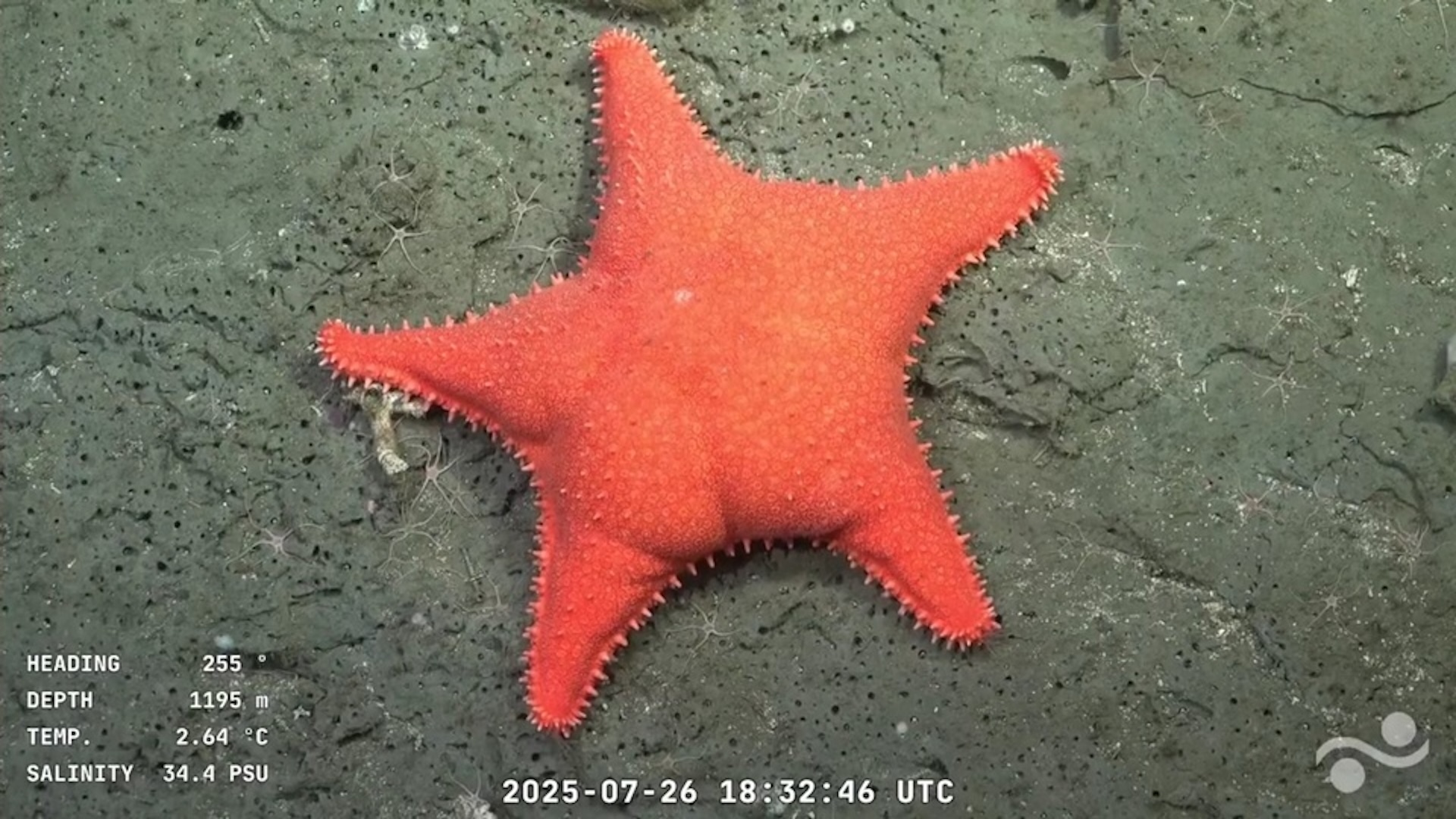
One of the show’s unexpected stars is a plump sea creature called “Big Butt Starfish” because of its creepy similarity to Patrick Star in “SpongeBob SquarePants.”

During a dive of the remotely operated vehicle (ROV) Subastasian at the Mar del Plata submarine Canyon in Argentina, which has been operating since July 23rd, scientists will board the accompanying research vessel, providing real-time commentary on the rarely seen deep-sea life. The dive revealed carnivorous sponges, translucent fish, brightly colored rays and corals. This has never been recorded in the South Atlantic, a biodiversity hotspot that has never been recorded in the South Atlantic.

You might like it

A viral hit on social media, Seastar belongs to the genus hippasteria, known for its thick central disk and short stubborn arms. During the live stream, viewers interacting via chat gave the affectionate nickname “Estrella Crona.”

Argentine scientists involved in the expedition provided several hypotheses for the anatomy that attracts the attention of the creature. Starfish may simply be well fed. They are greedy carnivorous animals. Or its round appearance could be a result of gravity. This is because the center disc was photographed on a vertical surface where it hangs downwards, creating the illusion of the glut area.

Starfish do not have the rear ends like humans and other bilateral symmetrical animals. Instead, they place their mouths under the central disc to show radial symmetry. The lower or “oral” surface is pushed against the seabed where feeding occurs. The anus is located in the center of the upper part, or on the “aboral” surface. This is the first thing a diver sees when approaching an animal.

Related: “Unconcretized Head Walking Around the Sea Bed of Lips”: Scientists finally solve what a starfish is

Get the world’s most engaging discoveries delivered straight to your inbox.

“Starfish have a full digestive system and anus, but that’s not where people point out on social media,” Mariella Romanelli, a biologist and curator of the Invertebrate Collection at the National Museum of Natural Sciences of Argentina, told the local Spanish news site Infobae. “Even so, it’s pretty hilarious to resemble Patrick Star’s ass.”

Leading by scientists from the National Council on Science and Technology Research and Schmidt Ocean Institute that captivated the masses, the starfish are not the only creatures from the expedition. Another deep-sea creature captured by camera was a violet sea cucumber, belonging to the genus Benthosites.

So far, the expedition has recorded at least 25 species of fish, both bone and cartilage. A carnivorous sponge that has never been recorded in the South Atlantic. Crustaceans and other invertebrates specially adapted to black and black depths.

The live stream, which will first air from nearly 13,100 feet above sea level (4,000 meters), continues until August 10th and can be viewed on the official Schmidt Ocean Institute YouTube channel.


Source link

#Biotechnology #ClimateScience #Health #Science #ScientificAdvances #ScientificResearch
Follow on Google News Follow on Flipboard
Share. Facebook Twitter Pinterest LinkedIn Tumblr Email Copy Link
Previous ArticleOpenai launches two “open” AI inference models
Next Article For the first time, OpenAI models are available on AWS

Related Posts

Far from the pitch, David Beckham remains soccer’s biggest star

June 14, 2026

Taylor Swift makes history as the youngest girl to be inducted into the Songwriters Hall of Fame

June 12, 2026

Disclosure Day review: Spielberg’s thrilling yet laborious epic will leave you feeling left out

June 11, 2026
Add A Comment
Leave A Reply Cancel Reply

Latest Posts

BTS’s “Come Over” was chosen as this week’s best new song

Laverne Cox brings back Mugler’s 2001 spider dress at Seattle Pride Gala

Far from the pitch, David Beckham remains soccer’s biggest star

Cardi B, Fat Joe and other musicians react

Trending Posts

BTS’s “Come Over” was chosen as this week’s best new song

June 15, 2026

Laverne Cox brings back Mugler’s 2001 spider dress at Seattle Pride Gala

June 14, 2026

Cardi B, Fat Joe and other musicians react

June 14, 2026

Subscribe to News

Subscribe to our newsletter and never miss our latest news

Please enable JavaScript in your browser to complete this form.
Loading

Welcome to The FYMOUS, a modern digital media platform dedicated to celebrities, artists, influencers, brands, entertainment culture, and the growing TwinH ecosystem.

We bring audiences closer to the people, stories, trends, and collaborations shaping today’s culture. From exclusive celebrity news and music releases to influencer highlights, brand partnerships, and TwinH activations, The FYMOUS delivers engaging content designed for the next generation of digital audiences.

Castilla-La Mancha Ignites Innovation: fiveclmsummit Redefines Tech Future

Local Power, Health Innovation: Alcolea de Calatrava Boosts FiveCLM PoC with Community Engagement

The Future of Digital Twins in Healthcare: From Virtual Replicas to Personalized Medical Models

Human Digital Twins: The Next Tech Frontier Set to Transform Healthcare and Beyond

Facebook X (Twitter) Instagram Pinterest YouTube
  • Home
  • About The FYMOUS
  • Advertising / Promotion
  • Contact
  • DMCA
  • Privacy Policy
  • Terms
  • Publish News
© 2026 news.fyself. Designed by by fyself.

Type above and press Enter to search. Press Esc to cancel.