
EU PFAS regulation approaches as ECHA backs regulation
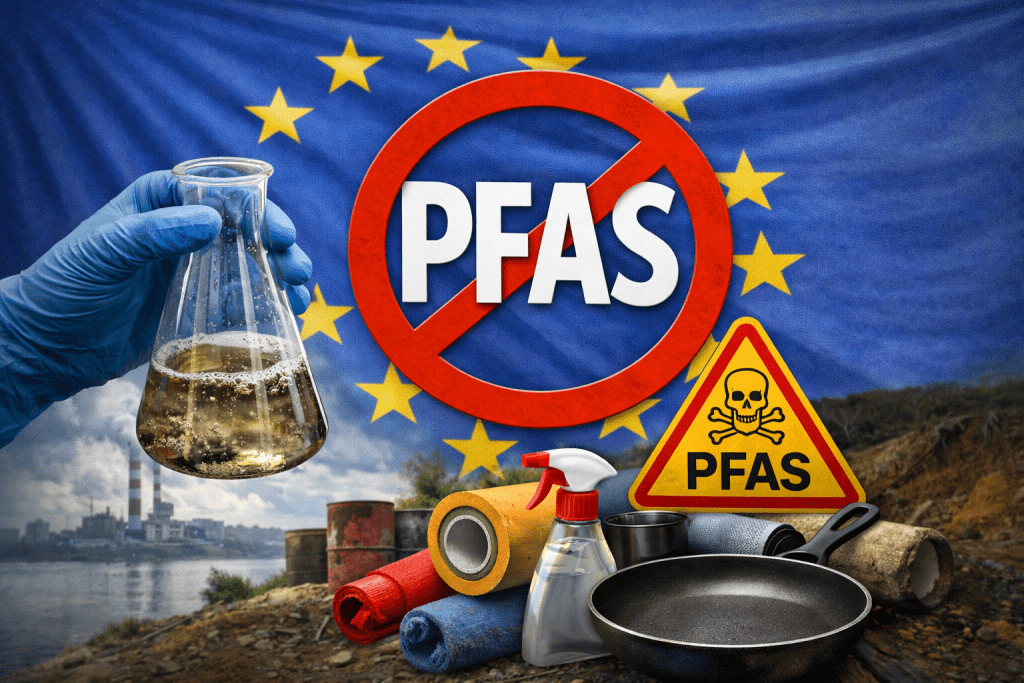
The commission, operating under the European Chemicals Agency (ECHA), concluded that existing regulations are insufficient to control emissions of per- and polyfluoroalkyl substances (PFAS), a class of industrial chemicals widely used for their resistance to heat, water and oil.
Their assessment is now being fed into a wider regulatory process, potentially leading to one of the most far-reaching chemicals regulations ever in the EU.
Scientific committee agrees on the need for EU-wide PFAS limits
The Risk Assessment Committee (RAC) has finalized its scientific opinion, determining that PFAS pose an increasing long-term risk to both human health and ecosystems.
These substances are known to be extremely persistent, accumulating in soil and groundwater and able to migrate far beyond their original source.
RAC findings show that some PFAS compounds are associated with serious health effects, including cancer and reproductive toxicity. The Commission concluded that the current regulatory framework does not adequately limit emissions, reinforcing the need for a coordinated response at EU level.
Meanwhile, the Socio-Economic Analysis Committee (SEAC) published a draft opinion broadly supporting PFAS regulation across the EU market. However, it emphasizes that exemptions or exemptions may be necessary if viable alternatives are not yet available.
Balancing risk mitigation and industrial realities
A central question for the proposed restrictions is how to balance critical uses of PFAS with critical industries. SEAC’s draft analysis highlights the wide application of PFAS in sectors from manufacturing to consumer goods, complicating uniform regulation.
The commission argues that targeted exemptions may be justified where the socio-economic benefits outweigh the risks and substitution is not possible.
At the same time, it emphasizes the importance of avoiding a fragmented national approach and maintaining a level playing field across the EU internal market.
Both committees have reached an opinion on the need for risk management measures associated with the exemption. These include requirements for industrial users to monitor and report emissions, implement site-specific management plans and improve supply chain transparency.
Proposed controls focus on emissions and accountability
To limit releases to the environment, RAC recommends a series of operational controls associated with the permitted use of PFAS. These include:
Monitoring and reporting of emissions from industrial sites Clear communication throughout the supply chain regarding PFAS use Labeling for consumers to guide safe handling and disposal Developing site-specific management plans for manufacturers
Such measures are intended to ensure that the environmental footprint of PFAS is strictly controlled even as they continue to be used.
RAC President Roberto Scazzola commented: “RAC’s final opinion and the scientific evidence make clear that PFAS can pose risks to people and the environment if not properly managed.
“EU-wide regulation is therefore an effective means to reduce these risks. Where deviations are permitted, RAC will recommend measures to minimize PFAS emissions.”
However, SEAC notes that it has not yet reached a final conclusion on whether these measures are proportionate, citing gaps in available data. This uncertainty is likely to be a focus at the consultation stage.
SEAC Chair Maria Ottati added: “While supporting broad restrictions on PFAS, SEAC’s draft opinion recognizes the need for targeted exclusions to keep measures proportionate and enforceable.
“This balanced approach reduces PFAS emissions, but allows certain uses to continue even if an immediate ban would have more negative impacts than positive impacts overall.”
Consultations will begin as the decision schedule progresses
A 60-day public consultation on SEAC’s draft opinion is currently underway and will run until May 25, 2026. Stakeholders, including industry representatives, researchers, non-governmental organizations, and the general public, are invited to provide evidence-based feedback.
ECHA publishes supporting materials such as guidance documents and PFAS use mapping to enable contributors to provide relevant views. The agency has indicated that high-quality submissions are critical in refining the final socio-economic assessment.
SEAC plans to adopt a final opinion by the end of 2026, taking into account new evidence gathered during the consultations.
Next steps towards EU law
Once completed, the commissions’ final opinions will be submitted to the European Commission, which will draft legislative proposals to limit PFAS.
The proposal will then be considered by the REACH Committee, made up of representatives from EU Member States, before being formally adopted.
This process highlights the scale and complexity of PFAS regulation. With increasing scientific evidence and growing regulatory momentum, the EU appears to be moving steadily towards stricter regulation of one of the most challenging groups of substances in modern chemical policy.
Source link

