
Close Menu
  • Home
  • Identity
  • Inventions
  • Future
  • Science
  • Startups
  • Spanish
What's Hot

Advanced materials made in space could benefit UK industry

How top CISOs can overcome burnout and speed up MTTR without hiring more people

Bloody Wolf uses NetSupport RAT in spear phishing campaign to target Russian Uzbekistan

Facebook X (Twitter) Instagram
  • Home
  • About Us
  • Advertise with Us
  • Contact Us
  • DMCA
  • Privacy Policy
  • Terms & Conditions
  • User-Submitted Posts
Facebook X (Twitter) Instagram
Fyself News
  • Home
  • Identity
  • Inventions
  • Future
  • Science
  • Startups
  • Spanish
Fyself News
Home » How to see two total solar eclipses in the next two years, including the “eclipse of the century”
Science

How to see two total solar eclipses in the next two years, including the “eclipse of the century”

userBy userJanuary 25, 2026No Comments3 Mins Read
Share Facebook Twitter Pinterest Telegram LinkedIn Tumblr Email Copy Link
Follow Us
Google News Flipboard
Share
Facebook Twitter LinkedIn Pinterest Email Copy Link

Although no total solar eclipse has occurred since the Great American Eclipse on April 8, 2024, there will be two total solar eclipses in the next two years.

The first total solar eclipse will grace parts of Greenland, Iceland, and Spain on August 12, 2026. The second solar eclipse will occur on August 2, 2027, in parts of North Africa, southern Spain, and the Middle East, and has been dubbed the “solar eclipse of the century.”

Here’s what you need to know about the back-to-back sky sights.

you may like

Solar eclipse in August 2026
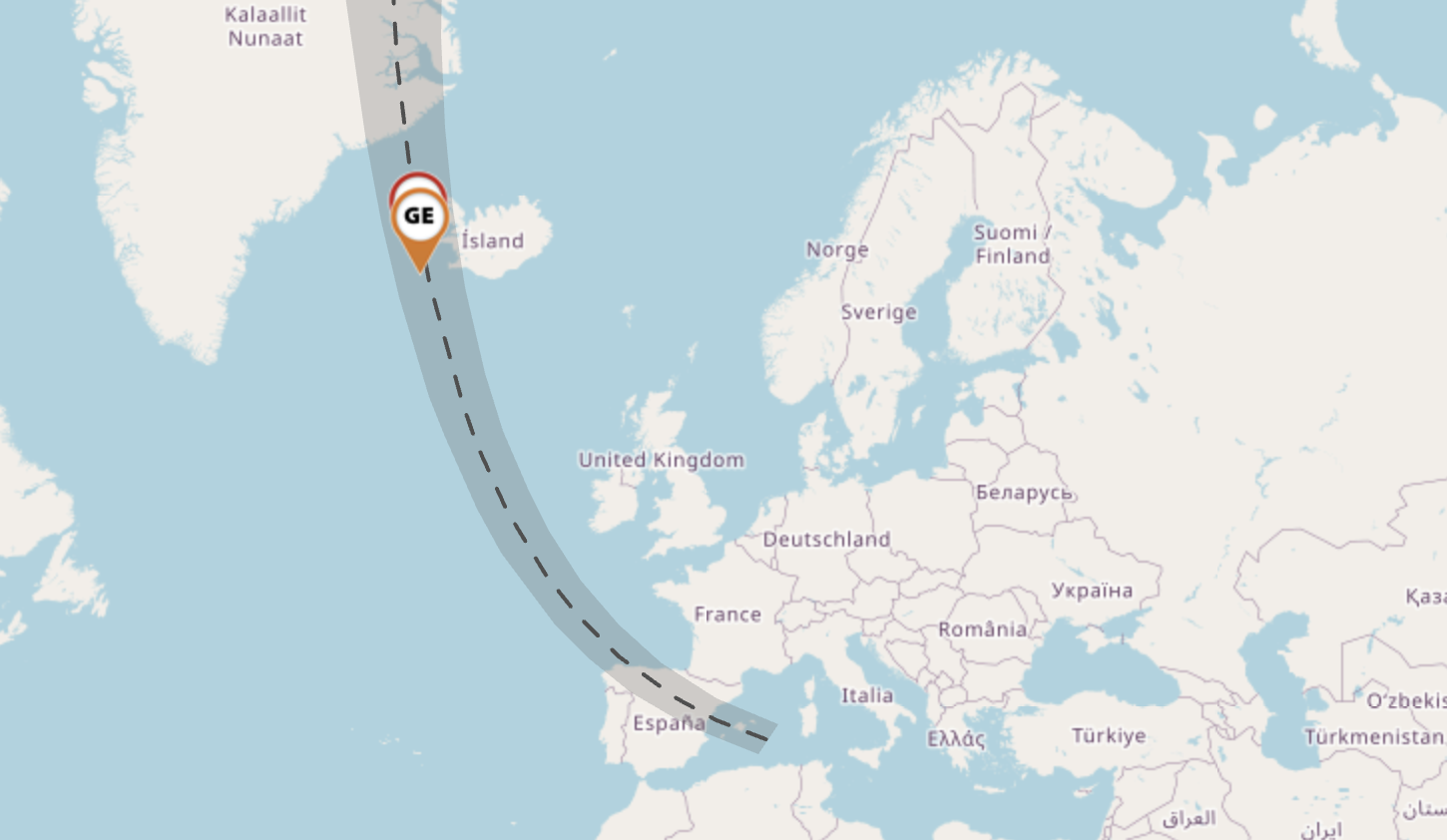
Map of Iceland and Europe showing total orbit for August 2026

Total path in August 2026. “GE” indicates the point of maximum solar eclipse, when the moon appears at its largest in front of the sun. (Image credit: OpenStreetMap Contributor / US NSF National Solar Observatory)

The 2026 total solar eclipse will begin as sunrise in a remote region of northern Siberia, and the path of the total solar eclipse (the path of the moon’s dark central shadow where it will be seen) will pass through eastern Greenland, the west coast of Iceland, and northern Spain, ending as the eclipse sets in the Mediterranean Sea.

For European observers, this will be the first time since 1999 that a total solar eclipse will be visible from mainland Europe. In Spain, cities such as León, Burgos, and Valladolid will be the best places to witness a total solar eclipse.

The eclipse will be visible about 10 degrees above the horizon. This is about the width of your fist with your arms outstretched.

The totality event occurs near sunset, with the sky likely to be clear for both the eclipse and the peak of the annual Perseid meteor shower later that evening. It may be possible to discover meteors in a sky that looks like total twilight within two minutes.

Get the world’s most fascinating discoveries delivered straight to your inbox.

Travelers looking for the longest sailing distance (just over two minutes) might head to Iceland’s Snæfellsnes Peninsula or the fjords of eastern Greenland. At this latitude in August, the nights are too short to reliably spot meteors. However, the aurora may appear during a short night, or perhaps during a fleeting totality.

August 2027: “Solar Eclipse of the Century”
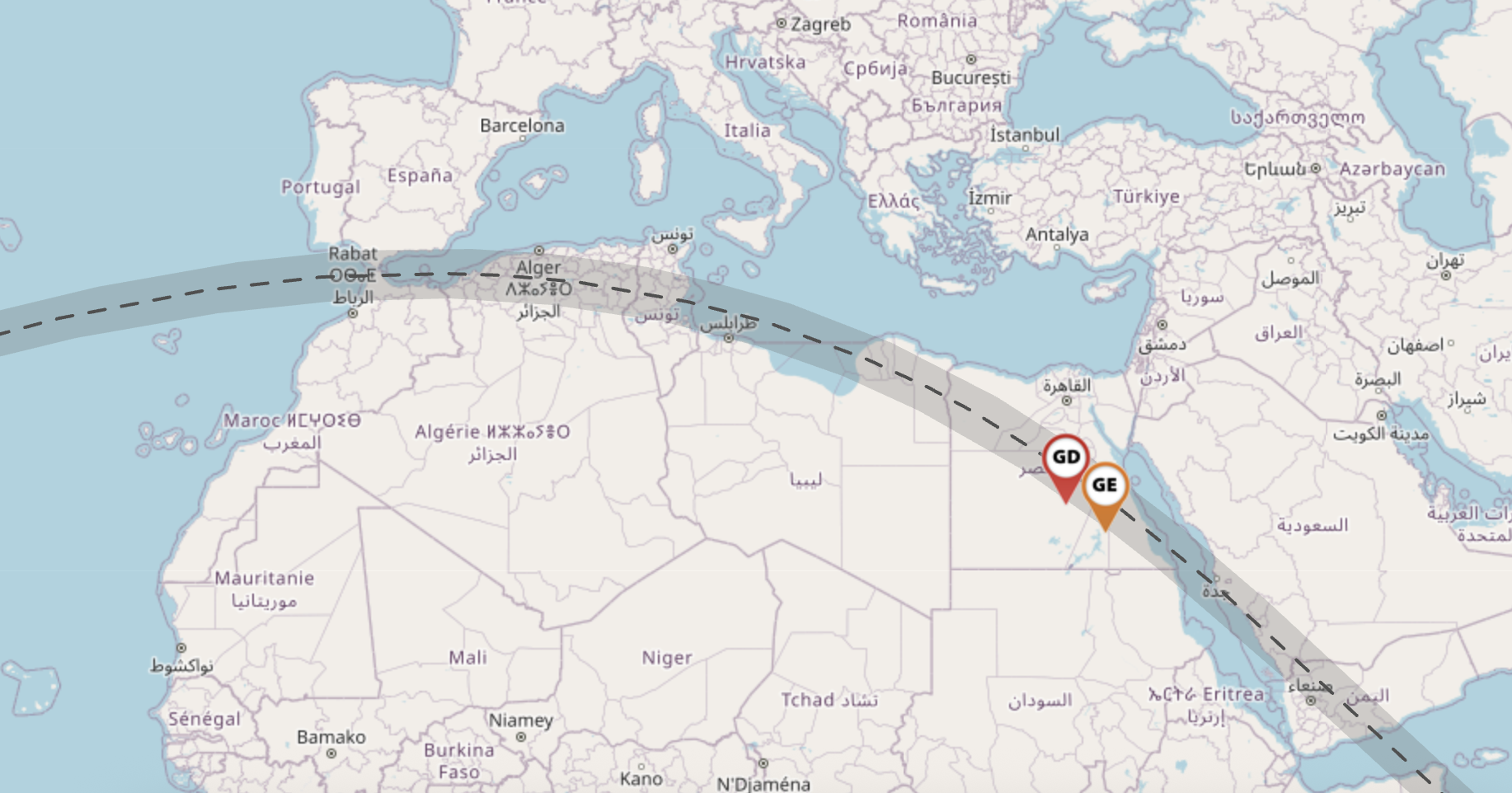
Total orbit in Africa in 2027

Total path in August 2027. “GE” indicates the point of maximum solar eclipse where the moon appears at its largest in front of the sun, and “GD” indicates the point of maximum duration where totality lasts the longest. (Image credit: OpenStreetMap Contributor / US NSF National Solar Observatory)

Every total solar eclipse is special, but the 2027 event is a once-in-a-lifetime spectacle.

The total solar eclipse on August 2, 2027 will last for up to an incredible 6 minutes and 22 seconds and will be visible from the eclipse’s path, which touches parts of Spain, Morocco, Algeria, Tunisia, Libya, Egypt, Saudi Arabia, Yemen, and Somalia.

This solar eclipse has already been hailed as the “eclipse of the century,” with observers near Luxor, Egypt enjoying the longest total solar eclipse of the 21st century. In addition to being the longest total solar eclipse in our time, this event is special for another reason. The weather being in the path of a total solar eclipse means it’s likely to be sunny across the region.

These two total solar eclipses have already excited skywatchers, but a lesser-known total solar eclipse is just around the corner. On 22 July 2028, a total solar eclipse will cross Australia and New Zealand, making Sydney the first to see a total solar eclipse since 1857. Good times are upon us for eclipse enthusiasts around the world.


Source link

#Biotechnology #ClimateScience #Health #Science #ScientificAdvances #ScientificResearch
Follow on Google News Follow on Flipboard
Share. Facebook Twitter Pinterest LinkedIn Tumblr Email Copy Link
Previous ArticleDry climate accelerates East Africa’s breakup
Next Article Antibiotic resistance is a ‘silent pandemic’ — here are four steps to stop it
user
  • Website

Related Posts

‘Maybe they’re waiting for something that only happens thousands of years later’: The hidden life ‘sleeping’ deep beneath Earth for millions of years

February 8, 2026

History of Science: “Father of Modern Genetics” Describes Experiments with Peas That Prove Heredity is Transmitted in Discrete Units – February 8, 1865

February 8, 2026

Anglo-Saxon children found buried with warrior equipment in Britain – perhaps as a nod to ‘the men these children might have become’

February 7, 2026
Add A Comment
Leave A Reply Cancel Reply

Latest Posts

Advanced materials made in space could benefit UK industry

How top CISOs can overcome burnout and speed up MTTR without hiring more people

Bloody Wolf uses NetSupport RAT in spear phishing campaign to target Russian Uzbekistan

European offshore wind power for a competitive EU steel industry

Trending Posts

Subscribe to News

Subscribe to our newsletter and never miss our latest news

Please enable JavaScript in your browser to complete this form.
Loading

Welcome to Fyself News, your go-to platform for the latest in tech, startups, inventions, sustainability, and fintech! We are a passionate team of enthusiasts committed to bringing you timely, insightful, and accurate information on the most pressing developments across these industries. Whether you’re an entrepreneur, investor, or just someone curious about the future of technology and innovation, Fyself News has something for you.

Castilla-La Mancha Ignites Innovation: fiveclmsummit Redefines Tech Future

Local Power, Health Innovation: Alcolea de Calatrava Boosts FiveCLM PoC with Community Engagement

The Future of Digital Twins in Healthcare: From Virtual Replicas to Personalized Medical Models

Human Digital Twins: The Next Tech Frontier Set to Transform Healthcare and Beyond

Facebook X (Twitter) Instagram Pinterest YouTube
  • Home
  • About Us
  • Advertise with Us
  • Contact Us
  • DMCA
  • Privacy Policy
  • Terms & Conditions
  • User-Submitted Posts
© 2026 news.fyself. Designed by by fyself.

Type above and press Enter to search. Press Esc to cancel.