
PNNL launches first battery production line for prismatic batteries in the US
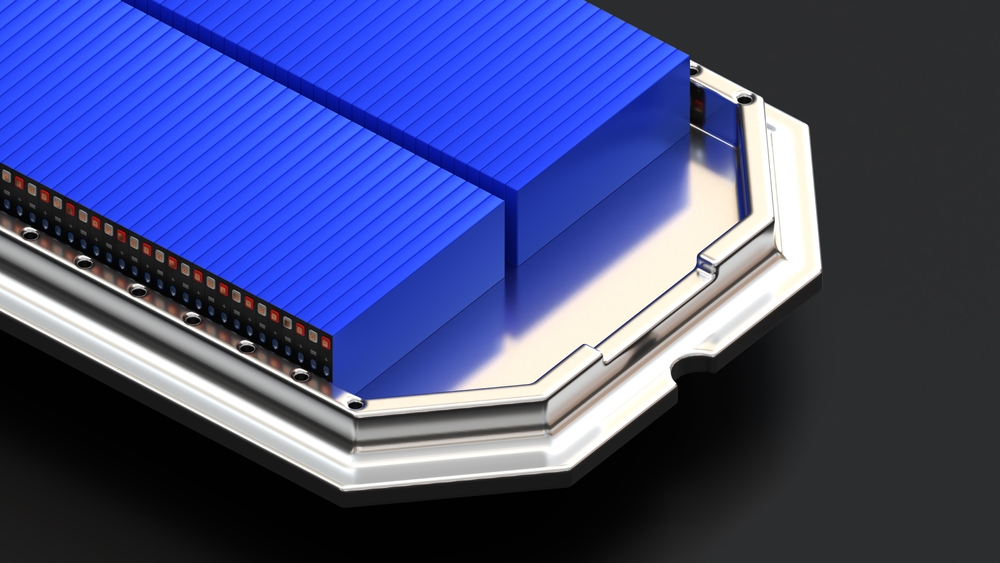
A major new battery manufacturing capability has been unveiled at the U.S. Department of Energy’s Pacific Northwest National Laboratory (PNNL), marking a significant step forward in the development of next-generation energy storage technology.
The researchers have put into operation a dedicated production line specifically designed for prismatic batteries, a key battery type for future grid-scale energy storage systems.
Located within PNNL’s Grid Storage Launchpad, this new facility will enable scientists to manufacture and evaluate prismatic cells at a scale much closer to actual commercial applications.
This capability is expected to help bridge the gap between laboratory research and industrial deployment by allowing researchers and private sector partners to validate new battery designs before they go to market.
With testing completed and operational procedures nearing completion, the production line will initially focus on manufacturing sodium-ion and lithium iron phosphate battery chemistries.
The data obtained establishes performance and safety benchmarks while demonstrating the potential for scaling advanced battery technology from small laboratory prototypes to large-scale commercial formats.
New facility designed for commercial-scale battery research
The newly commissioned production line occupies approximately 1,400 square feet and consists of 16 pieces of specialized equipment. This represents the first prismatic cell manufacturing line established within the US National Laboratory System.
The biggest feature of our facility is its ultra-low humidity environment. Battery materials are extremely sensitive to moisture, and even trace amounts of water can negatively impact performance and reliability.
To prevent contamination, the entire prismatic cell production line operates in a dry laboratory room with lower humidity than some of the driest regions on Earth.
The advanced setup allows researchers to move beyond small-scale battery experiments to assess how promising chemicals will perform when manufactured in larger, commercially relevant formats.
Why square cells are gaining momentum
Battery cells are manufactured in various formats such as coin, pouch, and cylindrical shapes. Although each is used for different applications, prismatic cells are gaining attention in the energy storage field.
Unlike cylindrical batteries, prismatic batteries feature a rectangular shape enclosed within a hard metal case. This design offers several advantages for large-scale energy storage projects.
The metal housing improves heat dissipation, reduces the risk of overheating, and increases overall safety. Better thermal management is especially important for grid-scale systems where thousands of cells may operate simultaneously under harsh conditions.
Prismatic cells also offer packaging efficiency benefits. Their rectangular shape allows them to be stacked more effectively than their cylindrical counterparts, increasing energy density at the battery pack level.
By fitting more energy into a smaller footprint, developers can potentially reduce installation space requirements and reduce system costs.
Industry experts see these properties as key factors driving the increased adoption of prismatic cells in utility-scale energy storage applications.
Scaling up from a lab concept to a market-ready battery
One of the biggest challenges in battery development is moving from small experimental cells to large commercial products.
Battery chemistries that work well in small laboratory coin cells can behave quite differently when scaled up to larger formats. As battery size increases, manufacturing processes, material distribution, thermal management, and mechanical stability all become increasingly complex.
A new prismatic cell line was specifically designed to address this challenge. Researchers can now produce larger battery cells using kilogram quantities of active material, rather than the milligrams typically used in laboratory tests.
This feature provides valuable insight into whether promising battery technologies can maintain performance, reliability, and safety as they approach commercial production.
Sodium-ion and LFP batteries lead initial tests
To demonstrate the capabilities of the new platform, PNNL researchers will first create two types of prismatic cells.
The first uses sodium ion chemistry, which is of great interest because sodium is much more abundant and widely available than lithium. This could help alleviate supply chain pressure and reduce costs for future grid storage projects.
The second relies on lithium iron phosphate (LFP) technology. This chemistry is already gaining popularity because of its strong safety profile and reliance on more readily available materials such as iron rather than nickel or cobalt.
Both types of batteries undergo extensive testing under a variety of operating conditions to evaluate performance, durability, and safety.
Opening the door to industry collaboration
Beyond internal research, the facility is expected to serve as a resource for commercial battery developers seeking independent validation of emerging technologies.
By providing pilot-scale manufacturing and testing capabilities, PNNL aims to help companies de-risk promising battery concepts before investing in full-scale commercial production.
As the demand for reliable energy storage alongside renewable power generation continues to grow, the new production line places prismatic batteries at the center of efforts to develop safer, more efficient and commercially viable battery technology for modern power grids.
Source link

