
Rick Baker Recalls Jim Carrey Grinch Makeup, ‘Thriller’ Video: Locarno
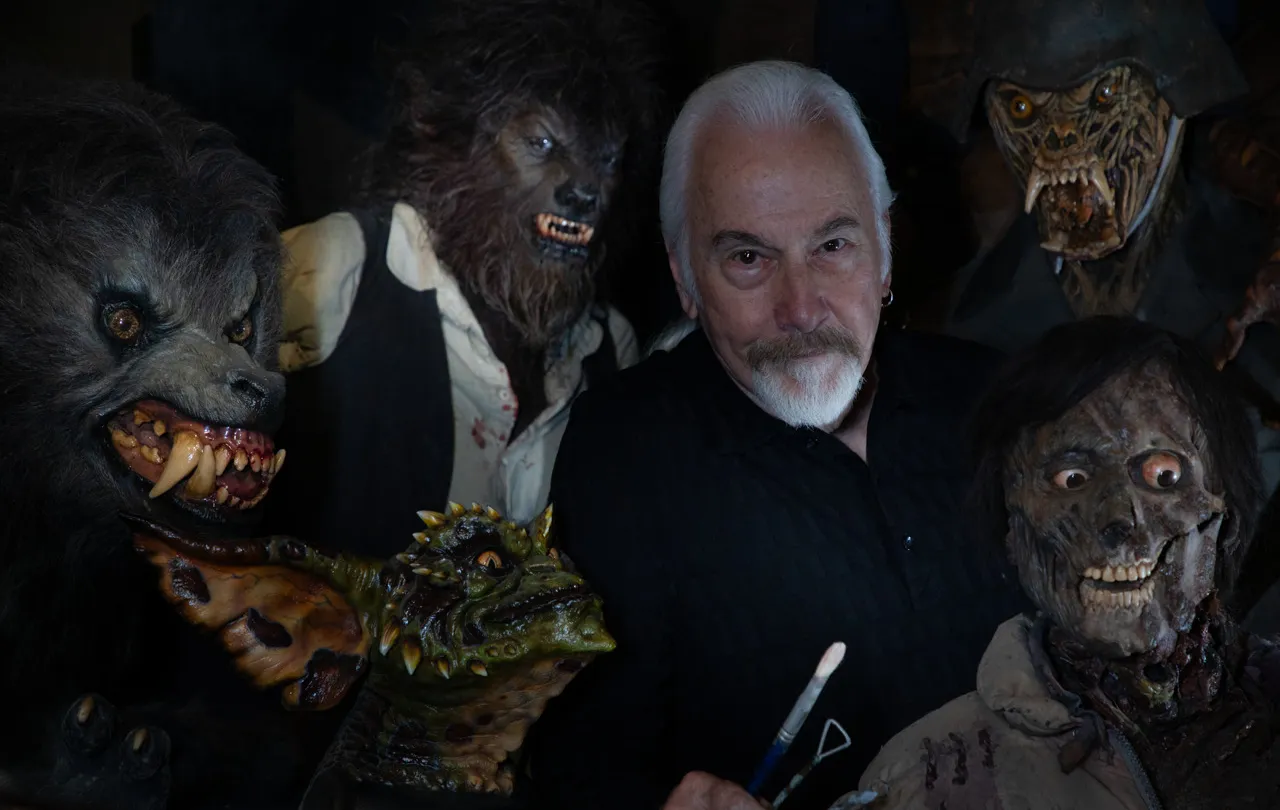
The 79th edition of the Locarno Film Festival will have Oscar royalty in the house on Wednesday evening – well, on its big 8,000-seat square, the Piazza Grande, to be precise. It will bestow its Vision Award, presented by Ticinomoda, upon Rick Baker, a seven-time Oscar winner, a record in the makeup and hairstyling field, and the creator behind some of cinema’s most fantastical creatures.
While at the Swiss festival, Baker is also presenting two key films from his career, namely An American Werewolf in London (1981) and The Nutty Professor (1996). The former marked his first Oscar win in 1981, followed by Harry and the Hendersons (1987), Ed Wood (1994), The Nutty Professor (1996)
Men in Black (1997), How the Grinch Stole Christmas (2000) and The Wolfman (2010).
You also know Baker’s work from Michael Jackson‘s famous Thriller video, in which he also played an on-screen role.
“From his early make-up work on genre films in the 1970s to his sophisticated creature and character designs for large-scale studio productions, Rick Baker has forged a new visual grammar for cinematic metamorphosis, earning him a record number of Academy Awards for best makeup and cementing his status as a reference point for generations of artists,” said Locarno organizers when they first unveiled his honor.
“Rick Baker was responsible for a Copernican revolution in cinema: visionary and revolutionary, he opened new paths for the imagination of entire generations, showing what it truly means to witness physical transmutation on the big screen,” highlighted Locarno artistic director Giona A. Nazzaro. “His filmography includes collaborations with George Lucas and David Cronenberg, Brian De Palma and Joe Dante, Tim Burton and Peter Jackson, John Carpenter and Mike Nichols, among many others.”
Before arriving in Locarno for his festival honor, Baker, 75, talked to THR about some of his best-known creations and some of the wacky experiences he had during his career.
Why did you end up wanting to work in the fields of makeup and transforming the look of actors and other performers?
I grew up in front of the TV. It was that first generation of kids to grow up in front of a TV. I loved those monster movies, and I loved the makeups. In Frankenstein, Boris Karloff just blew me away. Before I realized that makeup artist was what I wanted to be, I used to think I wanted to be a doctor because I wanted to be Doctor Frankenstein. I wanted to be a doctor, and I was going to have a basement laboratory, and I was going to make monsters. But then I grew up a little bit and also found out that I’m extremely squeamish – I don’t like the sight of real blood.
Also, my dad was kind of a ham. He’s actually in Schlock. In the first of the banana murders, there’s a dead guy on the ground. That’s my dad. But [director and star] John Landis redubbed his voice with his own voice.
How did you go about creating the look of a character, especially since you would work with all these made-up characters, such as the Grinch? Does the personality of the actors play into how you create a look at all?
When I got a call from Brian Grazer who said, “We’re going to do How the Grinch Stole Christmas, and we want Jim Carrey to be the Grinch.” I thought that’s great because Jim can make a lot of faces. I almost immediately visualized what it ended up being.
So that was all smooth sailing?
Well, the studio kept saying, “We just want Jim to be painted green.” And I went, “No, that’s going to ruin the movie.” You know, it’s not called How the Green Jim Carrey Stole Christmas. It’s the Grinch, so he should be this recognizable character. It is hard turning a 2D drawing into something. But I took what I could from that and added some Rick Baker to it. But to convince them to go with what I thought was the right way, I did the makeup on myself, filmed it and sent it to them. They went: “Well, it doesn’t look like Jim Carrey!” And I said: ‘Well, it will look more like Jim when it’s on Jim.” I mean, our face is very different. You’re not paying him for the look but for his acting, and he’s going to make this thing a really cool character.
We prepared for 10 different tests – from painting Jim Carrey green to what we eventually ended up with. I eventually felt I had to save these guys from themselves and from making a wrong decision here. I contacted Ain’t It Cool News, and they wrote a post along the lines of: “Rick Baker did this really cool makeup on himself as the Grinch, and Universal wants to paint Jim Carrey green.” And there were thousands of responses. So, two weeks before filming, they decided, okay, we’ll go for it.
Was there any other challenge with the Grinch movie?
Actually, the bigger problem I saw was the Whos, the people in Whoville. In the book, they look almost like insect people, which is going to be too weird. And as Cindy Lou Who, they cast a six-year-old Taylor Momsen. And I said: We can’t put a little girl into a three-hour makeup [session]. So we came up with a whole way that we thought it would all work. I rationalized a lot on the Whos, saying: When they’re little, their nose is more human-like, but as they grow, it moves up their face. So we could just paint her nose a little different color and give her these big teeth and give Cindy the long eyelashes.
Now, she’s a kick-ass rock star. I don’t know if you know. She’s in a band called The Pretty Reckless as the lead singer. She opens for AC/DC. She opened for the [Rolling] Stones. She’s really great. She’s got an incredible voice, and we became friends because I had daughters of the same age, and my daughters are in the Grinch movie too in a couple of scenes.
How did you come up with the ideas for Michael Jackson’s Thriller?
Thriller wasn’t as hard as a lot of other things I’ve done. It was kind of a no-brainer. I had done zombies before. Michael saw American Werewolf, and that’s why he hired John [Landis] as the director. He wanted to transform into a werewolf. Personally, I didn’t think he should be a werewolf. I thought he was much more feline. So I suggested we make him a werecat. I just thought the feline structure fit him much better.
The thing with Thriller was that we had no time and very little money on my end, and it was really just me working my butt off for weeks. Also, the dancers weren’t cast until the very end, and I said to John: “I can’t do what I normally do in a few days with this many people. Normally, we’d take a live mask of the people, sculpt custom appliances for them, mold them, cast them.”
So, he suggested a different solution: “I said I think what I can do is make some generic pieces that really are just in this area of a bandit mask, so you don’t have to deal with the proportions of the nose. We could make big teeth that we could put in them with some denture-like material, but I said that’s not going to be cool enough. So I said we should have featured zombies that are much cooler than the others. My crew and I all had our life casts already. I also had my body cast. So we started doing very cool zombies that we knew would be much more exciting than the dancer zombies. So, I’m in Thriller. My whole crew is also in Thriller. I am the bearded zombie who opens the crypt with my eyes rolled up.
Does it help with your makeup choices that you have put makeup on yourself?
I think it’s important. I think a makeup artist should have been made up, so they know what it’s like on the inside.
And beyond your cameo in Thriller, you have acted a few more times, right?
Yes, I played King Kong in the 1976 King Kong, directed by Federico De Laurentiis and produced by [his father] De Laurentiis, for which I made the suit. And I was determined not to be a whiny, complaining actor in that, like some people are when you put makeup on them. I didn’t have a dressing room. So, I would have to take my street clothes off on the stage and put this bear hide suit on and then sit there and sweat my brains out.
I read that you stepped in to play King Kong late in the process and that there was some debate about whether to use your gorilla suit or another one?
When I was younger, all the information I had about what a gorilla was came from movies, especially the original King Kong, and from any movies in the ’40s. I felt a gorilla was a real-life monster, and I started looking at films with gorilla suits in it and finding books and National Geographics and other things with gorillas in them. When I was younger, I thought I could make a realistic gorilla costume and fool people with it. So I was set on that path. The problem was I grew up very lower-middle-class. So to make a gorilla suit was a really hard thing, but I figured out ways to do it on a budget.
Years later, John Landis and I had become friends, and one day he goes, “Hey, did you hear some Italian guy is going to remake King Kong?” Somehow they got my number and knew that I had made a gorilla costume, and I thought this would be my only opportunity to really have a budget and make a real gorilla suit. This was in the era of disaster movies, and Kong was just another disaster. And they wanted to make him more like a primitive man.
I was 25 years old and went in there. I don’t have a filter. So, I brought in these mechanical gorilla hand extensions so you could have longer arms. They said: “We don’t need that shit. It’s going to be more man-like.” I thought these guys were fucking crazy. If anything, it should be a super gorilla. It should not be less of a gorilla. Kong is the greatest gorilla ever. They would rag on the original movie, and I just said: “You’ll be lucky if you can make anything near that film.” But I was still interested, and I thought I could convince them to change their mind.
But I didn’t hear from them, so I took another film. And as soon as I took the other film, they called me and said, “Yes, we want you to do this.” So I told them I needed six weeks to complete this other thing. When I came back, in the meantime, Dino had hired his friend from Italy, Carlo Rombaldi. They said he was a genius and wanted us to work together. But he didn’t speak English, and I don’t speak Italian. How’s that going to work? And it’s not a good thing to have two bosses.
They wanted us both to make a test suit; we had six weeks. I think I had something like $10,000, which to me was a lot of money back then, so by myself, basically in my garage, I threw away the drawings they gave me, and I made a gorilla suit.
I showed up on the day with my suit, and they were furious. “This looks nothing like what the drawings we gave you. What the hell?” Carlo didn’t have enough time to get the suit done, but he convinced them he could make a 40-foot robot that would do the whole movie. I thought he was delusional.
But they wanted to do some tests, and they only had my suit and me. It fit me, so they, regrettably, were using me as King Kong for the test. But they started to get used to me and the costume and look of the suit. A month later or more, Carlo got his suit done, and it was much more like the drawings they gave us, but it was a disaster. For example, my suit had a mechanism where I could control the mouth with my own jaw movements. His suit didn’t have any such mechanism.
And John Guillerman, the director, said, “Rick, put your suit on.” And he looked at Carlo’s suit and me. And then he was pointing at mine and said, “Yeah, this is better.” So they picked mine. From there, it was a team effort, but I designed it. And I played King Kong, but the publicity was about a giant robot, so they didn’t want anybody to know that it was this 25-year-old kid in a gorilla costume.
You are retired, but do you still do any acting or so?
I have done a few things, but just for friends, mostly. My wife and I are in the latest Anthrax video. I don’t know if you’re familiar with Anthrax. The name of the song is “The Edge of Perfection,” and my wife plays my magician’s assistant. The video was directed by Joel Harlow, who’s a makeup artist that I had work with. He’s one of the new makeup artists who do some great stuff. And it’s fun for me. I like dressing up and being somebody else.
Source link

