
Close Menu
  • Start
  • Celebrities
  • Music
  • Influencers
  • Tendencies
  • Exclusives
  • Business & Brands
  • TwinH
  • Spanish
What's Hot

Merlin, a common roadside duck in Mexico City, will be the World Cup mascot.

BTS is the group fans are most looking forward to seeing perform at the 2026 World Cup

Duchess Kate wears Patrick McDowell bespoke with Order of the Garter

Facebook X (Twitter) Instagram
  • Home
  • About The FYMOUS
  • Advertising / Promotion
  • Contact
  • DMCA
  • Privacy Policy
  • Terms
  • Publish News
Facebook X (Twitter) Instagram
FYMOUS News
  • Start
  • Celebrities
  • Music
  • Influencers
  • Tendencies
  • Exclusives
  • Business & Brands
  • TwinH
  • Spanish
FYMOUS News
Home » Rocks on Lake Superior reveal that they accumulate in the giant collisions that formed the supercontinent Rodynia
Tendencies

Rocks on Lake Superior reveal that they accumulate in the giant collisions that formed the supercontinent Rodynia

By August 20, 2025No Comments2 Mins Read
Share Facebook Twitter Pinterest Telegram LinkedIn Tumblr Email Copy Link
Follow Us
Google News Flipboard
Share
Facebook Twitter LinkedIn Pinterest Email Copy Link

About 1.1 billion years ago, the oldest and most structurally stable part of North America, called Laurentia – was rapidly heading south towards the equator. Laurentia eventually slammed into other lands on Earth during the Grenville orogeny, forming the supercontinent Rodynia.

Laurentia’s path during that period is known thanks to its paleomagnetic properties. By tracking the direction and magnetism of the rocks in the lithosphere, scientists can approximate the relative position and movement of Laurentia leading to the formation of Rodynia.

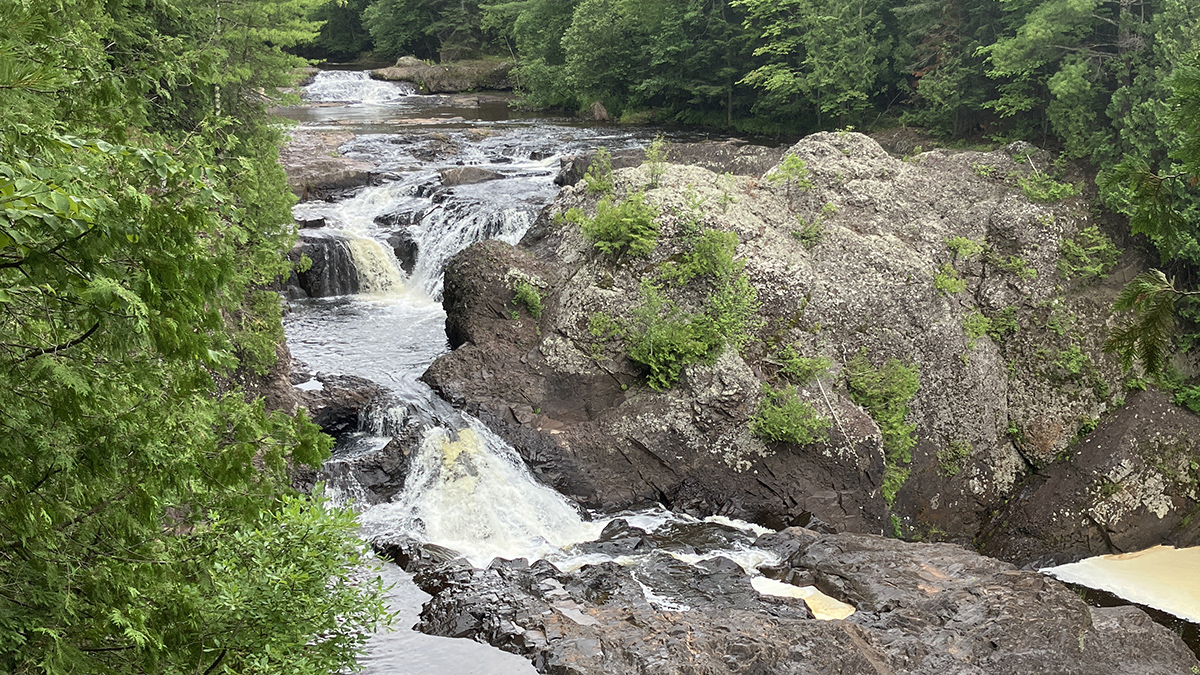
Rocks along Lake Superior in northern Wisconsin and Michigan are particularly important for tracking Laurentia’s movements. These rocks were dominated by red sandstone, siltstone, and mild conglomerates, but were deposited during extensive deposition caused by rifts in the central North American continent and are present in hematite-like iron oxides. Hematite can acquire magnetization when deposited. This records where the rocks were associated with the Earth’s poles at the time.

You might like it

Unfortunately, existing paleomagnetic records are undermined by gaps between 1075 million and 900 million years ago, limiting our understanding of how, when and where Rodynia was formed.

To fill this data gap, Fuentes et al. New samples were collected from the Freda Formation near Lake Superior. The authors combined these data with age modeling of stratigraphy to estimate the location of new sedimentary pale or geomagnetic poles at specific times in the past.

Previous studies have shown that for 30 million years, from 10 to 110 to 180 million years ago, Laurentia moved from about 60°N to 5°N at a rate of 30 cm (12 inches) per year. The study showed that over the next 30 million years, Laurentia’s progress slowed to 2.4 cm (1 inch) per year across the equator.

The slowing of aleocentinent during Freda formation deposition is consistent with the onset of the Grenville orogeny. The results confirm that at this interval a stagnant single lid regime was effective in which the lithosphere operates as a single continuous plate rather than as a multiple independent plate.

Get the world’s most engaging discoveries delivered straight to your inbox.

This article was originally published on eos.org. Please read the original article.


Source link

#Biotechnology #ClimateScience #Health #Science #ScientificAdvances #ScientificResearch
Follow on Google News Follow on Flipboard
Share. Facebook Twitter Pinterest LinkedIn Tumblr Email Copy Link
Previous ArticleThousands of Grok chats are now searchable on Google
Next Article Scientists think they first detected a known triple black hole system in the universe – and saw it die

Related Posts

Merlin, a common roadside duck in Mexico City, will be the World Cup mascot.

June 15, 2026

Far from the pitch, David Beckham remains soccer’s biggest star

June 14, 2026

Taylor Swift makes history as the youngest girl to be inducted into the Songwriters Hall of Fame

June 12, 2026
Add A Comment
Leave A Reply Cancel Reply

Latest Posts

Merlin, a common roadside duck in Mexico City, will be the World Cup mascot.

BTS is the group fans are most looking forward to seeing perform at the 2026 World Cup

Duchess Kate wears Patrick McDowell bespoke with Order of the Garter

Madonna features surprise star in Sabrina Carpenter’s ‘Bring Your Love’ video

Trending Posts

BTS is the group fans are most looking forward to seeing perform at the 2026 World Cup

June 15, 2026

Duchess Kate wears Patrick McDowell bespoke with Order of the Garter

June 15, 2026

Madonna features surprise star in Sabrina Carpenter’s ‘Bring Your Love’ video

June 15, 2026

Subscribe to News

Subscribe to our newsletter and never miss our latest news

Please enable JavaScript in your browser to complete this form.
Loading

Welcome to The FYMOUS, a modern digital media platform dedicated to celebrities, artists, influencers, brands, entertainment culture, and the growing TwinH ecosystem.

We bring audiences closer to the people, stories, trends, and collaborations shaping today’s culture. From exclusive celebrity news and music releases to influencer highlights, brand partnerships, and TwinH activations, The FYMOUS delivers engaging content designed for the next generation of digital audiences.

Castilla-La Mancha Ignites Innovation: fiveclmsummit Redefines Tech Future

Local Power, Health Innovation: Alcolea de Calatrava Boosts FiveCLM PoC with Community Engagement

The Future of Digital Twins in Healthcare: From Virtual Replicas to Personalized Medical Models

Human Digital Twins: The Next Tech Frontier Set to Transform Healthcare and Beyond

Facebook X (Twitter) Instagram Pinterest YouTube
  • Home
  • About The FYMOUS
  • Advertising / Promotion
  • Contact
  • DMCA
  • Privacy Policy
  • Terms
  • Publish News
© 2026 news.fyself. Designed by by fyself.

Type above and press Enter to search. Press Esc to cancel.