
Study finds elevated levels of microplastics contribute to AMR
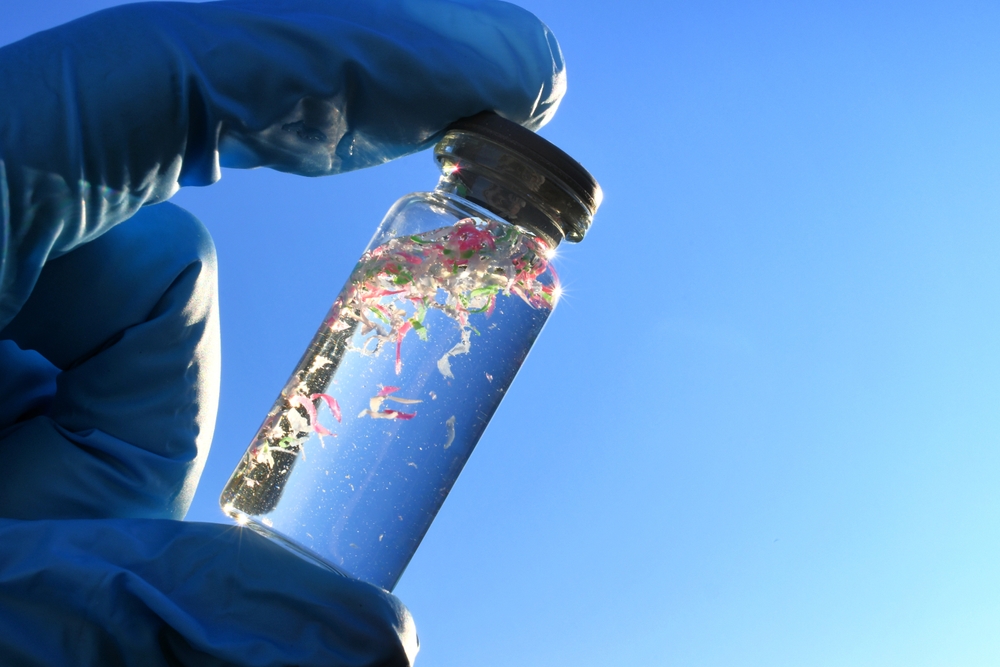
New research from the Plymouth Marine Laboratory shows that pathogenic and antimicrobial-resistant bacteria are colonizing microplastics in the natural environment.
Microplastics are plastic particles less than 5 mm in size and are very widespread pollutants.
It is estimated that more than 125 trillion particles are accumulated in the ocean (from the earth’s surface to the ocean floor) and have been detected in soil, rivers, lakes, animals, and human bodies.
An emerging concern associated with these substrates is the microbial communities that rapidly establish on particle surfaces and form complex biofilms known as “plastispheres.” These communities often include pathogenic (disease-causing) and antimicrobial-resistant (AMR) bacteria.
The researchers therefore call for urgent action for waste management and strongly recommend wearing gloves when participating in beach cleans.
The role of wastewater in the spread of antimicrobial-resistant bacteria
Wastewater treatment facilities and solid waste landfills have been proposed to influence the spread, facilitation, or evolution of natural antimicrobial resistance and pathogens.
This could increase risks to human health and means it is crucial to gain a better understanding of the interactions between bacterial communities within plastispheres and other marine pollutants, such as domestic and medical wastewater.
Laboratory studies have shown that some commonly discarded plastic materials can serve as a platform for the selective growth of bacterial communities that cause AMR and disease in humans and animals.
Although previous studies have investigated this environment, several questions and issues remain unanswered, and this new study aimed to address them.
Dr Emily Stevenson, lead author and postdoctoral fellow at Plymouth Marine Laboratory, explains: “Following the recent worrying release of sewage biobeads in Sussex, this timely research highlights the pathogenicity and AMR risks posed by microplastic substrates littering our oceans and coasts.
“By identifying high-risk substrates, we can improve their monitoring or even phase them out for safer alternatives.”
Harmful bacteria found in UK waterways
The research team developed a new structure that allows five different substrates (biobeads, nurdles, polystyrene, wood, and glass) to be anchored along waterways, thereby reducing anthropogenic pollution downstream.
After two months in water, the bacterial biofilms growing on each substrate were analyzed using metagenomics (genomic analysis of genetic material collected from an entire community of organisms in a given environment).
The findings showed that:
Pathogens and AMR bacteria were found on all substrates at all sample sites. Polystyrene and nurdles may pose a higher AMR risk than other substrates due to their ability to adsorb antibiotics and promote biofilm formation that promotes the introduction of antimicrobial resistance genes (ARGs). More than 100 unique ARG sequences were identified in microplastic biofilms. This is more than on natural (wood) or inert (glass) substrates. Environmental biobeads can support bacteria with resistance genes to major antibiotics such as aminoglycosides, macrolides, and tetracyclines. Unexpectedly, some bacterial pathogens moved downstream and increased in prevalence when associated with microplastic biofilms. Environmental location played an important role in microbial community composition and AMR gene prevalence. There is a potential biosecurity risk posed by microplastics, especially in areas close to aquaculture facilities, as filter-feeding organisms may ingest colonized particles containing pathogens and ARGs.
More effective waste management is essential
Dr Stevenson commented: “This research highlights the diverse and sometimes harmful bacteria that grow on plastics in the environment, so we recommend that beach cleanup volunteers wear gloves while cleaning and always wash their hands after cleaning.”
The researchers highlighted the need to further study how microplastics interact with their coexisting pollutants and improve waste management practices to reduce the spread of AMR and pathogens in the environment.
Source link

