

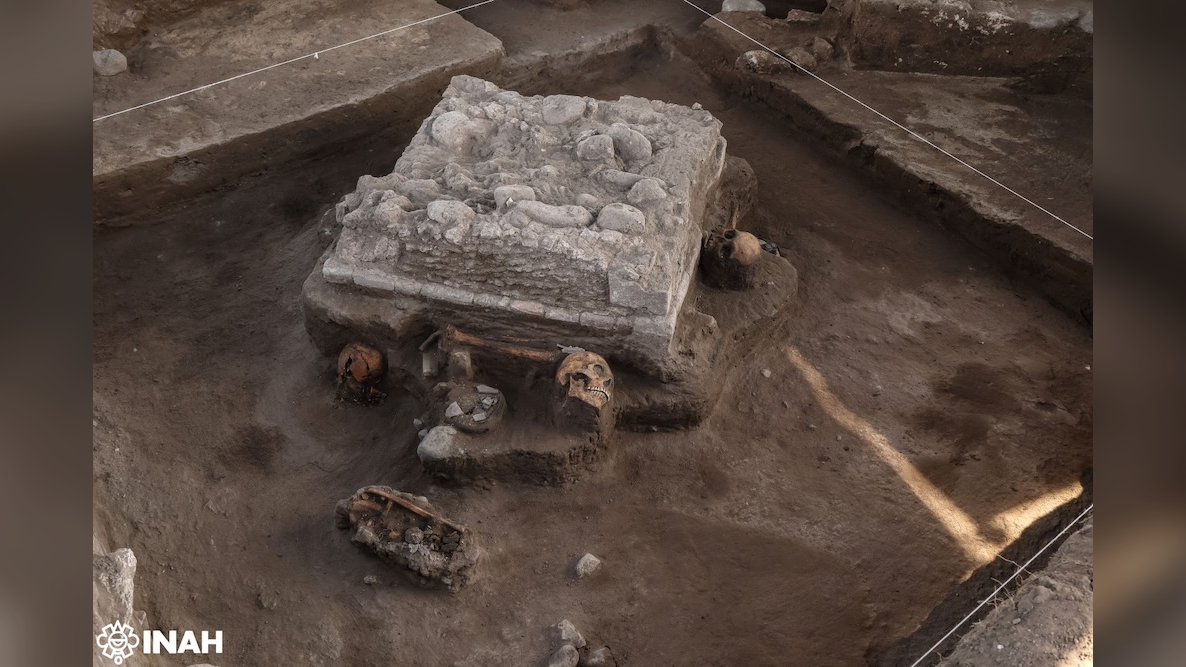
Mexican archaeologists have unearthed a square stone altar used for human sacrifices during the Toltec Empire more than 1,000 years ago.
The altar, human bones, obsidian knife and ceramic vessels were discovered during excavations for a transportation project near the Tula ruins, about 55 miles (88 kilometers) north of Mexico City.
In a translated statement posted by Mexico’s National Institute of Anthropology and History (INAH) on Tuesday (March 24), archaeologists explained that the altar (also called momoztli in Nahuatl) was a three-layered structure of stones approximately 10 square feet (1 square meter) wide. Four human skulls and several leg bones, likely belonging to the victims, were recovered from three sides of the altar.
Article continues below
you may like
“We know that these sites are offerings, especially because they are located in certain areas, but we do not know if there are other sites underground that cannot be physically seen,” archaeologist Victor Francisco Heredia Guillén, who is coordinating the project, said in a translated video.
Archaeologists found the remains of the walls around the altar, suggesting that the altar was located in a courtyard. Additional rooms were located on either side of the courtyard and may have been part of a palace or other residential structure inhabited by ancient Tula’s elite, Heredia said.
From the fall of Teotihuacan around 550 AD to the rise of Tenochtitlan in 1325, Tula was an important urban center in Mesoamerica and the capital of the Toltec Empire, which lasted from 950 to 1150 AD. Tula, located in Mexico’s Hidalgo state, was a contemporary city with the Mayan ruins of Chichen Itza on the Yucatan Peninsula. Tula is home to a large pyramid dedicated to the feathered serpent god Quetzalcoatl, topped by four giant statues of Toltec warriors.
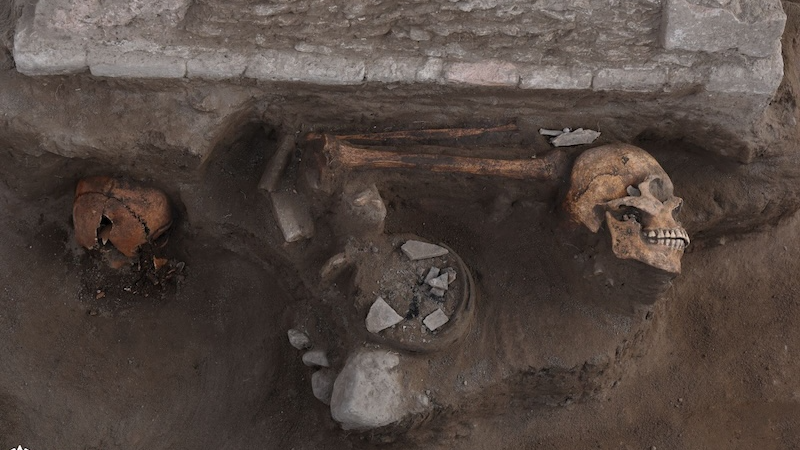
Archaeologists say the newly discovered altar likely dates from the period of occupation by the Tula Empire. By then, the Toltecs had acquired a reputation as fierce warriors, and human sacrifices may have been offered to their enemies after the Toltecs had defeated the Toltecs.
One of the skulls appears to still be attached to part of the spine, suggesting that the decapitation was part of a sacrificial ritual.
“In this case, we know that the metal was already being worked in the Postclassic period, but decapitations were still carried out here with obsidian and flint knives, leaving cuts in the bones,” Heredia said.
However, further research will be needed to learn more about the victims. Anthropological analysis will need to reveal whether the bones belong to a man or a woman, and chemical analysis may reveal whether the victims were local or came to Tula from far away, Heredia said.
“Each such discovery expands our knowledge of one of Mesoamerica’s great civilizations,” Mexico’s Culture Secretary Claudia Curiel de Icasa said in a statement.
First Americans Quiz: How much do you know about the first people to reach the Americas?
Source link
