
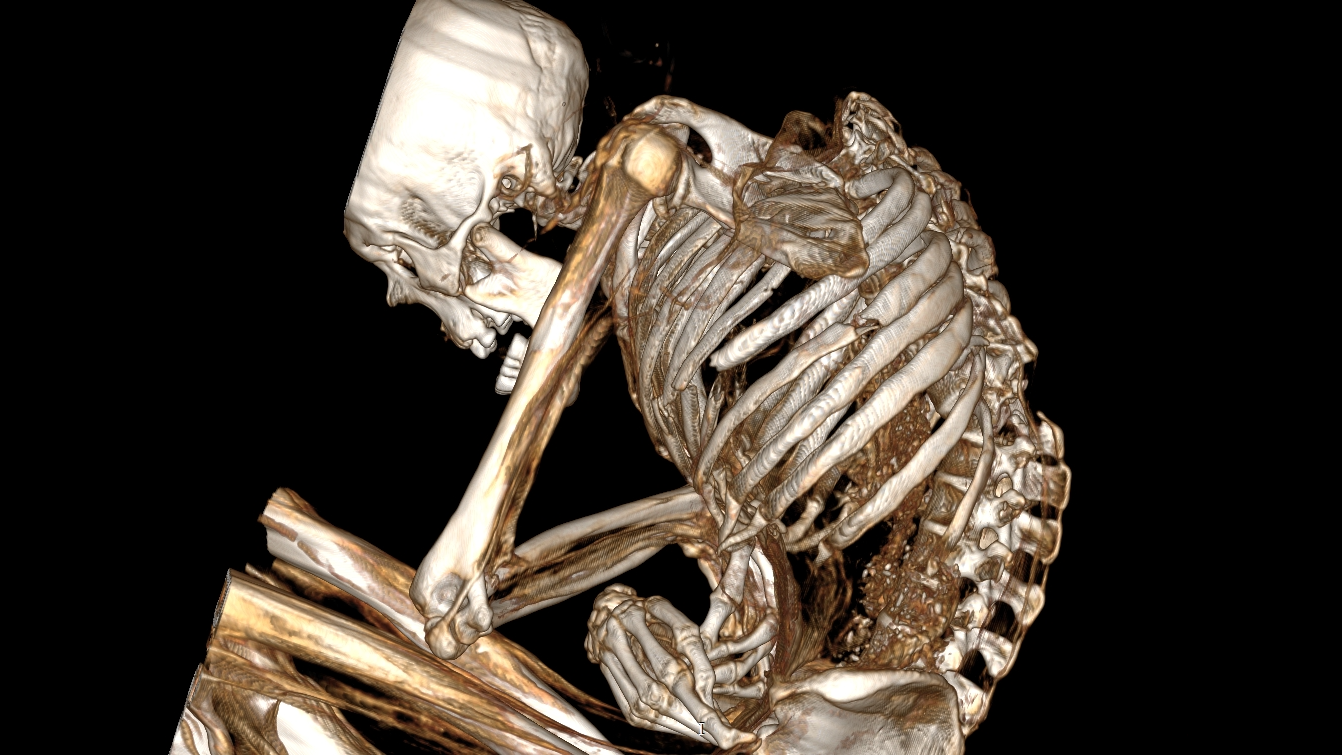
Close Menu
  • Home
  • Identity
  • Inventions
  • Future
  • Science
  • Startups
  • Spanish
What's Hot

NASA astronauts return to Earth after unprecedented medical emergency on ISS

Model security is the wrong framework – the real risk is workflow security

PFAS increase risk of gestational diabetes, major review finds

Facebook X (Twitter) Instagram
  • Home
  • About Us
  • Advertise with Us
  • Contact Us
  • DMCA
  • Privacy Policy
  • Terms & Conditions
  • User-Submitted Posts
Facebook X (Twitter) Instagram
Fyself News
  • Home
  • Identity
  • Inventions
  • Future
  • Science
  • Startups
  • Spanish
Fyself News
Home » 1,100-year-old mummy found in Chile dies of severe injuries caused by turquoise mine collapse, CT scan reveals
Science

1,100-year-old mummy found in Chile dies of severe injuries caused by turquoise mine collapse, CT scan reveals

userBy userJanuary 9, 2026No Comments4 Mins Read
Share Facebook Twitter Pinterest Telegram LinkedIn Tumblr Email Copy Link
Follow Us
Google News Flipboard
Share
Facebook Twitter LinkedIn Pinterest Email Copy Link

The 1,100-year-old mummified remains of a man have revealed that he likely died in an ancient turquoise mining accident in Chile. Extensive evidence of blunt force trauma found on the man’s skeleton suggests he died from a falling rock or mine collapse, according to a new study.

The naturally mummified remains, along with grave goods such as a bow and arrow and a hallucinogenic snuff kit, were originally unearthed in the 1970s in an area just outside a pre-Hispanic turquoise mine in El Salvador, a city in northern Chile in the middle of the Atacama Desert. An obvious fracture in the mummy’s lower left leg bone suggested that the man may have been involved in the accident, but a full analysis of the remains was not completed until 2023.

In a study published Dec. 15 in the International Journal of Osteoarchaeology, archaeologists Catalina Morales and Francisco Garrido of the National Museum of Natural History in Santiago, Chile, used CT scans and X-ray images to reveal the intricate details of the extensive trauma that likely led to the man’s death.

you may like

“Miners likely entered the mine and used stone hammers to extract the turquoise from the surrounding rock,” Morales and Garrido told Live Science via email. “If a rockfall occurred, there was no way to protect yourself.”

Researchers analyzed the mummy and found that the man was between 25 and 40 years old when he died. They carbon-dated the mummy to between 894 and 1016 AD, dating it to the beginning of the Late Middle Andean period in the central Andes, between the Wari Empire (and eventual fall) and the rise of the Inca Empire.

Multiple unhealed fractures were evident in the man’s upper spine. He also had fractured ribs, scapulae, and clavicle, suggesting a “widespread blunt impact” on his upper back, and that “the upper left thorax took the brunt of the impact,” Morales and Garrido wrote in their study. The impact dislocated some of his vertebrae and collapsed his ribcage.
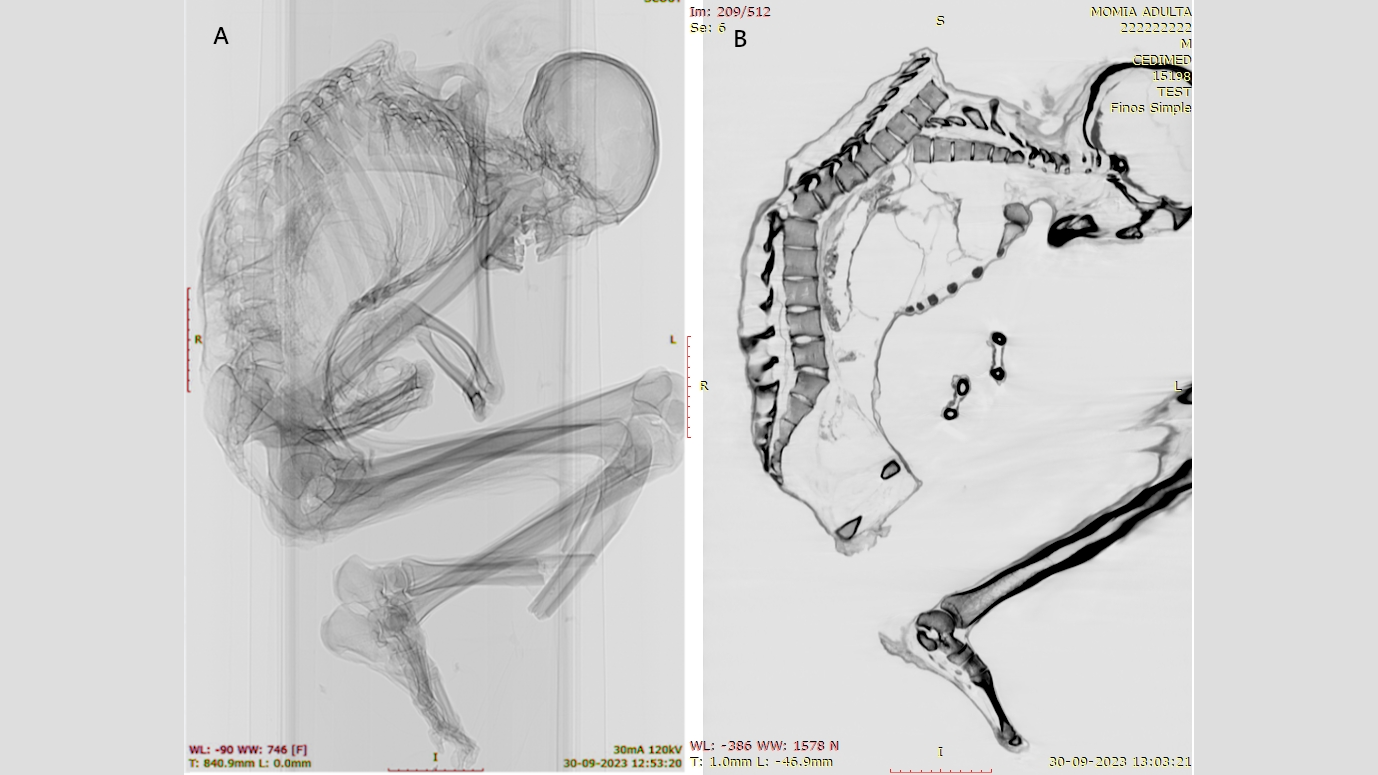
Two views of an x-ray of a human mummy with bones visible

A side view of the mummy’s bones reveals severe spinal and lower limb fractures. (Image credit: Francisco Garrido and Catalina Morales)

Additionally, researchers identified fractures in the vertebrae near the base of the spine, likely as a result of the initial upper back injury. Both upper and lower spine injuries are “usually associated with severe spinal cord injury and high mortality rates,” the researchers wrote.

Get the world’s most fascinating discoveries delivered straight to your inbox.

However, no damage was found to the man’s skull, neck or arms, indicating that the impact occurred while the man was in a head-down position. He may have been actively mining, or he may have tried to protect his head with his arms when he was struck by a heavy object falling from above. This type of damage is found in the bodies of people involved in earthquakes and industrial accidents in forestry, construction, and mining, the researchers wrote.

Researchers say turquoise has been mined in the Atacama Desert for 2,000 years. Miners used specialized equipment such as stone hammers, wooden and stone shovels, and baskets to extract semi-precious stones and take them back to mining camps, where the turquoise was processed into beads. Many of these beads were traded or exchanged along the pre-Hispanic Inca’s vast road network.
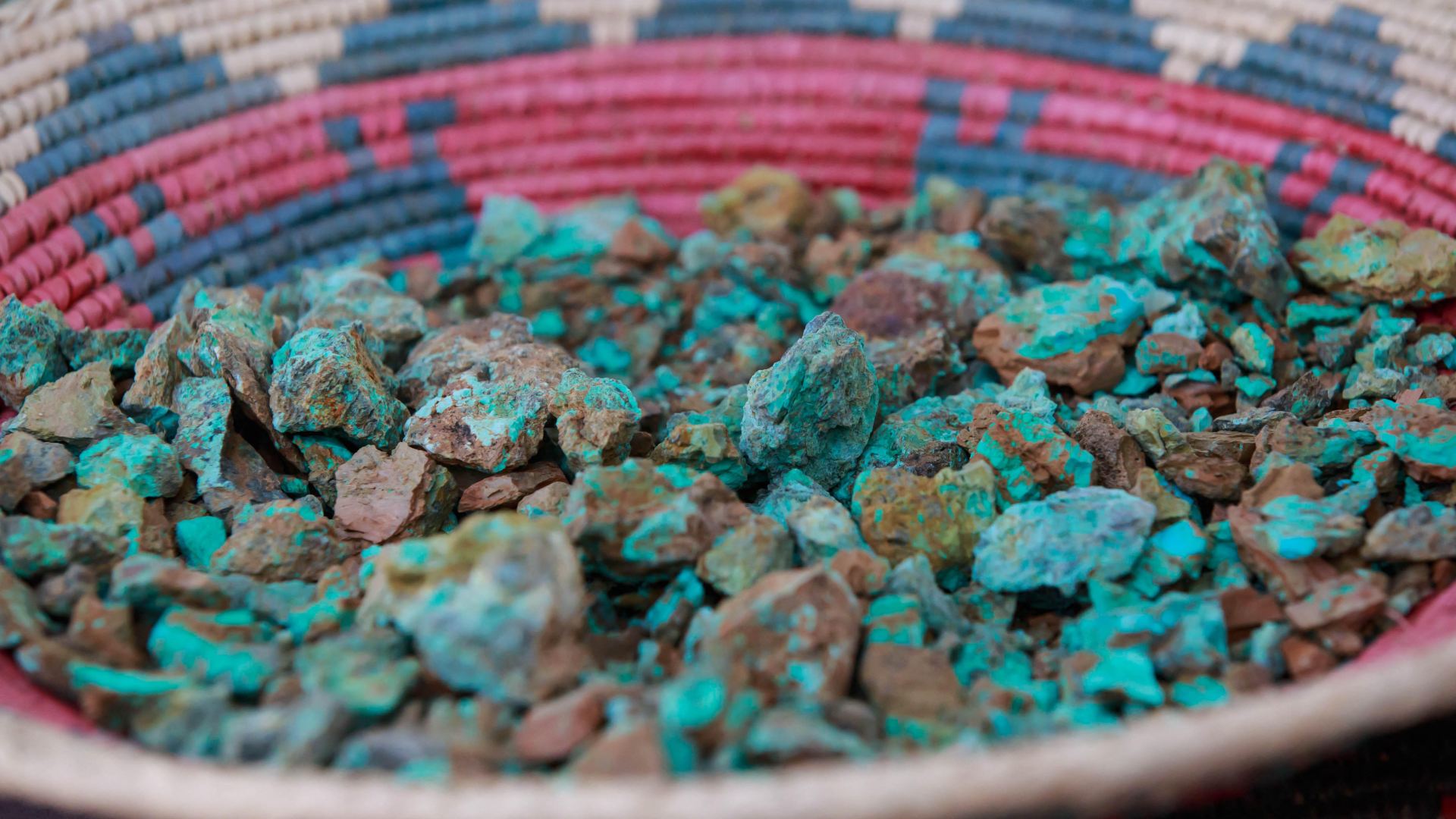
Rough turquoise stones in a colorful basket

This is a raw turquoise stone collected in New Mexico, USA. (Image credit: Alamy)

Most ancient turquoise mines were open and shallow, so miners did not wear protective equipment. But researchers say El Salvador’s mine is one of the few with underground pits.

“Given the archaeological context, this person likely died when a rock fell onto his back from the mine ceiling while mining turquoise,” the researchers wrote in the study, but added that “further research is needed to better understand the living conditions of ancient miners.”

Gold and Jewelry Quiz: What do you know about nature’s glittering treasures?


Source link

#Biotechnology #ClimateScience #Health #Science #ScientificAdvances #ScientificResearch
Follow on Google News Follow on Flipboard
Share. Facebook Twitter Pinterest LinkedIn Tumblr Email Copy Link
Previous ArticleAnritsu and VTT push the boundaries of D-band wireless communications
Next Article The hype you can ignore (and the risks you can’t ignore)
user
  • Website

Related Posts

NASA astronauts return to Earth after unprecedented medical emergency on ISS

January 15, 2026

18 of Earth’s largest deltas, including the Nile and Amazon rivers, are sinking faster than global sea levels are rising.

January 14, 2026

James Webb Telescope unravels the mystery of a strange, ‘starving’ galaxy that died a ‘thousand deaths’ in the ancient universe

January 14, 2026
Add A Comment
Leave A Reply Cancel Reply

Latest Posts

NASA astronauts return to Earth after unprecedented medical emergency on ISS

Model security is the wrong framework – the real risk is workflow security

PFAS increase risk of gestational diabetes, major review finds

Dark matter may have started at a much higher temperature than scientists thought

Trending Posts

Subscribe to News

Subscribe to our newsletter and never miss our latest news

Please enable JavaScript in your browser to complete this form.
Loading

Welcome to Fyself News, your go-to platform for the latest in tech, startups, inventions, sustainability, and fintech! We are a passionate team of enthusiasts committed to bringing you timely, insightful, and accurate information on the most pressing developments across these industries. Whether you’re an entrepreneur, investor, or just someone curious about the future of technology and innovation, Fyself News has something for you.

Castilla-La Mancha Ignites Innovation: fiveclmsummit Redefines Tech Future

Local Power, Health Innovation: Alcolea de Calatrava Boosts FiveCLM PoC with Community Engagement

The Future of Digital Twins in Healthcare: From Virtual Replicas to Personalized Medical Models

Human Digital Twins: The Next Tech Frontier Set to Transform Healthcare and Beyond

Facebook X (Twitter) Instagram Pinterest YouTube
  • Home
  • About Us
  • Advertise with Us
  • Contact Us
  • DMCA
  • Privacy Policy
  • Terms & Conditions
  • User-Submitted Posts
© 2026 news.fyself. Designed by by fyself.

Type above and press Enter to search. Press Esc to cancel.