
Close Menu
  • Home
  • Identity
  • Inventions
  • Future
  • Science
  • Startups
  • Spanish
What's Hot

Benchmark raises $225 million in special funding to double Cerebras

From Svedka to Anthropic, brands are boldly leveraging AI in their Super Bowl ads

Prince Andrew’s advisor encouraged Jeffrey Epstein to invest in EV startups like Lucid Motors

Facebook X (Twitter) Instagram
  • Home
  • About Us
  • Advertise with Us
  • Contact Us
  • DMCA
  • Privacy Policy
  • Terms & Conditions
  • User-Submitted Posts
Facebook X (Twitter) Instagram
Fyself News
  • Home
  • Identity
  • Inventions
  • Future
  • Science
  • Startups
  • Spanish
Fyself News
Home » 1,800-year-old ‘piggy bank’ filled with Roman coins unearthed in French village
Science

1,800-year-old ‘piggy bank’ filled with Roman coins unearthed in French village

userBy userDecember 6, 2025No Comments3 Mins Read
Share Facebook Twitter Pinterest Telegram LinkedIn Tumblr Email Copy Link
Follow Us
Google News Flipboard
Share
Facebook Twitter LinkedIn Pinterest Email Copy Link

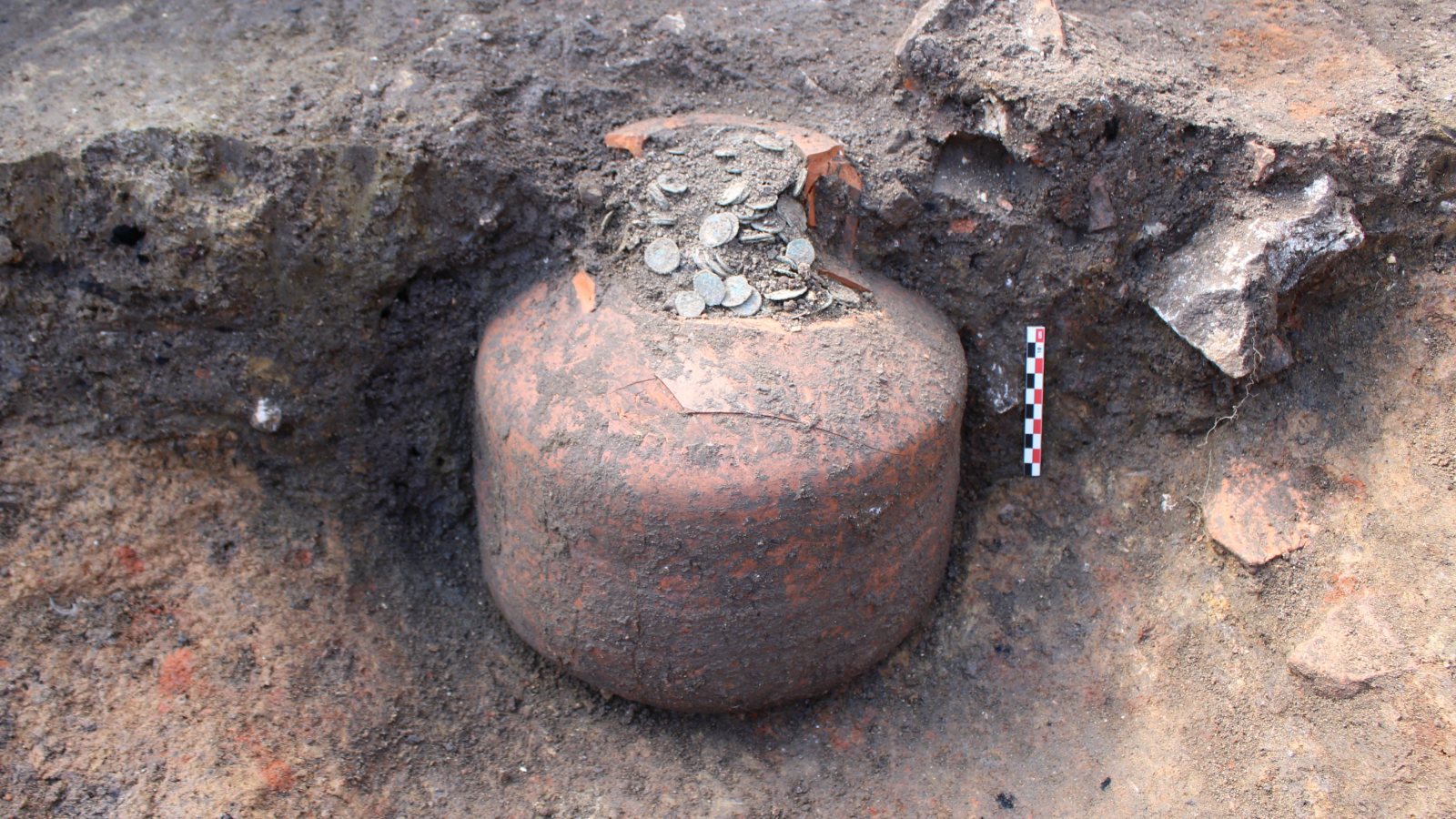
French archaeologists have discovered three ancient storage jars filled with tens of thousands of Roman coins. These containers were buried in holes in the floors of houses in ancient settlements 1,700 years ago, probably as a type of safe or piggy bank.

These three jugs, known as amphorae, were discovered during excavations carried out by the National Institute for Preventive Archeology (INRAP) in the village of Senon in northeast France, and may contain a total of more than 40,000 Roman coins.

The first vault contained an estimated 83 pounds (38 kilograms) of coins, “equivalent to approximately 23,000 to 24,000 coins,” INRAP numismatist Vincent Geneviève, who is analyzing the vault, told Live Science in an email.

you may like

The second jug and its coins weighed about 50kg and “based on the 400 coins recovered from the broken neck when it was discovered, it could have contained between 18,000 and 19,000 coins,” Genevieve said. The third jug was recovered in ancient times, and only three coins remained in the hole where the container had once been placed.
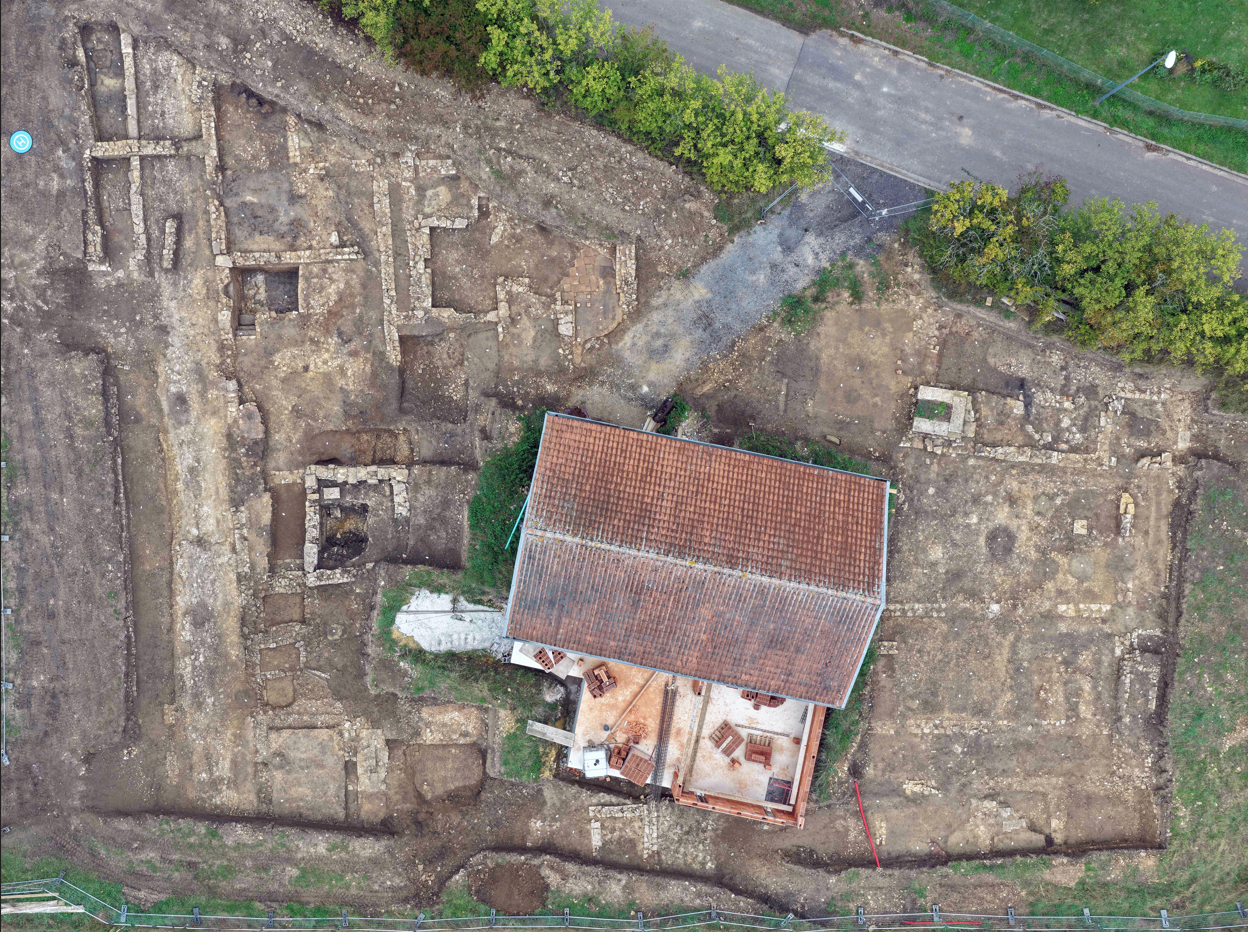
A bird's eye view of the excavation area in Senon, France.

A bird’s eye view of the excavation area in Senon, France. The excavation was carried out by the Regional Archeology Authority (SRA) and INRAP, and was led by INRAP’s Simon Ritz. (Image credit: © Anthony Robin, Inrap)

The real significance of this discovery lies not in the sheer number of coins, but in the detailed information about where the coin hoards were found, as around 30 coin hoards are already known in the region.

“It is unclear whether, contrary to what may seem at first glance, these are hidden ‘treasures’ in times of instability,” according to a translated statement from INRAP on Nov. 26. Experts believe the amphora was buried between 280 and 310 AD, based on the dates on the coins.

The treasure also includes coins with busts of Victorinus, Tetrix I, and his son Tetrix II, emperors of the so-called Gallic Empire, which ruled Gaul and its surrounding areas independent of the rest of the Roman Empire from 260 to 274, until being reunited by Emperor Aurelian in 274.

Get the world’s most fascinating discoveries delivered straight to your inbox.

Treasure hidden away in a hurry or long-term savings?
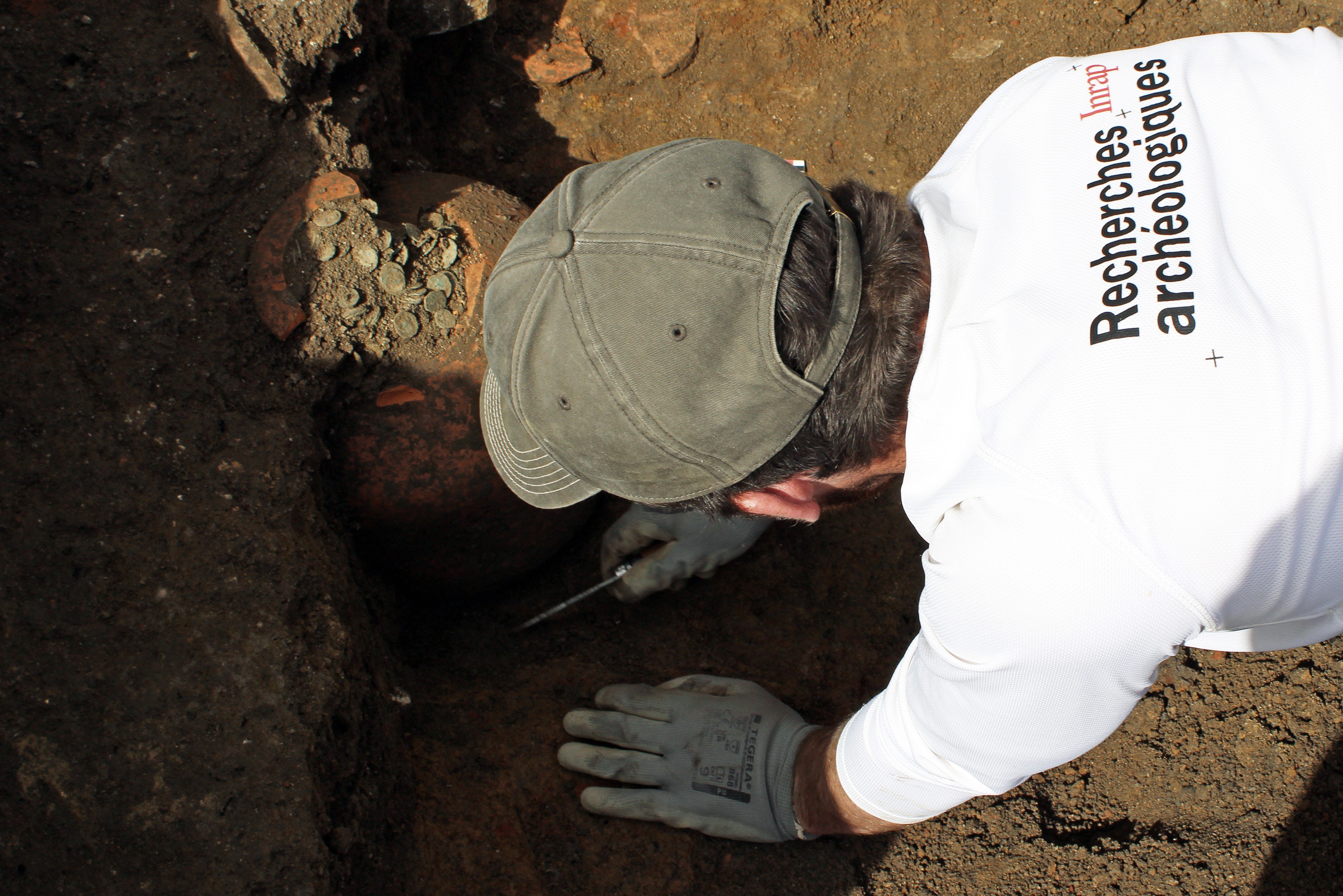
Researchers will excavate it.

Researchers have unearthed one of the troves of 1,800-year-old coins. (Image credit: © Lino Mocci, Inrap)

The amphora filled with coins had been carefully buried in a well-built hole in the living room of the house. The opening of the jug was at ground level, making it easily accessible, like an ancient piggy bank.

“In two cases, several coins were found attached to the rim of the vase, clearly indicating that they were deposited after the vase was buried, when the hole was not yet filled with sediment,” the statement said.

The accessible jars suggest that their owners were using them as long-term savings instruments rather than hastily hidden storage. This residential area had stone buildings with underfloor heating, a basement and a workshop with a stove. There was also a Roman fort nearby.

In the early 4th century, the village was destroyed by a great fire. The settlement was rebuilt before a second fire permanently abandoned it, but the coin deposit was lost for nearly 2000 years.

Roman Emperor Quiz: Test your knowledge about the rulers of ancient empires


Source link

#Biotechnology #ClimateScience #Health #Science #ScientificAdvances #ScientificResearch
Follow on Google News Follow on Flipboard
Share. Facebook Twitter Pinterest LinkedIn Tumblr Email Copy Link
Previous ArticleReact2Shell critical flaw added to CISA KEV after active exploitation
Next Article Check out these copycats after checking out Spotify Wrapped 2025.
user
  • Website

Related Posts

All major galaxies except one are moving away from the Milky Way – and we finally know why

February 6, 2026

“Mono” viruses increase the risk of MS and cancer for some people. 22 genes suggest why.

February 5, 2026

The spotted orchid fly has invaded the United States. They may have acquired evolutionary superpowers in Chinese cities.

February 5, 2026
Add A Comment
Leave A Reply Cancel Reply

Latest Posts

Benchmark raises $225 million in special funding to double Cerebras

From Svedka to Anthropic, brands are boldly leveraging AI in their Super Bowl ads

Prince Andrew’s advisor encouraged Jeffrey Epstein to invest in EV startups like Lucid Motors

AI agents could become lawyers after all

Trending Posts

Subscribe to News

Subscribe to our newsletter and never miss our latest news

Please enable JavaScript in your browser to complete this form.
Loading

Welcome to Fyself News, your go-to platform for the latest in tech, startups, inventions, sustainability, and fintech! We are a passionate team of enthusiasts committed to bringing you timely, insightful, and accurate information on the most pressing developments across these industries. Whether you’re an entrepreneur, investor, or just someone curious about the future of technology and innovation, Fyself News has something for you.

Castilla-La Mancha Ignites Innovation: fiveclmsummit Redefines Tech Future

Local Power, Health Innovation: Alcolea de Calatrava Boosts FiveCLM PoC with Community Engagement

The Future of Digital Twins in Healthcare: From Virtual Replicas to Personalized Medical Models

Human Digital Twins: The Next Tech Frontier Set to Transform Healthcare and Beyond

Facebook X (Twitter) Instagram Pinterest YouTube
  • Home
  • About Us
  • Advertise with Us
  • Contact Us
  • DMCA
  • Privacy Policy
  • Terms & Conditions
  • User-Submitted Posts
© 2026 news.fyself. Designed by by fyself.

Type above and press Enter to search. Press Esc to cancel.