

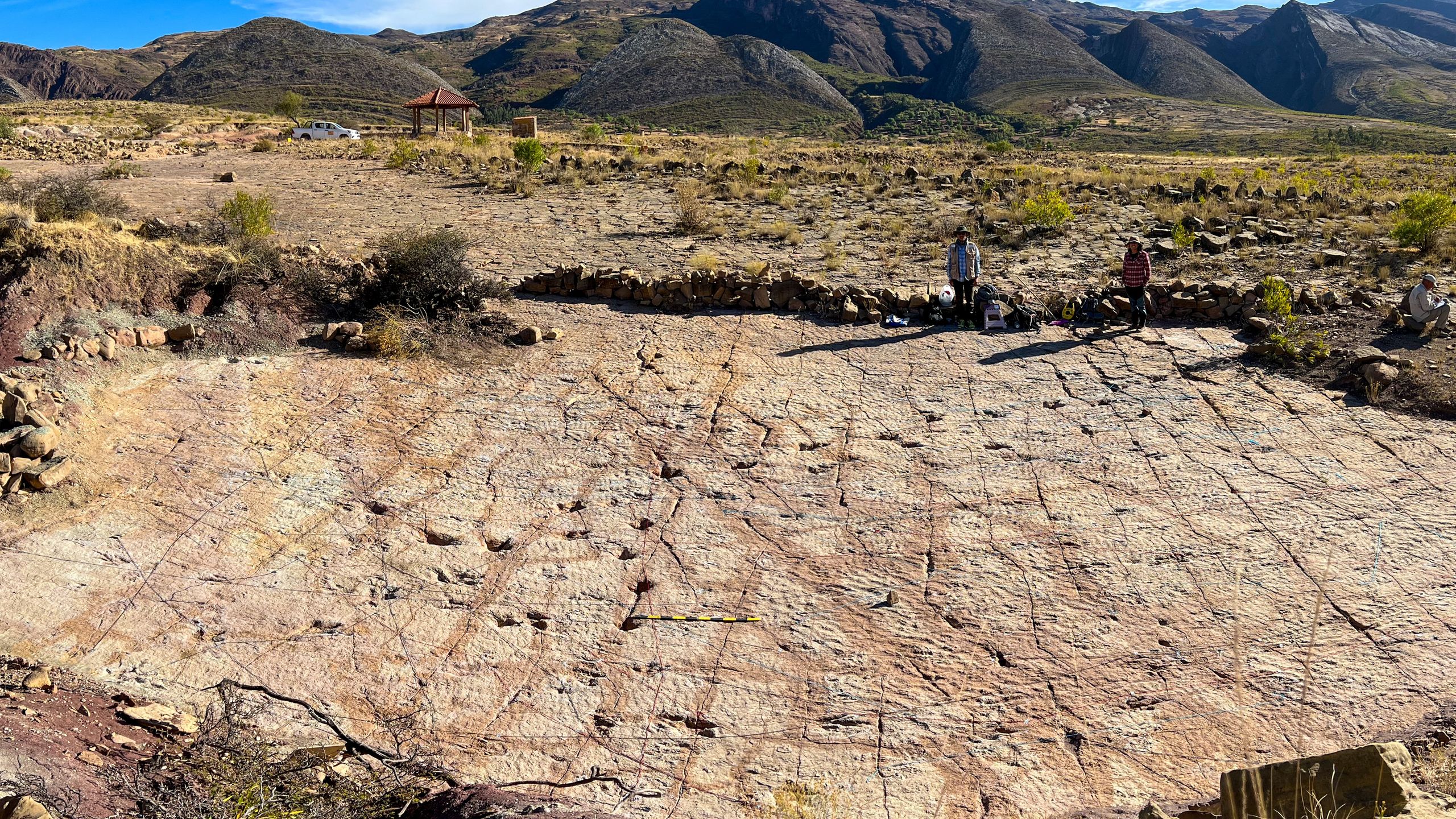
Scientists have discovered a record number of fossilized dinosaur footprints and swim tracks in a national park in central Bolivia.
The new study shows that the track trail follows what was once an ancient coastline, rippled from northwest to southeast along footprints and other footprints. Most of the footprints are from bipedal, three-toed dinosaurs known as theropods, which lived during the late Cretaceous period (145 million to 66 million years ago), but the scientists noted that many bird footprints have also been preserved. The paper was published in the academic journal PLOS One on Wednesday (December 3).
you may like
In total, McLarty and his colleagues counted 16,600 theropod footprints and 1,378 swim tracks. These were discovered at the Carreras Pampas track site in Bolivia, which was already known but had not been properly studied or documented.
Carreras Pampas is located on a lot of 80,570 square feet (7,485 square meters) within Toro Toro National Park. Early work included sweeping debris from dinosaur tracks with brooms, removing rocks from trail tracks, and removing sediment where additional footprints were likely to be found.
The researchers found footprints of a wide variety of shapes and sizes, indicating that many types of theropod dinosaurs roamed along the ancient coastline. Some of the footprints were smaller than 4 inches (10 centimeters), which is unusual in the fossil record, according to the study. It is unclear whether these footprints were made by small theropod species such as Coelophysis or by juvenile larger theropods, the researchers wrote.
The largest footprints were more than 12 inches (30 centimeters) long, and the researchers believe they may have been made by medium-sized theropod dinosaurs such as Dilophosaurus or Allosaurus. The researchers noted that large theropods, such as tyrannosaurs and giganotosaurus, typically leave footprints up to 16 inches (40 cm) long.
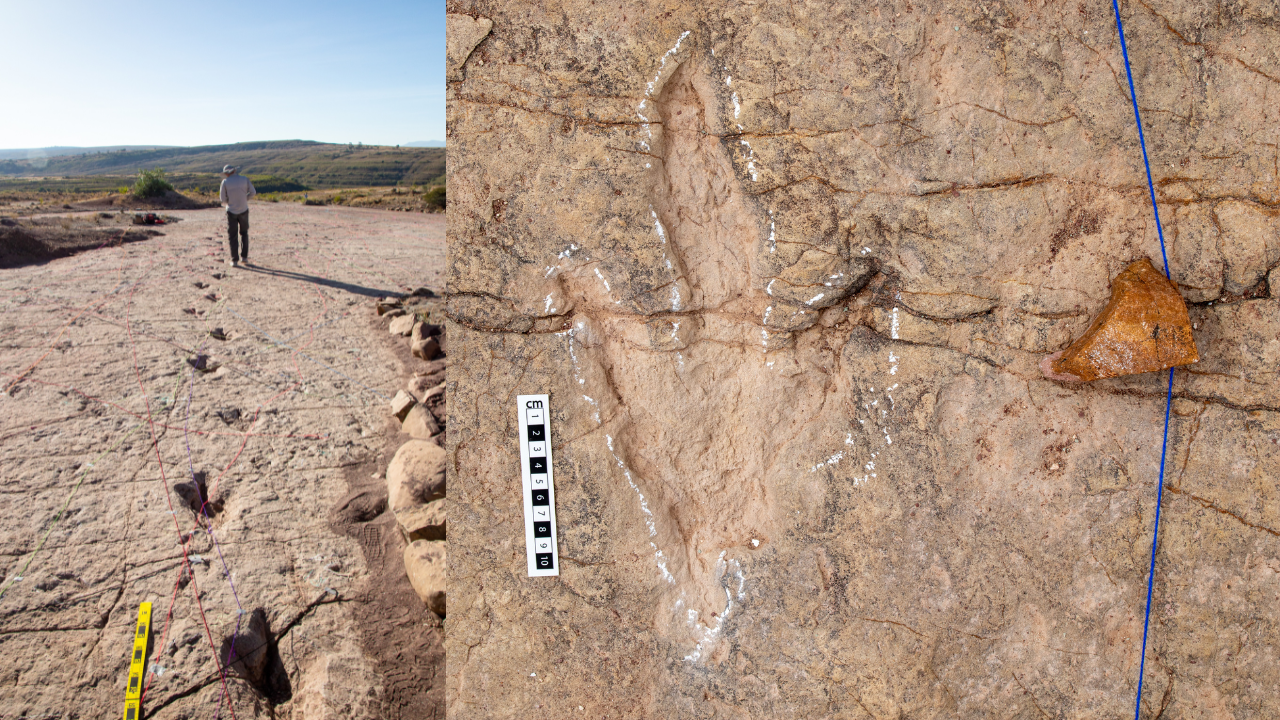
Carreras Pampa is unique in that it has footprints that show a variety of dinosaur behaviors, including walking, running, swimming, dragging its tail, and making sharp turns. “We have preserved evidence of several types of unusually preserved locomotor behavior, and we have more dinosaur tail traces preserved than anywhere else in the world,” McLarty said.
McLarty said swim tracks are straight or comma-shaped grooves, often flanked by one or two similar smaller grooves. The main grooves are from theropods scratching the bottom sediment with their metatoes, and the smaller grooves are from other toes. Unlike other archaeological sites that preserve only the swim marks of individual dinosaurs, Carreras Pampa preserves alternating left and right swim marks.
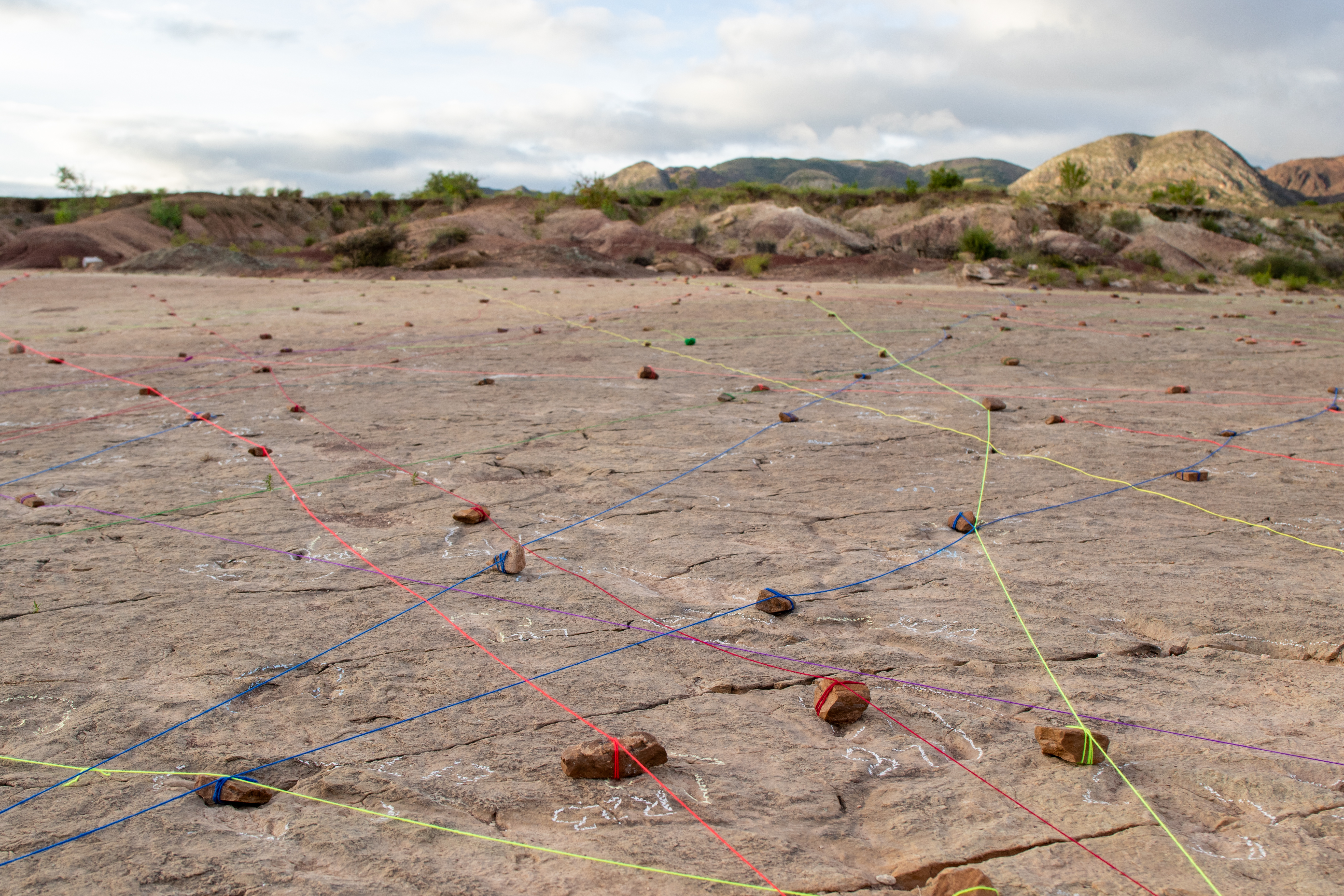
Abundant traces indicate that the Carreras Pampa was a prehistoric highway, and the parallel orientation of some of the tracks suggests that some dinosaurs traveled in groups.
Bolivia is known as a dino truck hotspot.
“The next circuit with the most tracks is also in Bolivia,” McLarty said. “The Cal Orco track site is located as an almost vertical wall within an active quarry and is elongated. The Carreras Pampa track site is spread over a larger area.”
Source link
