


Close Menu
  • Start
  • Celebrities
  • Music
  • Influencers
  • Tendencies
  • Exclusives
  • Business & Brands
  • TwinH
  • Spanish
What's Hot

President Trump to headline America’s 250th anniversary celebration after artist declines

Taylor Swift completed ‘Toy Story 5’ song in ‘hectic’ 8 hours

Hot rivalry crushes competition in 13 categories at Canadian Screen Awards

Facebook X (Twitter) Instagram
  • Home
  • About The FYMOUS
  • Advertising / Promotion
  • Contact
  • DMCA
  • Privacy Policy
  • Terms
  • Publish News
Facebook X (Twitter) Instagram
FYMOUS News
  • Start
  • Celebrities
  • Music
  • Influencers
  • Tendencies
  • Exclusives
  • Business & Brands
  • TwinH
  • Spanish
FYMOUS News
Home » 3,500-year-old Egyptian military fortress with ancient oven and fossilized fabric discovered in Sinai desert
Tendencies

3,500-year-old Egyptian military fortress with ancient oven and fossilized fabric discovered in Sinai desert

By October 18, 2025No Comments4 Mins Read
Share Facebook Twitter Pinterest Telegram LinkedIn Tumblr Email Copy Link
Follow Us
Google News Flipboard
Share
Facebook Twitter LinkedIn Pinterest Email Copy Link

Archaeologists have discovered a 3,500-year-old military fortress with zigzag walls in Egypt’s North Sinai Desert, near the Mediterranean coast. The fort is surprisingly well preserved, with remains of ovens and fossilized chunks of dough that the fort’s soldiers never had a chance to eat.

Egypt’s Ministry of Tourism and Antiquities said in a translated statement that artifacts unearthed from the approximately 2-acre (0.8 hectare) fortress suggest it may have been built during the reign of Thutmose I (c. 1504-1492 BC). Thutmose I was the pharaoh who expanded the Egyptian empire into what is now Syria, which helps explain the location of the fortress.
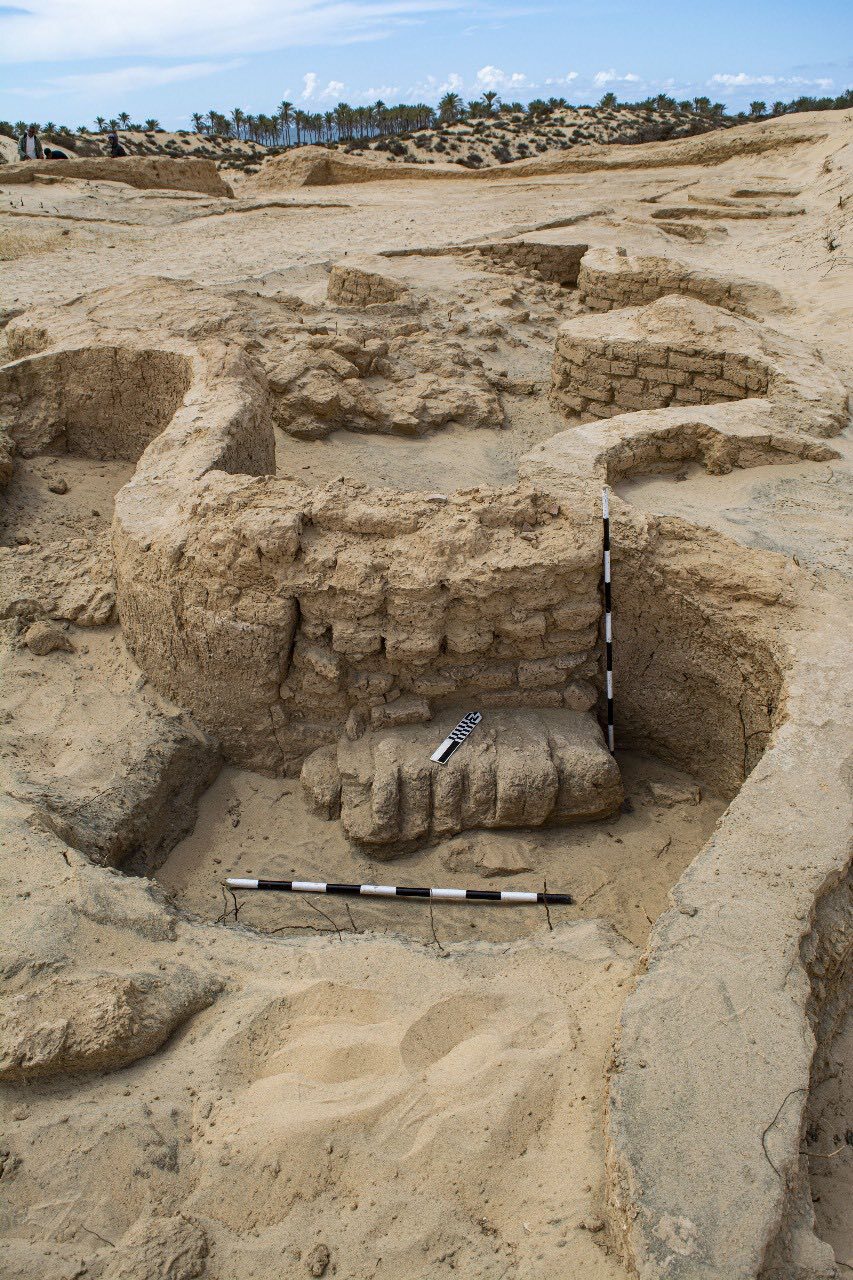
This fortress was discovered at Tell el Harouba. The site is located near an ancient military road known as the “Way of Horus” or “Horus Military Road” after the Egyptian falcon-headed god of the sky and war. The road ran across the northern Sinai Desert and connected the Nile Delta with other parts of the eastern Mediterranean. Other fortifications have previously been discovered at the ancient road site, the statement said.

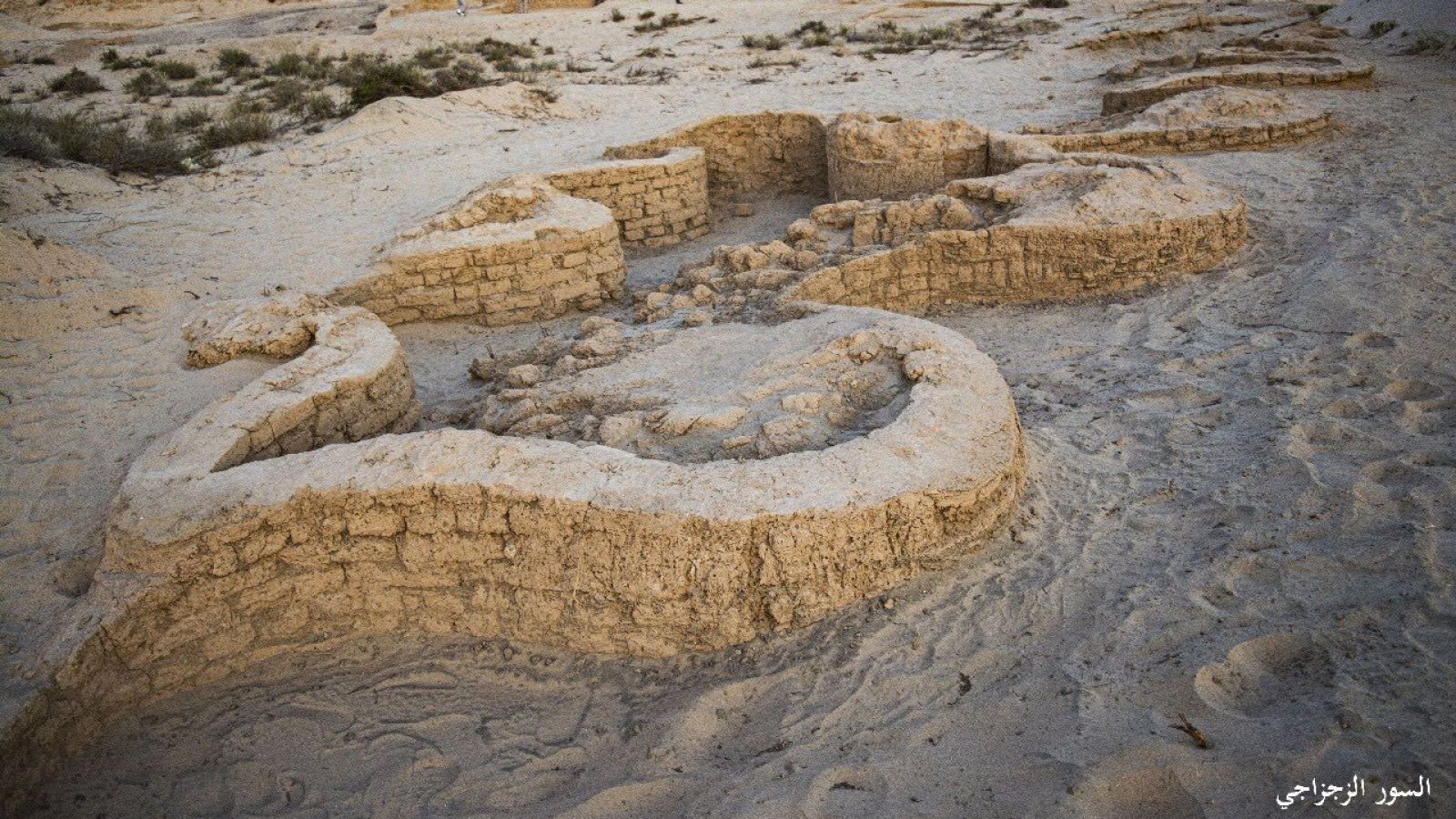
Part of a zigzag wall.

Part of a fortress wall with a zigzag pattern. (Image credit: Provided by the Egyptian Ministry of Tourism and Antiquities)

One of the inner ramparts of the fortress has a zigzag pattern, running from north to south and separating part of the western section that was used as a residential area. Hesham Hussein, Egypt’s Ministry of Tourism and Antiquities’ Undersecretary for Antiquities in Lower Egypt and Sinai, who led the excavation team at the site, told Live Science in an email that the zigzag pattern “helped strengthen the stability of the wall and reduce the effects of wind and sand erosion.”

Some of the outer recesses contained small ovens, which were likely used for “daily household chores within the fortress,” he added. This is near where the team discovered fossilized dough next to one of the ovens.

The large fortress was heavily guarded. Archaeologists have so far discovered 11 defensive towers within the fortress, some of which still have “basic deposits” made of pottery buried at the beginning of construction. Some of the pottery is engraved with the name of Thutmose I. In ancient Egypt, foundation deposits were commonly buried as ritual offerings in newly constructed buildings.
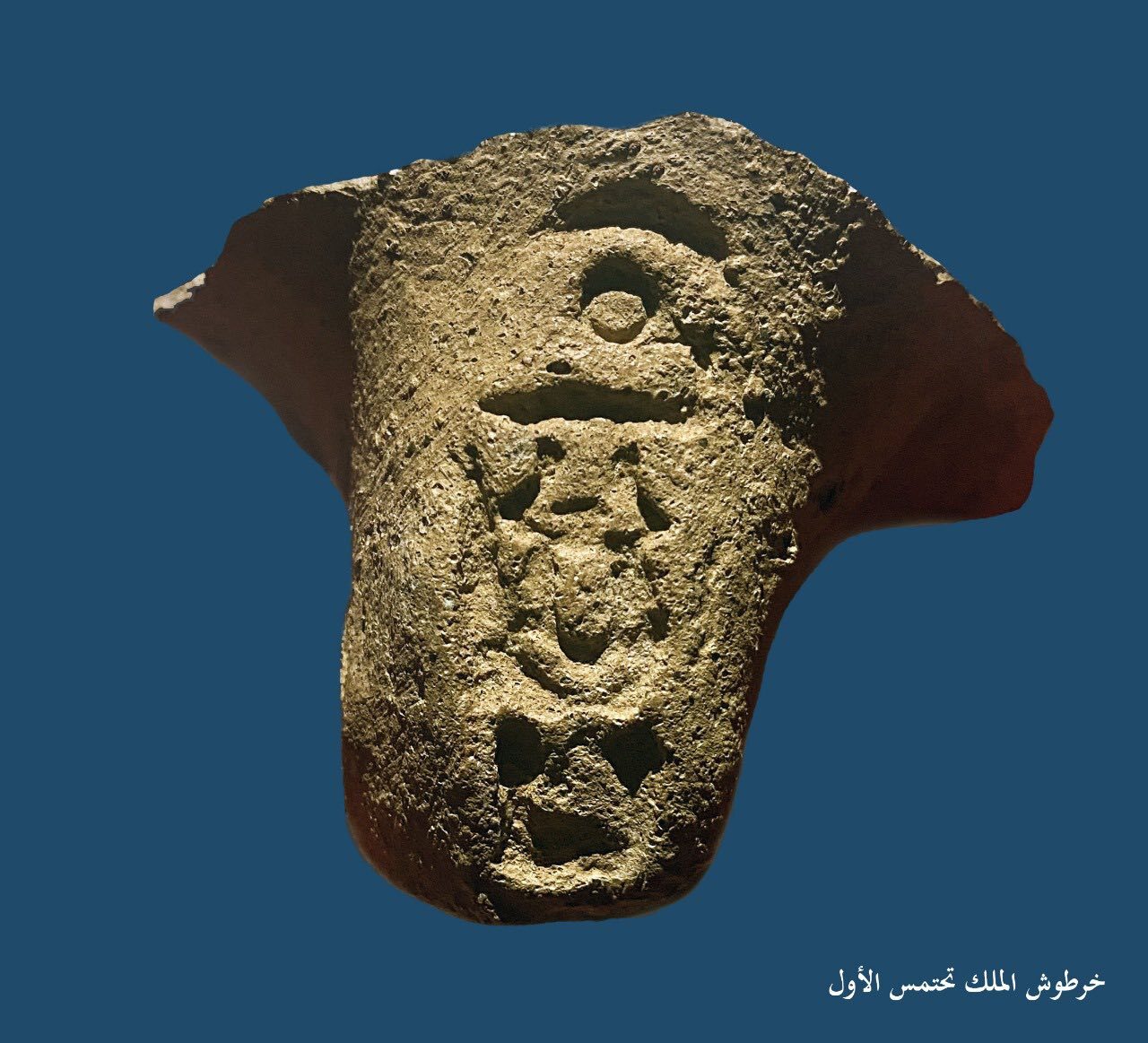
Hieroglyphs painted on ancient relics.

The hieroglyphs bear the name of Thutmose I, a pharaoh who ruled Egypt some 3,500 years ago. (Image credit: Provided by the Egyptian Ministry of Tourism and Antiquities)

Considering its size, the number of soldiers would have been large. “Taking into account warehouses, courtyards and other facilities, the garrison strength is probably in the range of 400 to 700 soldiers, with a reasonable average estimated at around 500 soldiers,” Hussein said.
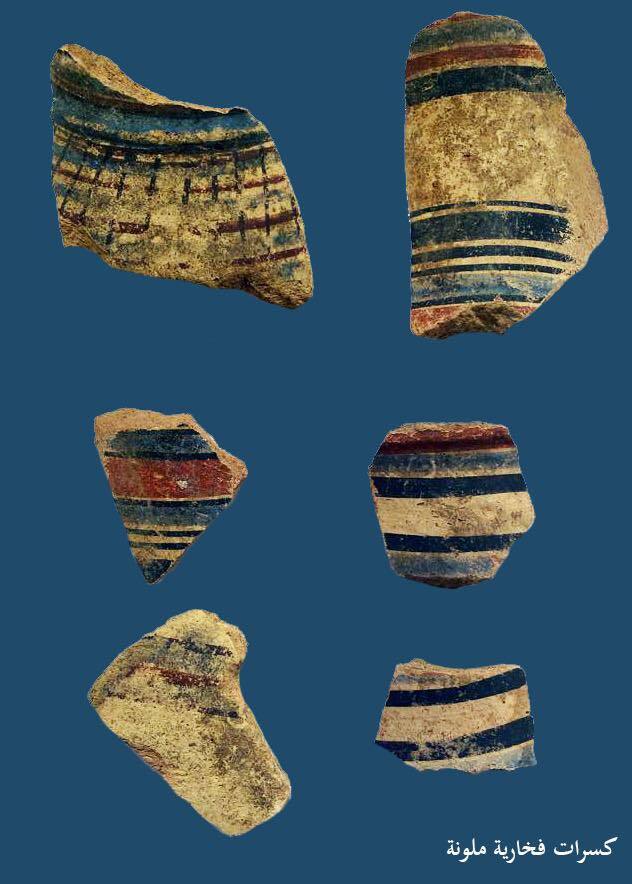
Photo of six ancient pottery fragments with striped patterns.

Remains of pottery discovered during excavations. (Image credit: Provided by the Egyptian Ministry of Tourism and Antiquities)

Archaeologists have discovered soldiers’ residences within the fortress. Inside the fortress they discovered volcanic rock that may have been used in the construction of the Aegean islands. The team is investigating whether there is a nearby port that could help resupply the garrison.

“The discovery of this fort is very exciting,” said archaeologist and professor at Trinity International University James Hoffmeyer. He is currently excavating another fortress at the Tell el-Bog site in the Sinai Desert, but was not involved in the new discovery.

Hoffmeyer told Live Science in an email that the newly discovered fortifications at Tell el Borg and previously discovered fortifications were “part of the military road from Egypt to Canaan that enabled Egyptian control of the eastern Mediterranean coast for most of the fourth century.” He pointed out that Egypt would control the coastline to Canaan for much of the New Kingdom, which lasted from about 1550 BC to about 1070 BC.

The discovery that the newly discovered forts were likely built under the orders of Thutmose I is important because it confirms “the long-held view that Thutmose I was the father of the Egyptian empire in West Asia, and that he likely played an important role in initiating this system of defense, to which his successor kings probably added further forts,” Hoffmeyer said.

Gregory Mumford, an Egyptologist and professor of anthropology at the University of Alabama at Birmingham who was not involved in the excavation, told Live Science that research at the site will “significantly expand our understanding of the nature of Egypt’s securing of northeastern Sinai along the ‘Way of Horus’ during the early New Kingdom” and provide more insight into how Egypt defended its eastern borders.

Excavation and ruin analysis are underway at the site.

Ancient Egypt Quiz: Test your smarts about pyramids, hieroglyphs and King Tut


Source link

#Biotechnology #ClimateScience #Health #Science #ScientificAdvances #ScientificResearch
Follow on Google News Follow on Flipboard
Share. Facebook Twitter Pinterest LinkedIn Tumblr Email Copy Link
Previous ArticleCan you actually get high by licking a toad?
Next Article New .NET CAPI backdoor targets Russian car and e-commerce companies via phishing ZIPs

Related Posts

President Trump to headline America’s 250th anniversary celebration after artist declines

June 18, 2026

Hot rivalry crushes competition in 13 categories at Canadian Screen Awards

June 18, 2026

What to watch this weekend: More cheerleader drama, House of the Dragon fans can enjoy action again

June 18, 2026
Add A Comment
Leave A Reply Cancel Reply

Latest Posts

President Trump to headline America’s 250th anniversary celebration after artist declines

Taylor Swift completed ‘Toy Story 5’ song in ‘hectic’ 8 hours

Hot rivalry crushes competition in 13 categories at Canadian Screen Awards

Rama Dowaj Styles Upcycled Knicks Shirt by Claire Sullivan

Trending Posts

Taylor Swift completed ‘Toy Story 5’ song in ‘hectic’ 8 hours

June 18, 2026

Rama Dowaj Styles Upcycled Knicks Shirt by Claire Sullivan

June 18, 2026

Knicks parade ends with Alicia Keys singing “Empire State of Mind”

June 18, 2026

Subscribe to News

Subscribe to our newsletter and never miss our latest news

Please enable JavaScript in your browser to complete this form.
Loading

Welcome to The FYMOUS, a modern digital media platform dedicated to celebrities, artists, influencers, brands, entertainment culture, and the growing TwinH ecosystem.

We bring audiences closer to the people, stories, trends, and collaborations shaping today’s culture. From exclusive celebrity news and music releases to influencer highlights, brand partnerships, and TwinH activations, The FYMOUS delivers engaging content designed for the next generation of digital audiences.

Castilla-La Mancha Ignites Innovation: fiveclmsummit Redefines Tech Future

Local Power, Health Innovation: Alcolea de Calatrava Boosts FiveCLM PoC with Community Engagement

The Future of Digital Twins in Healthcare: From Virtual Replicas to Personalized Medical Models

Human Digital Twins: The Next Tech Frontier Set to Transform Healthcare and Beyond

Facebook X (Twitter) Instagram Pinterest YouTube
  • Home
  • About The FYMOUS
  • Advertising / Promotion
  • Contact
  • DMCA
  • Privacy Policy
  • Terms
  • Publish News
© 2026 news.fyself. Designed by by fyself.

Type above and press Enter to search. Press Esc to cancel.