
UBC uses benchtop reactors to enhance nuclear fusion reactions
For decades, scientists have pursued nuclear fusion (the process that moves the sun) as the ultimate clean energy solution.
Most efforts focus on huge nuclear reactors that require extreme heat, pressure and $1 billion in facilities to maintain the fusion reaction.
Currently, researchers at the University of British Columbia (UBC) show that advances towards fusion don’t always require large-scale infrastructure.
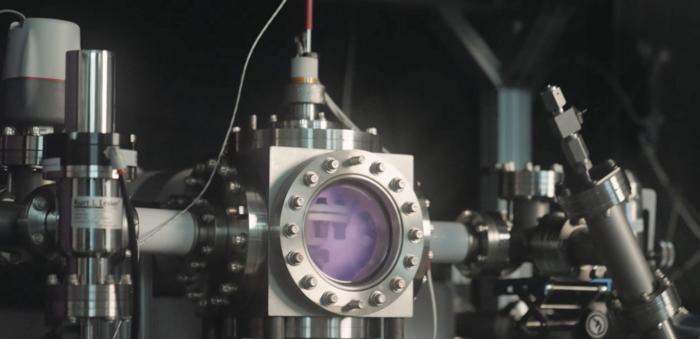
In the study, the team demonstrated that the Thunderbird Reactor, a compact benchtop device, can enhance nuclear fusion reactions using unconventional methods.
Although the experiment did not generate any net energy, it represents a fresh and accessible approach that can accelerate the pace of fusion research around the world.
Thunderbird Reactor
At the heart of this research is the Thunderbird Reactor, a small-scale custom-built particle accelerator.
The reactor combines a plasma raster, vacuum chamber and electrochemical cell to allow researchers to load fuel onto metal targets in innovative ways.
The setup is much more accessible than the giant nuclear reactors currently being built around the world, lowering the barriers to fusion research outside the National Laboratory.
Fueling the fusion process
The UBC team focused on deuterium, a heavy isotope of hydrogen, as a fusion fuel.
Deuterium was loaded in two different ways using a palladium metal target. One has a plasma field and the other has added an electrochemical method.
The electrochemical approach allowed for much higher concentrations of deuterium, effectively compressing the fuel into metal, like a sponge.
Surprisingly, applying 1 volt of power gave results equivalent to 800 times the pressure above the atmospheric level.
This increase in fuel density increased the probability of deuterium collisions that promote nuclear fusion reactions.
Results: Conservative but measurable boost
This experiment showed that when electrochemical loading was combined with plasma implantation, the fusion rate increased by 15%.
Although the system produced no more energy than consumed, this achievement represents the first time that these combined technologies have been shown to enhance deuterium fusion.
Importantly, the team measured direct indicators of hard nuclear signature-fusion events, such as neutron emissions.
Based on the history of fusion energy
The pursuit of deuterium fusion dates back to 1934, when early particle accelerators first achieved the reaction.
Decades later, in 1989, Cold Fusion’s controversial claims were temporarily excited before being rejected due to lack of verification.
However, UBC experiments avoid these pitfalls by relying on measurable nuclear signatures rather than excessive heat.
Platform for future research
Although it is not yet a practical energy source, UBC’s work poses a new direction.
By integrating fusion science with electrochemical and material research, Thunderbird Reactor provides a platform for low-cost research with low reproducibility.
The team hopes this will encourage more researchers to experiment, iterate, refine and refine ways that could ultimately make fusion power a reality.
As global races continue to advance towards clean energy, even modest improvements in the fusion reaction represent a critical step in unlocking one of science’s greatest promises.
Source link

