Close Menu
  • Home
  • Identity
  • Inventions
  • Future
  • Science
  • Startups
  • Spanish
What's Hot

Warning of signal phishing targeting German government agencies, politicians, military personnel and journalists

Benchmark raises $225 million in special funding to double Cerebras

AI startup founder says he plans a ‘March for Billionaires’ to protest California’s wealth tax

Facebook X (Twitter) Instagram
  • Home
  • About Us
  • Advertise with Us
  • Contact Us
  • DMCA
  • Privacy Policy
  • Terms & Conditions
  • User-Submitted Posts
Facebook X (Twitter) Instagram
Fyself News
  • Home
  • Identity
  • Inventions
  • Future
  • Science
  • Startups
  • Spanish
Fyself News
Home » Tiny spiders found in Peru and Philippines that create giant ‘doll’ decoys from their disembodied prey
Science

Tiny spiders found in Peru and Philippines that create giant ‘doll’ decoys from their disembodied prey

userBy userNovember 12, 2025No Comments4 Mins Read
Share Facebook Twitter Pinterest Telegram LinkedIn Tumblr Email Copy Link
Follow Us
Google News Flipboard
Share
Facebook Twitter LinkedIn Pinterest Email Copy Link

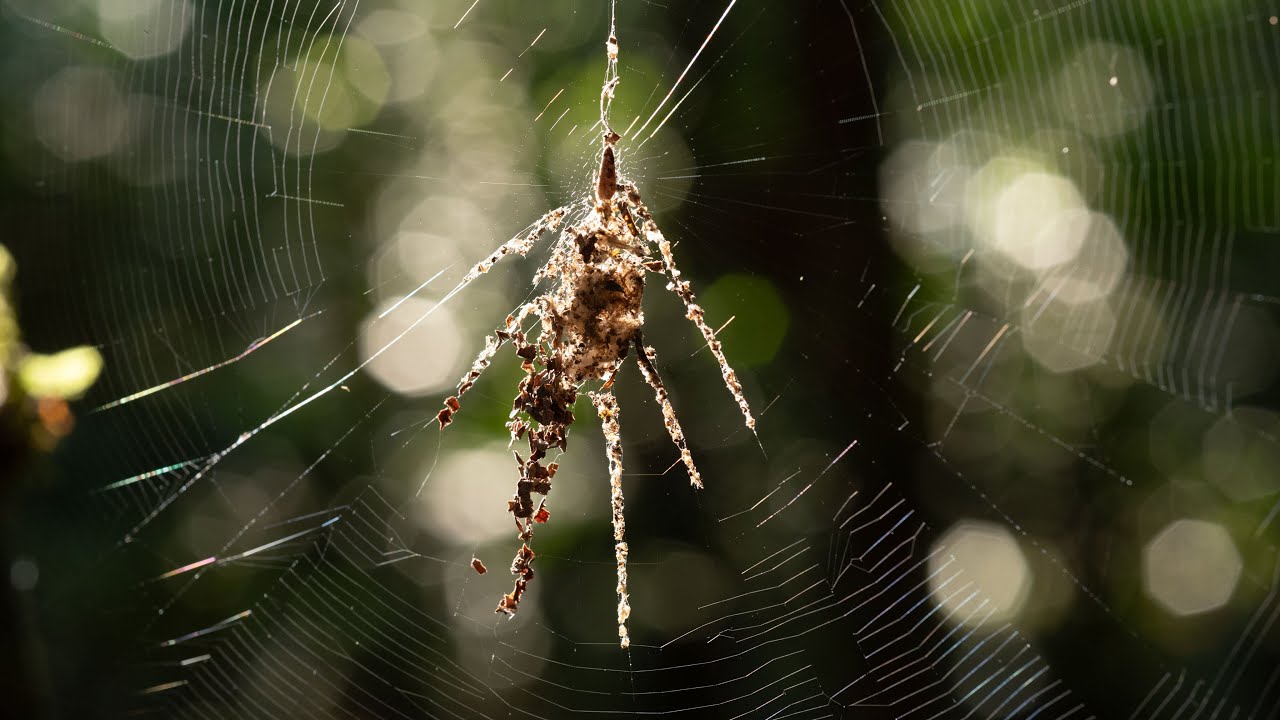
Small tropical spiders in the Philippines and the Peruvian Amazon build giant arachnid-like decoys in their webs to ward off predators, a new study has found.

The oversized imitation spider is made of silk. plant remains. and dead, disembodied prey. While some decoys look rudimentary, others accurately mimic the shape of spiders, according to a study published Nov. 6 in the journal Ecology and Evolution.

These decoy spiders are made by orb weavers Cyclosa inca and Cyclosa longicauda, ​​which are only 2.5 millimeters (0.1 inch) long. Their webs have the classic wheel shape made of silk, but hidden within them are important clues about spiders’ survival strategies in a world full of predators.

you may like

Spider art or survival? 🕷️ Cyclosa’s Fake Spider Mystery | Video Summary – YouTube
Spider art or survival? 🕷️ Cyclosa's Fake Spider Mystery | Video Summary - YouTube

watch on

“They don’t just decorate their webs, they meticulously arrange detritus, prey carcasses and threads to clearly resemble the silhouettes of larger, more menacing spiders than their own,” study lead author George Oller, a conservation geneticist at the Australian National University, said in a statement.

Unlike other orb weavers who create silken tubes and hide in their webs, the two Cyclosa spiders devote time, energy, and resources to crafting these decoys. This means the fake is more than just a strange biological observation, study co-author Lawrence Reeves, an assistant professor in the University of Florida’s Medical Entomology Laboratory, said in a statement.

“This points to a fundamental evolutionary trade-off in the spider world,” Reeves said.

Although researchers have known about the strange behavior of cyclosac spiders for some time, this study marks the first time that their decoy-making behavior has been formally documented and interpreted.

Get the world’s most fascinating discoveries delivered straight to your inbox.

Oler said spiders turn their webs into “theaters of deception” to keep attackers at bay.

The decoy likely scares away birds, lizards, and other natural predators, encouraging them to stay away. It can also serve as camouflage for small cyclosac spiders, which have the same color as their own creations, allowing them to hide among plants and prey debris.
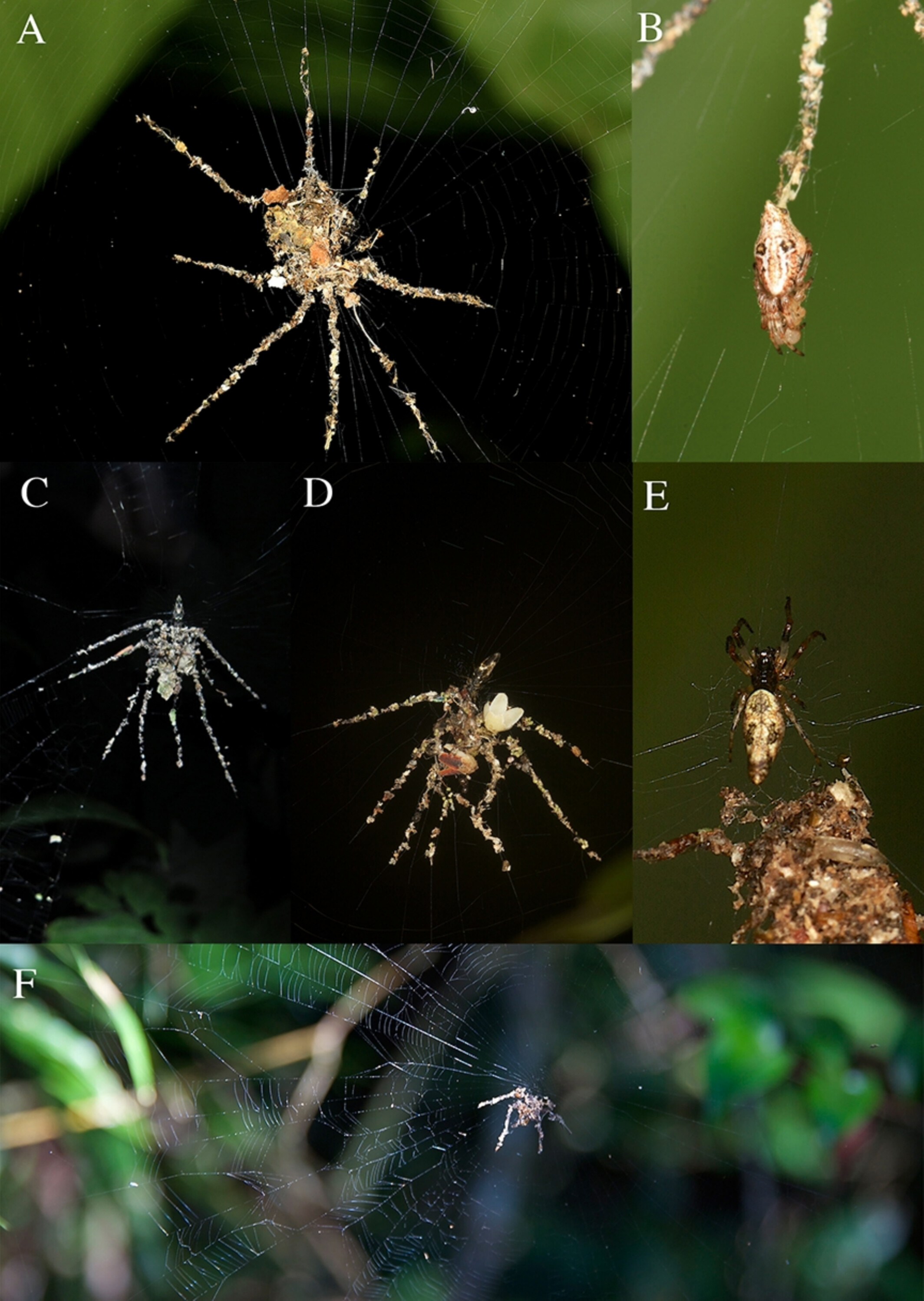
Various examples of spider-shaped decoys in spider webs.

Researchers have documented various examples of fake spider decoys present in Cyclosa webs. (Image credit: Olah et al. 2025, Ecology and Evolution (CC BY 4.0))

According to the study, the decoys may be as effective at protecting cyclosac spiders from predators as the hideouts made by other orb weavers, explaining why the spiders put so much energy into creating them. When a predator approaches the nest, the spider hidden inside the decoy vibrates its abdomen, causing the fake spider to vibrate and appear alive.

you may like

Spiders do this day and night, the researchers wrote in their study. “When approached further, the spider jumped from its web to the ground,” the researchers said, noting that it was observed several times in the Peruvian Amazon in 2022, adding that the arachnid returned to its nest once the perceived threat was gone.

Juan Carlos Yatto, a nature guide from Peru’s Tambopata National Reserve who collaborated with the study authors, said in a video that the decoys could provide a safe place for the cyclosac spider to lay its eggs. The spider moves the contents of its web to a new location by constructing a single thread, carrying along the thread the eggs and any debris or body parts used as decoys. In this scenario, the dismantled decoys could potentially camouflage the eggs during relocation, Yat said.

Other benefits of making decoys may be to attract prey and strengthen spider webs against bad weather, the researchers wrote in the study. More research is needed to understand these different benefits, Oler said.

The black widow spider and its strangely decorated nests are featured in the documentary series The Secret Lives of Animals.

Spider Quiz: Test your web of knowledge


Source link

#Biotechnology #ClimateScience #Health #Science #ScientificAdvances #ScientificResearch
Follow on Google News Follow on Flipboard
Share. Facebook Twitter Pinterest LinkedIn Tumblr Email Copy Link
Previous ArticleGoogle launches ‘Private AI Computing’ – secure AI processing with on-device level privacy
Next Article Microsoft fixes 63 security flaws, including zero-days, in Windows kernel under active attack
user
  • Website

Related Posts

Psychedelics may rewire the brain to treat PTSD. Scientists are finally beginning to understand how.

February 6, 2026

All major galaxies except one are moving away from the Milky Way – and we finally know why

February 6, 2026

“Mono” viruses increase the risk of MS and cancer for some people. 22 genes suggest why.

February 5, 2026
Add A Comment
Leave A Reply Cancel Reply

Latest Posts

Warning of signal phishing targeting German government agencies, politicians, military personnel and journalists

Benchmark raises $225 million in special funding to double Cerebras

AI startup founder says he plans a ‘March for Billionaires’ to protest California’s wealth tax

From Svedka to Anthropic, brands are boldly leveraging AI in their Super Bowl ads

Trending Posts

Subscribe to News

Subscribe to our newsletter and never miss our latest news

Please enable JavaScript in your browser to complete this form.
Loading

Welcome to Fyself News, your go-to platform for the latest in tech, startups, inventions, sustainability, and fintech! We are a passionate team of enthusiasts committed to bringing you timely, insightful, and accurate information on the most pressing developments across these industries. Whether you’re an entrepreneur, investor, or just someone curious about the future of technology and innovation, Fyself News has something for you.

Castilla-La Mancha Ignites Innovation: fiveclmsummit Redefines Tech Future

Local Power, Health Innovation: Alcolea de Calatrava Boosts FiveCLM PoC with Community Engagement

The Future of Digital Twins in Healthcare: From Virtual Replicas to Personalized Medical Models

Human Digital Twins: The Next Tech Frontier Set to Transform Healthcare and Beyond

Facebook X (Twitter) Instagram Pinterest YouTube
  • Home
  • About Us
  • Advertise with Us
  • Contact Us
  • DMCA
  • Privacy Policy
  • Terms & Conditions
  • User-Submitted Posts
© 2026 news.fyself. Designed by by fyself.

Type above and press Enter to search. Press Esc to cancel.