

Close Menu
  • Home
  • Identity
  • Inventions
  • Future
  • Science
  • Startups
  • Spanish
What's Hot

Microsoft legal action disrupts RedVDS cybercrime infrastructure used for online fraud

Europe’s auto workers need to be retrained for electrification

Palo Alto fixes GlobalProtect DoS flaw that could crash firewall without logging in

Facebook X (Twitter) Instagram
  • Home
  • About Us
  • Advertise with Us
  • Contact Us
  • DMCA
  • Privacy Policy
  • Terms & Conditions
  • User-Submitted Posts
Facebook X (Twitter) Instagram
Fyself News
  • Home
  • Identity
  • Inventions
  • Future
  • Science
  • Startups
  • Spanish
Fyself News
Home » A sunken city discovered in a Kyrgyzstan lake was a medieval hotspot on the Silk Road – until it was obliterated by an earthquake
Science

A sunken city discovered in a Kyrgyzstan lake was a medieval hotspot on the Silk Road – until it was obliterated by an earthquake

userBy userNovember 18, 2025No Comments4 Mins Read
Share Facebook Twitter Pinterest Telegram LinkedIn Tumblr Email Copy Link
Follow Us
Google News Flipboard
Share
Facebook Twitter LinkedIn Pinterest Email Copy Link

Archaeologists have discovered a submerged medieval city at the bottom of a salt lake in northeastern Kyrgyzstan.

This place was an important stop on one of the Silk Roads between China and the West during the Middle Ages. However, the city there was hit by a major earthquake in the 15th century and is thought to have sunk under water.

Researchers are currently exploring the submerged site of Lake Issyk-Kul, high in the Tien Shan Mountains near the border of Kyrgyzstan and Kazakhstan, and have discovered the ruins of a submerged city, the Russian Geographical Society said in a statement.

you may like

submerged city

According to the Kyrgyz government, Lake Issyk-Kul is one of the deepest lakes in the world, reaching 2,300 feet (700 meters) below the surface in parts. There is no river outlet, so the saltiness is modest.

The researchers investigated four submerged sites near the northwest shore of the lake, ranging in depth from 1 to 4 meters. This place was called Tor Aigir and was inhabited mainly by Muslims during the Middle Ages.

“The monuments studied are cities or large commercial agglomerations in one of the important areas of the Silk Road,” archaeologist Valery Kolchenko, head of the expedition’s Kyrgyz research team, said in a statement.

“In the early 15th century, as a result of a terrible earthquake, the city sank under the waters of a lake…The tragedy may be comparable to Pompeii.”

Get the world’s most fascinating discoveries delivered straight to your inbox.

The research team discovered the remains of several buildings made of kiln-fired bricks that are now submerged in water. This includes buildings that once contained stone mills, evidence that this was once a grain mill.

Also discovered were collapsed stone structures, wooden beams, and the remains of public buildings with exterior decorations that may have been mosques or Islamic schools known as madrassas.
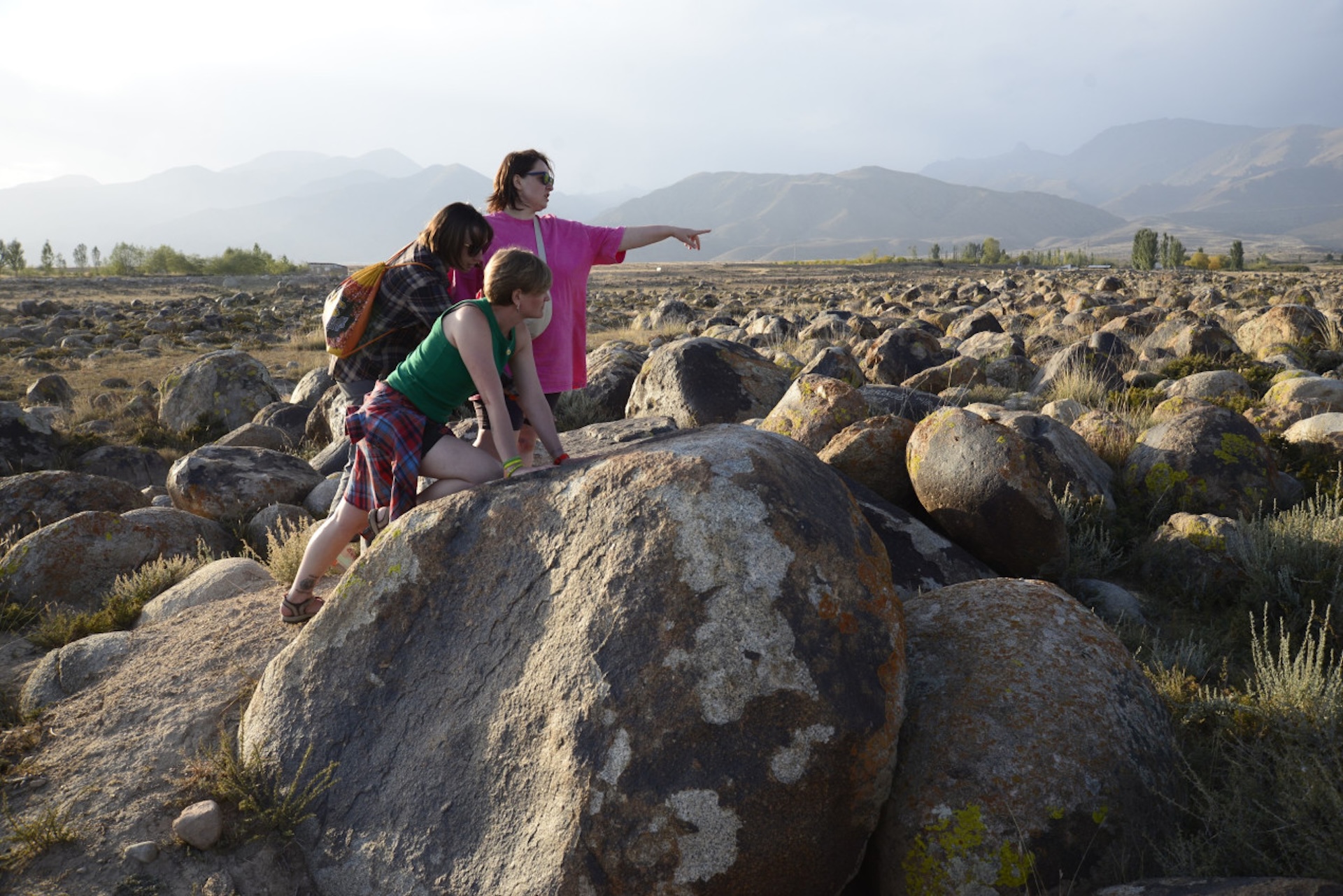
Three researchers on the rocky shore of a lake

Several expedition researchers stand by Lake Issyk-Kul, high in the Tien Shan Mountains near the border of Kyrgyzstan and Kazakhstan. (Image credit: Denis Davidoff)

medieval muslim cemetery

One of the underwater sites revealed the remains of a Muslim cemetery covering an area of ​​about 14 acres (6 hectares), the equivalent of 11 soccer fields.

you may like

The team recovered the remains of two of the dead from the cemetery and found that their faces were facing towards Mecca, which is now located in Saudi Arabia. This is a common practice in Muslim burials.

Archaeologists believe the cemetery dates back to the 13th century, when Islam was brought to the region by the Golden Horde, a Mongol state that ruled much of Central Asia from the 1240s to 1502.

According to the statement, the region had previously been ruled by the Karakhanids, a Turkic dynasty centered in Kyrgyzstan, since the 10th century.

Maxim Menshikov, expedition leader at the Institute of Archeology of the Russian Academy of Sciences, said in a statement that Tor Aigir was a multicultural city when it was founded before the 13th century. “The people here practiced a variety of religions, including pagan Tengrianism, Buddhism, and Nestorian Christianity,” he says. But the introduction of Islam changed the character of the city, as people preferred to trade with other Muslims, he said.

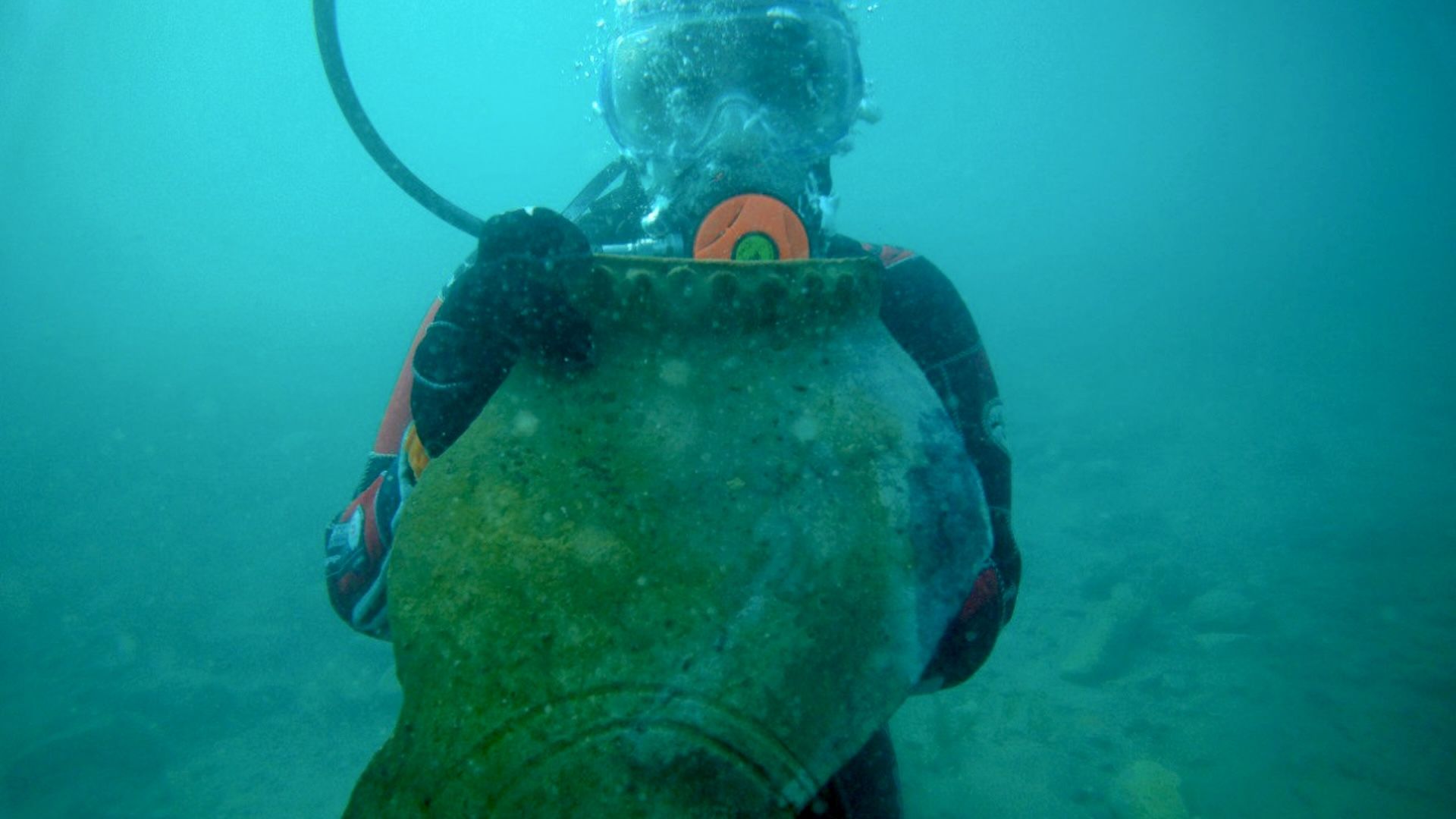
Other remains of the sunken city have uncovered some medieval Islamic pottery, including a large, intact qum, or water jar, which researchers hope to salvage in a future expedition.

Three burials were also discovered nearby, but these are thought to have been in an earlier non-Muslim cemetery.

Researchers also discovered the remains of mud-brick buildings and conducted underwater drilling at the site to collect sediment cores that can be used to reconstruct the city’s developmental stages, the statement said.


Source link

#Biotechnology #ClimateScience #Health #Science #ScientificAdvances #ScientificResearch
Follow on Google News Follow on Flipboard
Share. Facebook Twitter Pinterest LinkedIn Tumblr Email Copy Link
Previous ArticleDNA damage in CTE is similar to that in Alzheimer’s disease
Next Article Hugface CEO says we’re in an ‘LLM bubble’, not an AI bubble
user
  • Website

Related Posts

Largest crowdsourced search for alien information, data from collapsed Arecibo Observatory reveals 12 billion “signals of interest”

January 13, 2026

Giant iceberg A23a, once the world’s largest iceberg, finally dies after 40 years at sea, turning into a bright “blue mush”

January 13, 2026

Artemis 2 mission update: NASA prepares first manned Artemis mission to the moon, deployment imminent

January 13, 2026
Add A Comment
Leave A Reply Cancel Reply

Latest Posts

Microsoft legal action disrupts RedVDS cybercrime infrastructure used for online fraud

Europe’s auto workers need to be retrained for electrification

Palo Alto fixes GlobalProtect DoS flaw that could crash firewall without logging in

3km X-ray laser measures the hottest solid material on Earth

Trending Posts

Subscribe to News

Subscribe to our newsletter and never miss our latest news

Please enable JavaScript in your browser to complete this form.
Loading

Welcome to Fyself News, your go-to platform for the latest in tech, startups, inventions, sustainability, and fintech! We are a passionate team of enthusiasts committed to bringing you timely, insightful, and accurate information on the most pressing developments across these industries. Whether you’re an entrepreneur, investor, or just someone curious about the future of technology and innovation, Fyself News has something for you.

Castilla-La Mancha Ignites Innovation: fiveclmsummit Redefines Tech Future

Local Power, Health Innovation: Alcolea de Calatrava Boosts FiveCLM PoC with Community Engagement

The Future of Digital Twins in Healthcare: From Virtual Replicas to Personalized Medical Models

Human Digital Twins: The Next Tech Frontier Set to Transform Healthcare and Beyond

Facebook X (Twitter) Instagram Pinterest YouTube
  • Home
  • About Us
  • Advertise with Us
  • Contact Us
  • DMCA
  • Privacy Policy
  • Terms & Conditions
  • User-Submitted Posts
© 2026 news.fyself. Designed by by fyself.

Type above and press Enter to search. Press Esc to cancel.