


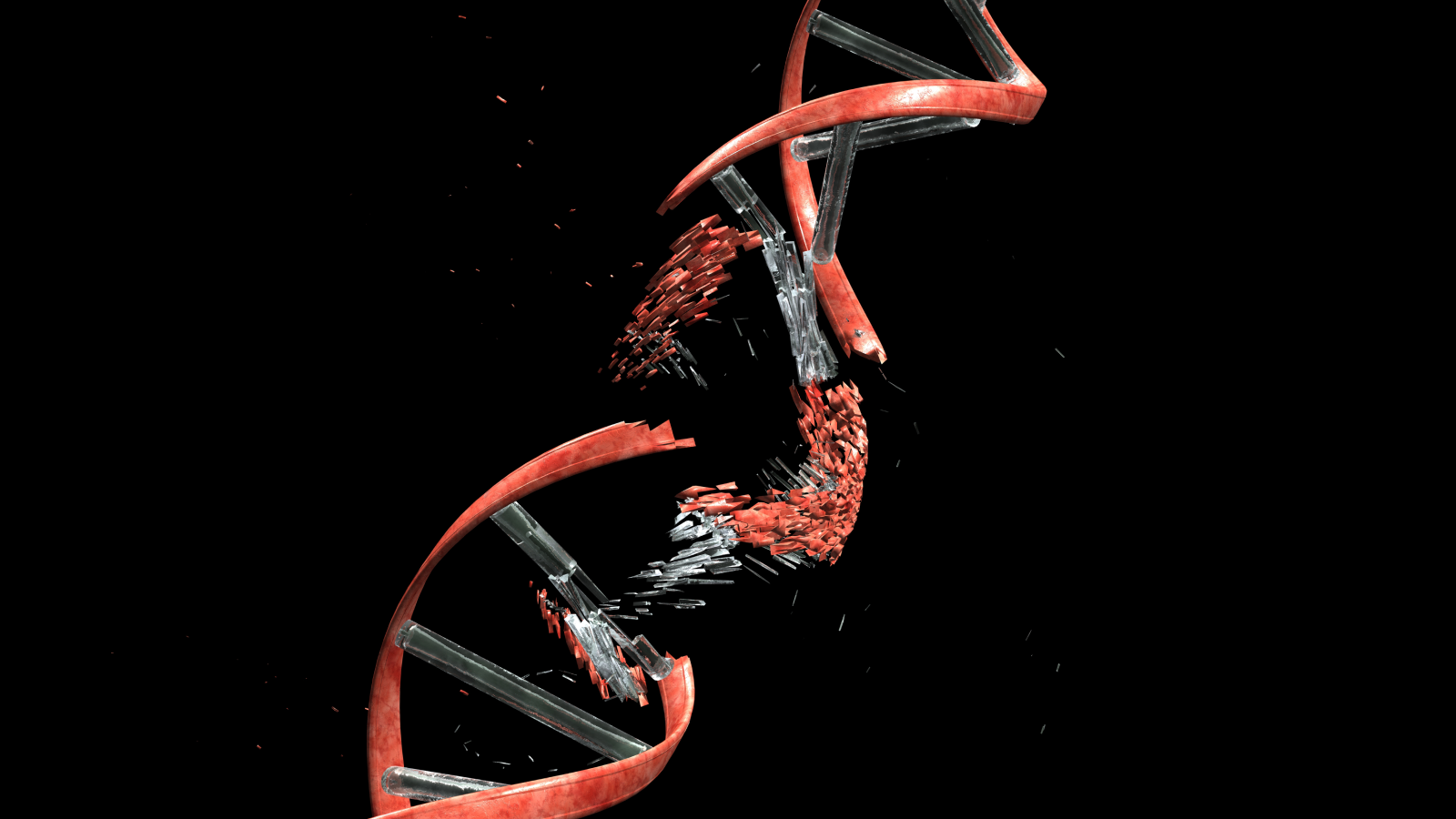
The brain disease chronic traumatic encephalopathy (CTE) is associated with physical trauma to the head, which can cause inflammation and DNA damage that accumulates in brain cells over time, a new study finds.
Research suggests that the DNA damage that can ultimately lead to cell dysfunction and death is similar to damage seen in the brains of people with Alzheimer’s disease.
you may like
Scientists behind the new study decided to take a closer look at the link between DNA damage and CTE after discovering that mature neurons accumulate mutations throughout their lives, even though they don’t divide. In a 2015 study, researchers found that these mutations accumulate even faster in brain diseases such as Alzheimer’s disease.
“We thought neurons had the most stable genomes in the body,” said Dr. Christopher Walsh, a geneticist at Boston Children’s Hospital and co-author of both the previous study and the new study. “But they’re finding mutations year after year, and they’re finding that those mutations are accelerating in neurodegenerative diseases,” he told Live Science.
This finding raises the question whether DNA damage that accumulates in other brain diseases may also cause the neuron loss seen in CTE.
In the new study, published Oct. 30 in the journal Science, researchers analyzed the genomes of individual neurons taken from 15 people who were postmortem diagnosed with CTE, and from four people who suffered repeated head impacts but did not develop CTE. The research team compared these neurons with cells from healthy brains and cells from Alzheimer’s patients. They did this using single-cell whole-genome sequencing, which analyzes all the DNA within each sampled cell.
The results showed that neurons from CTE brains had more DNA mutations than neurons from healthy brains. On average, each neuron contained about 114 additional one-letter changes to its DNA code. However, neurons from people who suffered repeated head impacts but did not develop CTE showed no increase in mutations compared to healthy brains.
The researchers observed that the pattern of mutations seen in CTE appears to be very similar to that occurring in Alzheimer’s disease. Both have an increased number of mutations and similar types of DNA changes.
The team’s previous work “found that neurons that don’t replicate actually accumulate mutations at a constant rate throughout their lives,” Walsh said. “Even in a healthy brain, from birth to old age, the clock advances about 17 new mutations a year. But when you get sick, the clock speeds up.”
you may like
The researchers also identified another type of genetic damage: short insertions and deletions known as indels, which add or remove letters from the DNA code. These small DNA breaks were more abundant in neurons in both CTE and Alzheimer’s brains than in healthy brains. Some CTE cases had more than 1,000 indels in their neurons. This is comparable to what would be seen if normal aging continued for more than a century.
“These indels are increasing,” Walsh says. “They are probably in sufficient numbers to cause severe dysfunction and death in the affected cells.”
Although this study did not directly examine inflammation in neurons, previous work by study co-authors Dr. Anne McKee, a neuropathologist at the Boston University (BU) CTE Center, and John Cherry, a BU neuroscientist, showed that inflammation is widespread activation of microglia (the brain’s immune cells) in CTE brains.
“We think CTE may be a combination of repeated head trauma and inflammation,” Walsh said. Because both UV and tobacco exposure cause DNA damage, “the combination could expose the genome to the same kind of damaging processes that UV light causes in the skin, or the same kinds of damaging processes that cause cigarette smoke in the lungs.”
In summary, repeated head impacts can cause inflammation in the brain, which can promote the accumulation of DNA mutations within neurons and contribute to cell dysfunction and cell death. These findings suggest that while head trauma remains the primary trigger for CTE, long-term harm is likely caused by DNA damage caused by inflammation.
The research team is now investigating whether similar processes occur in other neurodegenerative diseases, such as amyotrophic lateral sclerosis (ALS) and Huntington’s disease.
“This could be a common final pathway for a variety of diseases,” Walsh said. “We want to track the biochemical steps from inflammation to neuron death and figure out where we can intervene.”