


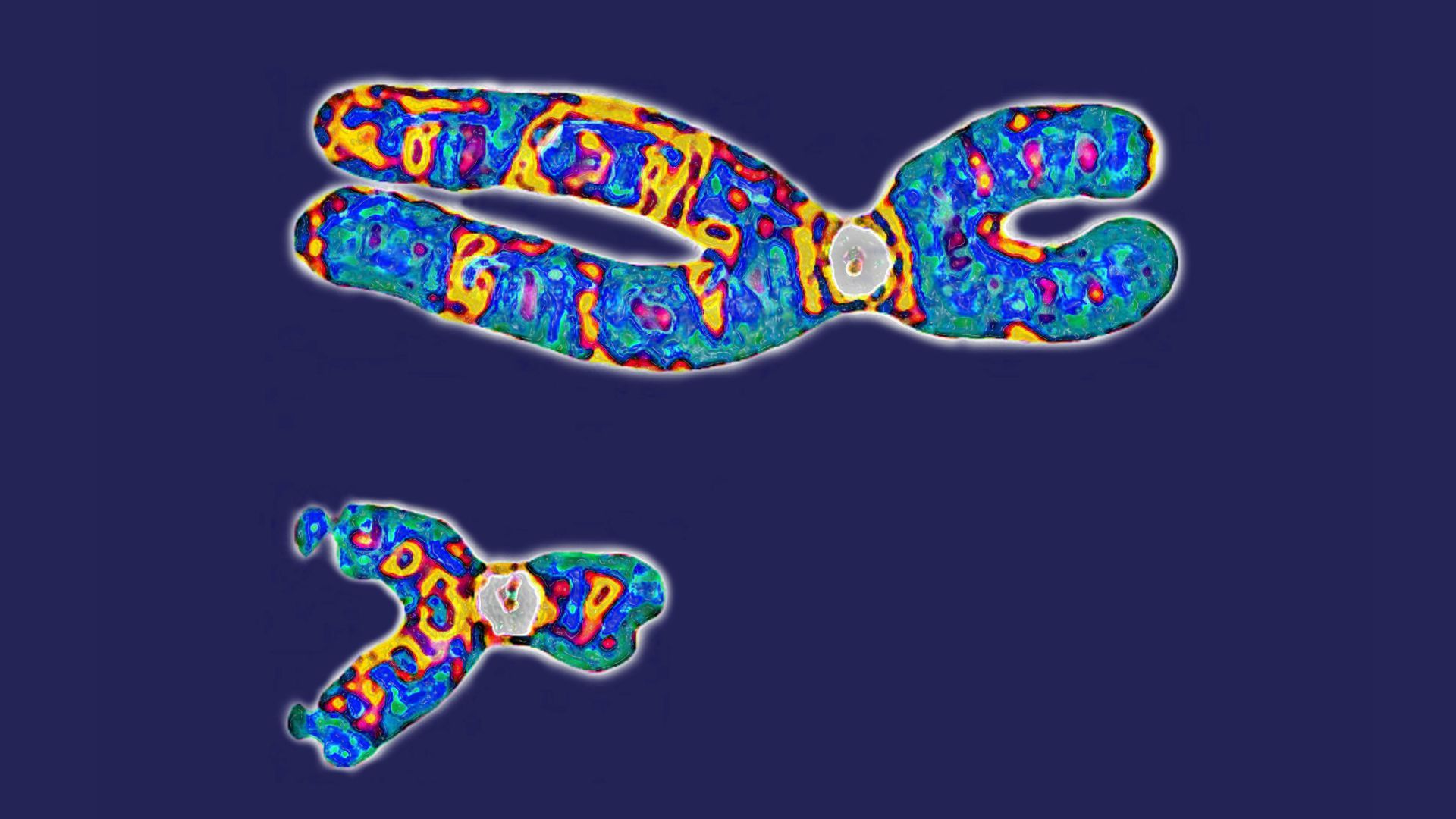
Patient: 35-year-old female living in Brazil
Symptoms: A woman presents to the hospital after suffering a miscarriage during her seventh week of pregnancy. Prior to the hospital visit, the woman’s gynecologist decided to test the patient’s chromosomes to see if there was an underlying genetic reason for the miscarriage.
The most common karyotype, or chromosomal profile, for women is 46,XX. 46 indicates that each cell has 23 pairs of chromosomes. Two of these are sex chromosomes, usually XX for women and XY for men. However, testing revealed that the patient’s blood cell karyotype was 46,XY, a typical male karyotype.
you may like
What happened next: At the hospital, doctors performed two more blood tests and ordered more tests to check for other chromosomes in the woman’s body. Her skin cell karyotype was 46,XX.
Doctors then conducted a physical examination of the patient. Her visible features were female, and no abnormalities were found in her genitals or reproductive system. Her hormone production was also within normal limits. She told doctors that her sexual development was normal during adolescence and that she began menstruating regularly when she was 13 years old. Her medical history had no unusual health problems, and she was the first in her family to be tested for possible genetic disorders, doctors wrote in a report describing her case.
Diagnosis: Doctors identified her condition as chimerism. In chimerism, the body contains at least two different sets of DNA between different cells.
This can occur after a blood transfusion or organ transplant, where one person receives tissue (and therefore DNA) from another person. However, chimerism can also occur naturally when several fertilized eggs fuse together in the uterus to produce a single fetus, or when cells and their DNA are “exchanged” in the uterus. This exchange can occur between mother and fetus, and can also occur between twins who share the same placenta or whose individual placentas interact in some way.
The patient in this case had a twin brother. When doctors analyzed samples taken from the woman’s siblings and parents, they found genetic mutations in the twin brothers’ XY blood cells that matched those in the patient’s blood. The researchers concluded that while the woman incorporates the twin’s DNA into her blood cells during fetal development, she carries another copy of the DNA with the XX chromosome in the rest of her body’s tissues.
“There was a blood transfusion process called interfetal transfusion,” report co-author Dr. Gustavo Arantes Rosa Maciel, professor of medicine at the University of São Paulo, told BBC News Africa (translated from French). “At one point, the veins and arteries of both children became intertwined with the umbilical cord.”
Results: Approximately 11 months after the patient’s miscarriage, after the hospital tests were completed, the woman became pregnant again. As a precautionary measure due to a previous miscarriage, doctors prescribed supplements of the hormone progesterone, which is administered vaginally during pregnancy. There were no complications and I gave birth to a healthy baby boy.
you may like
Characteristics of this case: In most patients with chimerism involving sex chromosomes, the condition presents with significant physical or reproductive problems. This is the first known example of complete blood chimerism in a woman with typical female characteristics, no health problems, and was able to conceive. This case suggests that chimerism in humans is not necessarily a barrier to reproduction.
According to the report, this is also the first case in medical literature where a patient became a chimera in utero via the blood of a twin.
Remarkably, even karyotype testing to determine a woman’s condition is not commonly performed. This is not part of a standard medical examination. Therefore, it is unclear how common individuals carrying hidden chromosomal abnormalities are, and as a result, the incidence of blood chimerism is likely underreported, the authors write. In fact, research suggests that other types of chromosomal mutations are also underreported, such as having an extra sex chromosome.
For more interesting medical cases, check out our Diagnostic Dilemma archives.
This article is for informational purposes only and does not provide medical advice.