


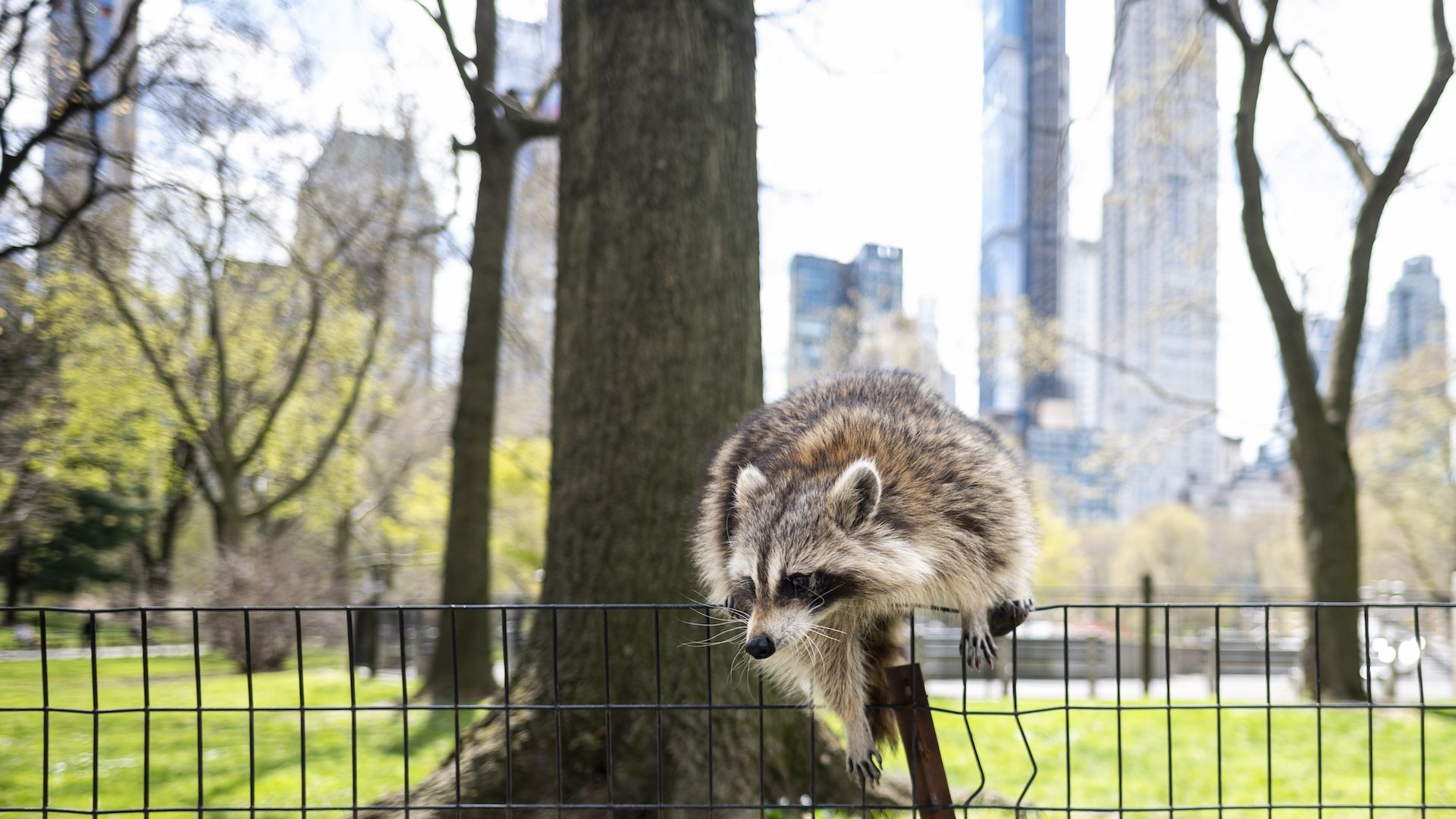
Raccoons living in cities are showing early signs of domestication, a new study has found.
Using photos uploaded to the citizen science platform iNaturalist, researchers found that raccoons in urban environments had shorter snouts than those in rural areas. This difference may be one of several characteristics that constitute a “domestication syndrome,” the scientists said in a study published Oct. 2 in the journal Frontiers in Zoology.
you may like
“We wanted to know whether living in an urban environment initiates the domestication process in currently undomesticated animals,” study co-author Rafaela Resch, a zoologist at the University of Arkansas at Little Rock, said in a statement. “Are raccoons on the path to domestication just by hanging around humans?”
Domestication begins when animals adapt to new niches created by human presence. For a raccoon, that niche may include taking root in a trash can.
“Trash is truly a Kickstarter,” Lesh said. The waste becomes an easy meal for the creatures. “All they have to do is not be aggressive and tolerate our presence, so they can eat whatever we throw away.”
In the new study, Resch and a team of 16 students looked for early signs of raccoon domestication in the United States. Physical signs that a species has been domesticated often include a short snout, floppy ears, white spots, and a reduced fear response, a set of traits collectively known as the “domestication syndrome.”
From about 20,000 photos uploaded to iNaturalist, the researchers found that raccoons living in densely populated areas have noses that are about 3.5 percent shorter than those living in more rural counties.
These seemingly unrelated “domestication syndrome” traits tend to arise early in domestication and may be related thanks to mutations that occur during animal development. In 2014, scientists proposed that mutations in neural crest cells, a type of stem cell that forms in vertebrate embryos, could cause these changes.
The new findings appear to support that hypothesis, the researchers wrote in the study. Natural selection may make that bravery more common in urban environments, as a reduced fear response helps animals like raccoons take advantage of the human environment. The researchers said changes in snout length early in domestication may suggest that the two traits are related.
Future research will examine whether the same pattern holds for other urban mammals, such as opossums, the statement said.
“This will help us know whether human presence is enough to already start the process of domestication of the species,” Lesh said.