


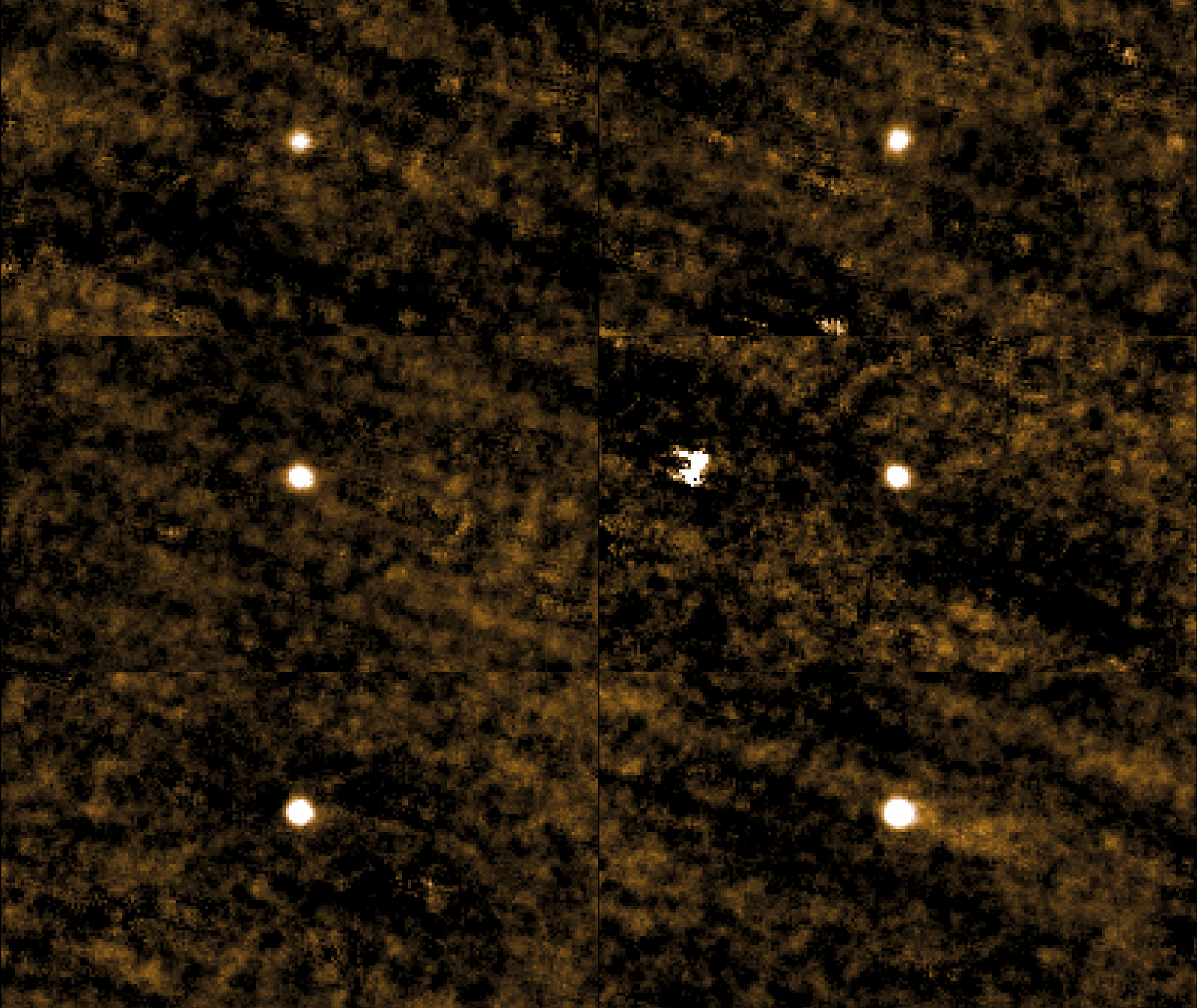
NASA has finally released a cache of previously unreleased images of comet 3I/ATLAS, emphasizing that the interstellar visitor is a natural object.
Comet 3I/ATLAS has become a celestial celebrity since its discovery in July. One reason for this is the constant speculation that it could be an alien spacecraft. Most astronomers are confident that this interstellar visitor is a natural comet from an unknown star system, but NASA has remained silent about the comet in recent weeks due to the U.S. government shutdown.
This outage, which lasted from October 1 to November 12, coincided with Comet 3I/ATLAS flying behind the Sun, reaching its closest point to the Sun (perihelion) on October 29, and entering its most active phase. NASA’s delay in releasing new images during this period fueled conspiracy theories, with some speculating that the agency was hiding something.
you may like
watch on
When NASA hosted a stream showcasing the long-awaited images on Wednesday (November 19), the results were shocking. Shortly after the meeting began, NASA Deputy Administrator Amit Kshatriya said he wanted to address what he called “rumours.”
“This object is a comet,” Kshatriya said. “It looks and behaves like a comet…and all the evidence points to it being a comet. But this one comes from outside our solar system, which is what makes it fascinating and exciting and so scientifically important.”
The comet’s natural origins should not detract from the 3I/ATLAS story. This object is only the third interstellar comet ever recorded, potentially the oldest comet ever observed, and the most massive of its kind, so there are many reasons why this object is interesting to humans beyond aliens.
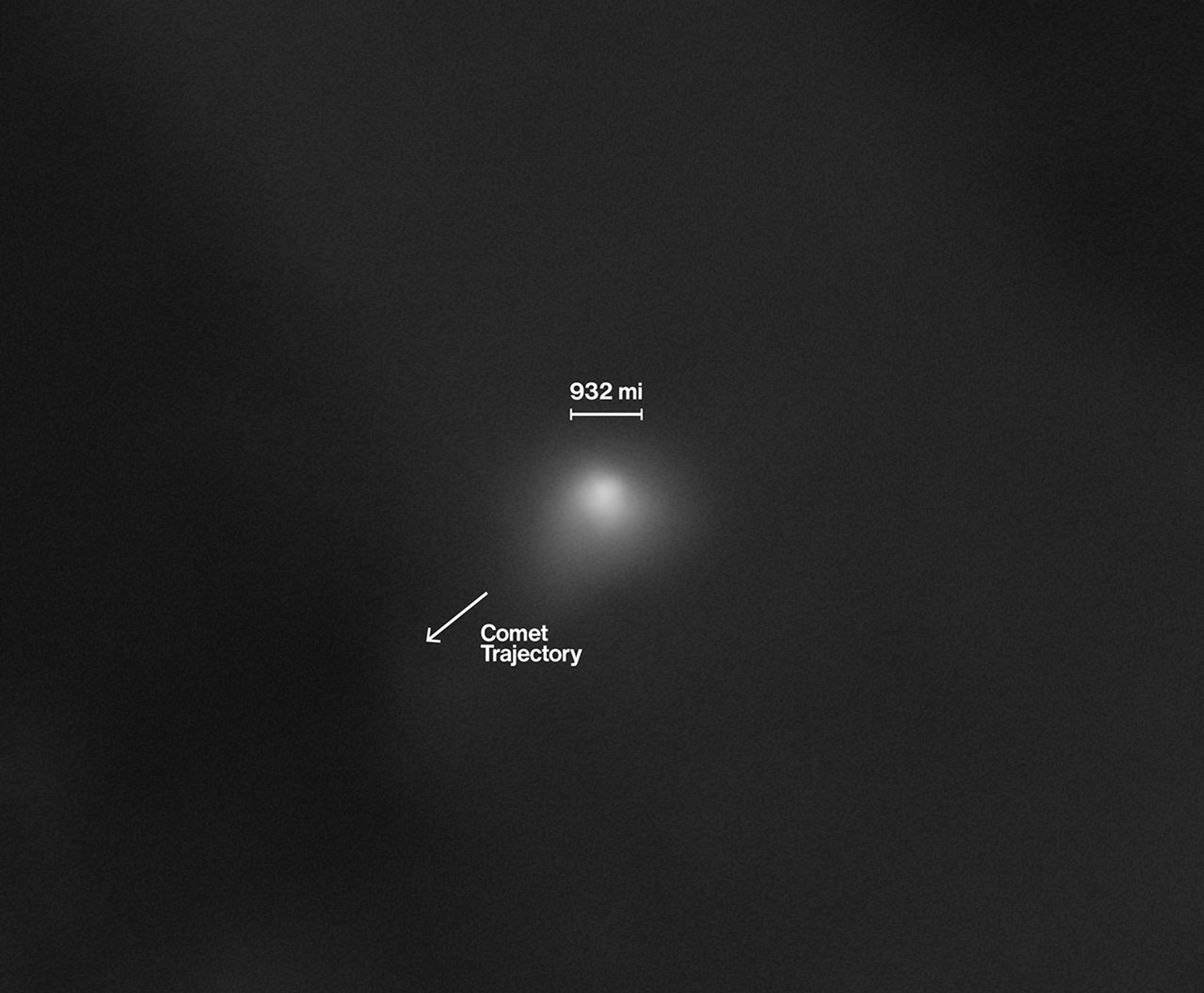
The new images were taken using a variety of instruments, with the closest shot coming from NASA’s Mars Reconnaissance Rover. The rover has been orbiting Mars since 2006, searching for signs of water on Mars with its onboard High-Resolution Imaging Science Experiment (HiRISE). This imager photographed comet 3I/ATLAS as it passed Mars in early October.
The Mars Atmosphere Volatile Evolution (MAVEN) spacecraft also took 3I/ATLAS ultraviolet images of the comet, which will help researchers better understand the comet’s composition, NASA said.
Elsewhere, solar monitors like NASA’s Solar-Terrestrial Relations Observatory (STEREO) and the asteroid-tracking spacecraft Psyche and Lucy have captured more new views of comet 3I/ATLAS. The space agency noted that these observations provide details about the comet’s tail. However, the findings from the images have been limited so far, as they have only recently been processed and are currently being studied.
The interstellar invader originated somewhere outside our solar system. Researchers don’t know which star system it came from, but it could be billions of years old, making it more than 3 billion years older than our sun.
The comet’s age has not yet been confirmed, but Tom Statler, chief scientist for small solar system bodies in NASA’s Planetary Science Division, said it likely has been in interstellar space for a very long time, as it is plummeting three times faster than the average speed at which stars in our cosmic neighborhood orbit the center of the Milky Way.
“We can’t say for sure, but it’s likely that they came from a solar system older than our own,” Statler said during the stream. “This gives me goosebumps when I think about it frankly, because it means that 3I/ATLAS is not just a window into another solar system, but a window into the deep past. And so deep in the past that it means it’s older than the formation of the Earth and the Sun.”