



Scientists have finally discovered how a strange desert plant can grow in one of the hottest places on Earth. It turns out that this vigorous plant changes its internal arrangement as the temperature rises.
Extreme conditions frequently occur in California’s Death Valley. Temperatures often exceed 120 degrees Fahrenheit (49 degrees Celsius) in the shade during summer. Most plants die when faced with such heat, but one plant, Tidestromia oblongifolia, thrives.
Now, researchers have discovered that these grey-green flowering shrubs grow smaller leaves and rearrange their interiors to thrive even under extremely hot conditions. They also discovered that the shrub has the highest photosynthetic thermotolerance, the ability to photosynthesize at high temperatures of any known plant.
you may like
The study was published in Current Biology on November 17th.
Climate change is increasing global temperatures and increasing the frequency of heat waves. The heat has already reduced yields of staple foods such as wheat and corn, and scientists and officials are concerned about how this will affect food security as temperatures continue to rise.
Heat-loving plants like T. oblongifolia may hold secrets that help other plants survive the heat and keep food on people’s plates. “Understanding that adaptation could help researchers design crop, environmental, and management strategies to improve growth under increasingly frequent and prolonged high temperatures,” study co-author Soon Lee, a plant biologist and director of Michigan State University’s Plant Resilience Institute, told Live Science.
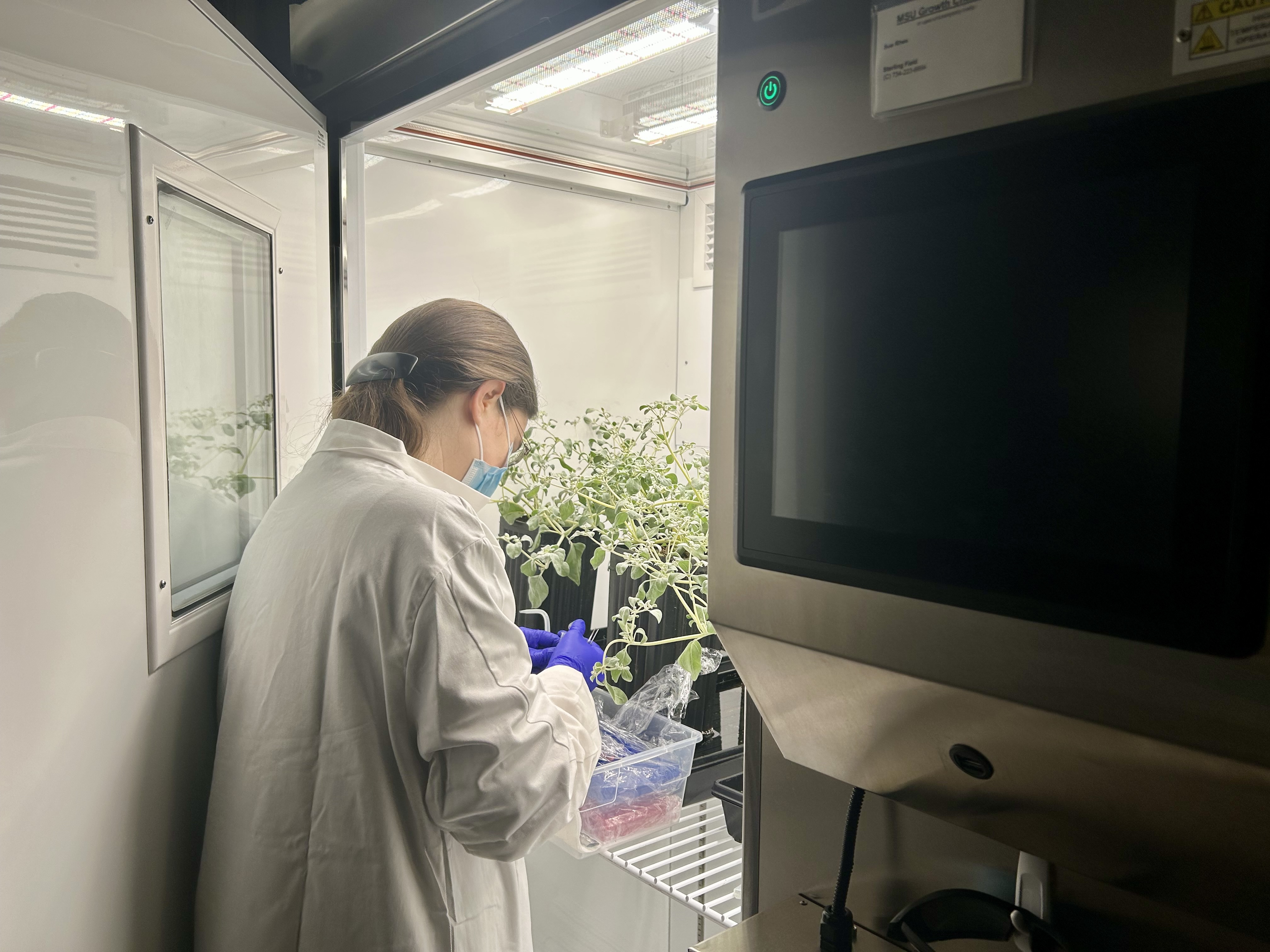
Scientists have known for decades that there’s something special about T. oblongifolia. At higher temperatures, the photosynthetic rate of most other plants decreases. But in 1972, researchers showed that T. oblongifolia’s photosynthesis peaks at 47°C. To find out how this hardy survivor is able to continue photosynthesizing and thriving while other plants die, the researchers behind this new study collected seeds from Death Valley and grew the plants in growth containers. When the plants were eight weeks old, the scientists exposed them to Death Valley conditions for a month. They then observed the plants’ reactions, including how much carbon dioxide they absorbed.
Within two days, T. oblongifolia increased its photosynthetic rate. After 10 days, the biomass had tripled, producing many smaller leaves than those produced at lower temperatures.
But a truly amazing change took place within the factory. Scientists have discovered that mitochondria, the power plants, or batteries, in cells are more developed. These mitochondria were also more mobile, allowing them access to the site of photosynthesis, which takes place within special cell organelles called chloroplasts.
“These plants are moving their mitochondria, reducing their volume and increasing their density, concentrating their energy centers around the chloroplasts,” Andy Lee, a plant ecologist at Australia’s University of Technology Sydney who specializes in thermophilic plants, told Live Science.
you may like
In response to Death Valley’s harsh temperatures, the plant’s chloroplasts also changed from oval to cup-shaped. This has been seen before in algae, but not in plants, which have many chloroplasts in the same cell. Researchers do not know how the shape of the cup facilitates photosynthesis and survival.

T. oblongifolia also rewires its transcriptome. The transcriptome is the script of all the RNA messages that a cell produces at a given time, indicating which genes are being used or expressed. Some of the active genes focused on heat response and plant repair systems.
Rhee said the research team’s next step is to identify and characterize candidate genes to further narrow down how the plants survive. These could allow researchers to find new ways to help other plants withstand high temperatures.
“While the mechanisms that cause temperature sensitivity are well known, strategies to overcome these inefficiencies are still being developed,” Carl Bernacchi, a crop researcher at the University of Illinois at Urbana-Champaign who was not involved in the study, told Live Science. The new insights provide “a roadmap to potentially overcome these challenges,” he said.
T. oblongifolia’s strategies to survive and thrive in high temperatures “could help make crops more resilient in the future as well as in regions of the world currently experiencing food insecurity,” he added.
Lee was excited about the new research. T. oblongifolia “was able to physically reconfigure its photosynthetic machinery when the chip was down, and it was able to maintain its photosynthetic function under stress, which is really impressive,” she said.
Professor Lee, who studies heat-loving plants in Australia’s scorching deserts, said there was still much scientists didn’t know about organisms that survived in extreme environments.
“This particular species looks like a weed. It’s so weird that you might miss it,” she said. “There are some really strange plants out there that are doing strange things that could be the key to improving crops.”