
£6.9m investment planned to transform UK satellite communications
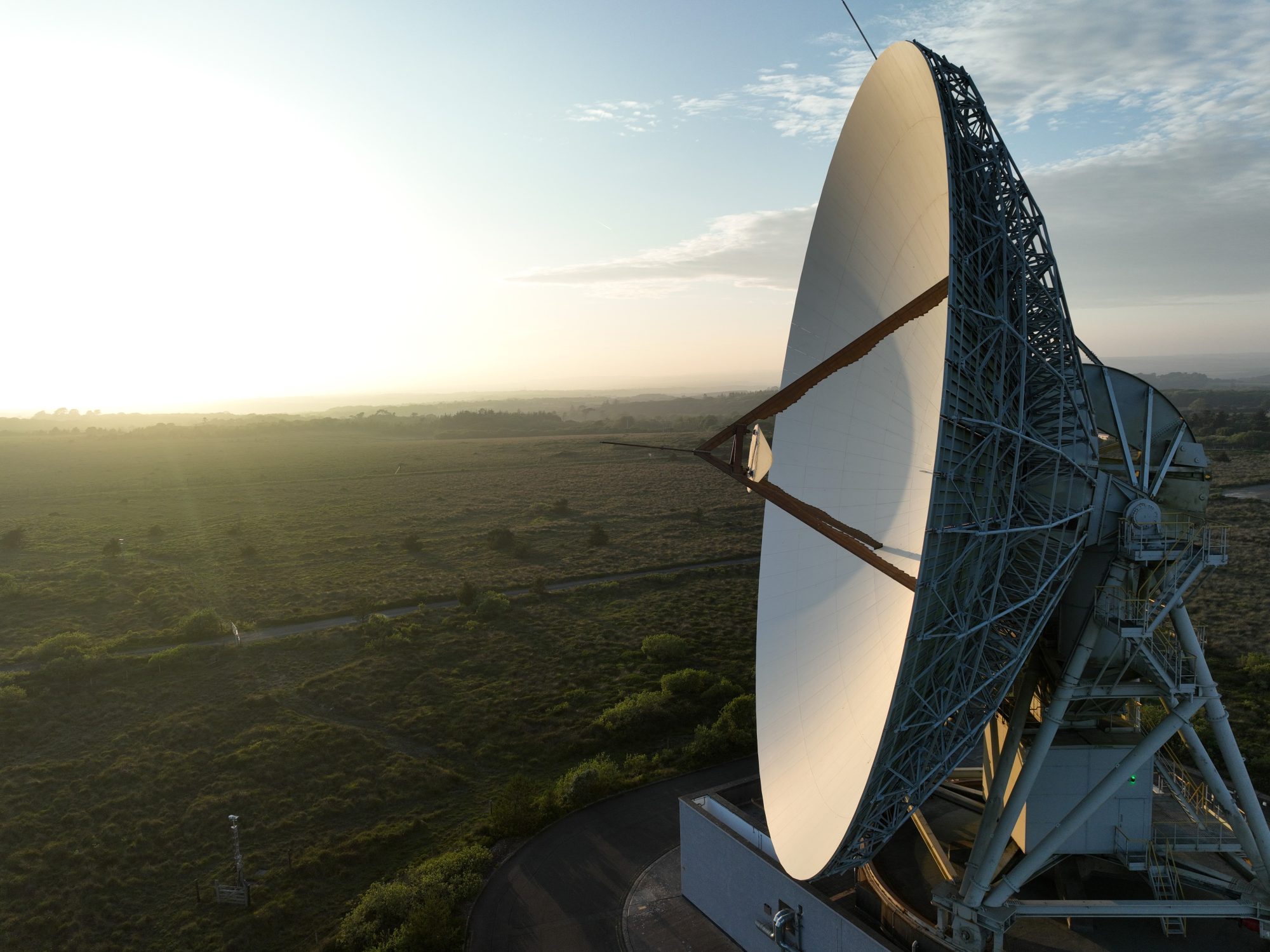
The UK Space Agency is investing £6.9m in satellite communications that will transform connectivity and secure the UK’s position as Europe’s space leader.
The funding will support five ground-breaking projects through the European Space Agency’s (ESA) ARTES (Advanced Research in Telecommunications Systems) program to develop breakthrough satellite communications, from faster connectivity to lunar missions.
These projects will showcase the UK’s expertise in next generation satellite technology and strengthen the UK’s role in advanced communications.
This investment supports the UK’s industrial strategy priority capabilities: satellite communications, positioning, navigation and timing, on-orbit servicing and manufacturing, space domain awareness and space data for terrestrial applications.
The importance of satellite communications increases
European satellite communications demand is predicted to reach £40bn by 2033, and even 2% of this would generate around £800m in revenue for the UK economy alone.
Space Minister Liz Lloyd explained: “Space technology, and in particular satellites, is essential to our everyday lives. From car navigation to mobile phones, weather forecasts to online banking, space is where everything happens.”
“By supporting the UK sector, we are not only consolidating our position as Europe’s space leader, but also creating highly skilled jobs, attracting investment and ensuring space technology can connect local communities to the space-enabled services they need.”
The five UK-led projects span key areas of innovation in satellite communications, from refueling satellites to extend their lifetime, to developing 5G networks and optical links to improve global connectivity.
Which projects will receive funding?
The winning projects are:
Orbit Fab, £2.9m: This will deliver the Advancing Satcom Technology with Refueling and Logistics (ASTRAL) project to refuel electric propulsion satellites using UK-developed technology. Goonhilly Earth Station, £1.6m: AGILE: Antenna Ground Interface and LunaNet Equipment project will produce an interface unit that can be installed on global antennas to communicate with spacecraft using the internationally recognized LunaNet specification. Vicinity Technologies, £1.19m: The team will design and develop versatile 5G non-terrestrial network regeneration payload systems and user terminals, including the entire software stack for both space and ground segments. Archangel Lightworks, £356,000: This will advance optical communications through space optical link integration research, investigating use cases for deploying free-space optical communications technology within Eutelsat’s OneWeb LEO global network. Inmarsat Navigation Ventures Ltd, £881,000: This funding will develop services that enable governments to plan, procure, manage and monitor satellite communications services from Viasat and other providers, ensuring secure and consistent management of critical satellite communications.
Britain’s role in Europe’s space ambitions
The funding for next-generation satellite communications comes ahead of the ESA Ministerial Council meeting in Bremen on 26-27 November, where the Government will focus on economic growth and national security, and negotiate the UK’s investment in the future of Europe’s space ambitions.
As well as the ESA programme, the UK space sector now has access to a wider range of national space funding than ever before. To support the national program and the UK’s membership in ESA, the Government has allocated £2.8bn to the UK Space Agency for the period up to 2029/30.
Dr Paul Bate, CEO of the UK Space Agency, said: “Today’s investment shows how Britain’s space ambitions can translate into real-world impact.”
“By advancing satellite communications technology, we are not only building a globally competitive sector, but also ensuring that communities in even the most remote areas of the UK have access to the services they need. This is the space we give people and the one that will drive our future economy.”
From pioneering satellite refueling to transforming connectivity in remote areas, these projects demonstrate how investing in space can bring real benefits to people’s everyday lives.
Source link

