


Free radicals have a bad reputation. These highly reactive and unstable molecules are associated with cancer, aging, and degenerative diseases such as Alzheimer’s disease.
However, the body constantly produces free radicals as an important part of life-sustaining processes such as respiration, cell signaling, and defense against disease. So are free radicals really that bad, or do they have unappreciated benefits?
you may like
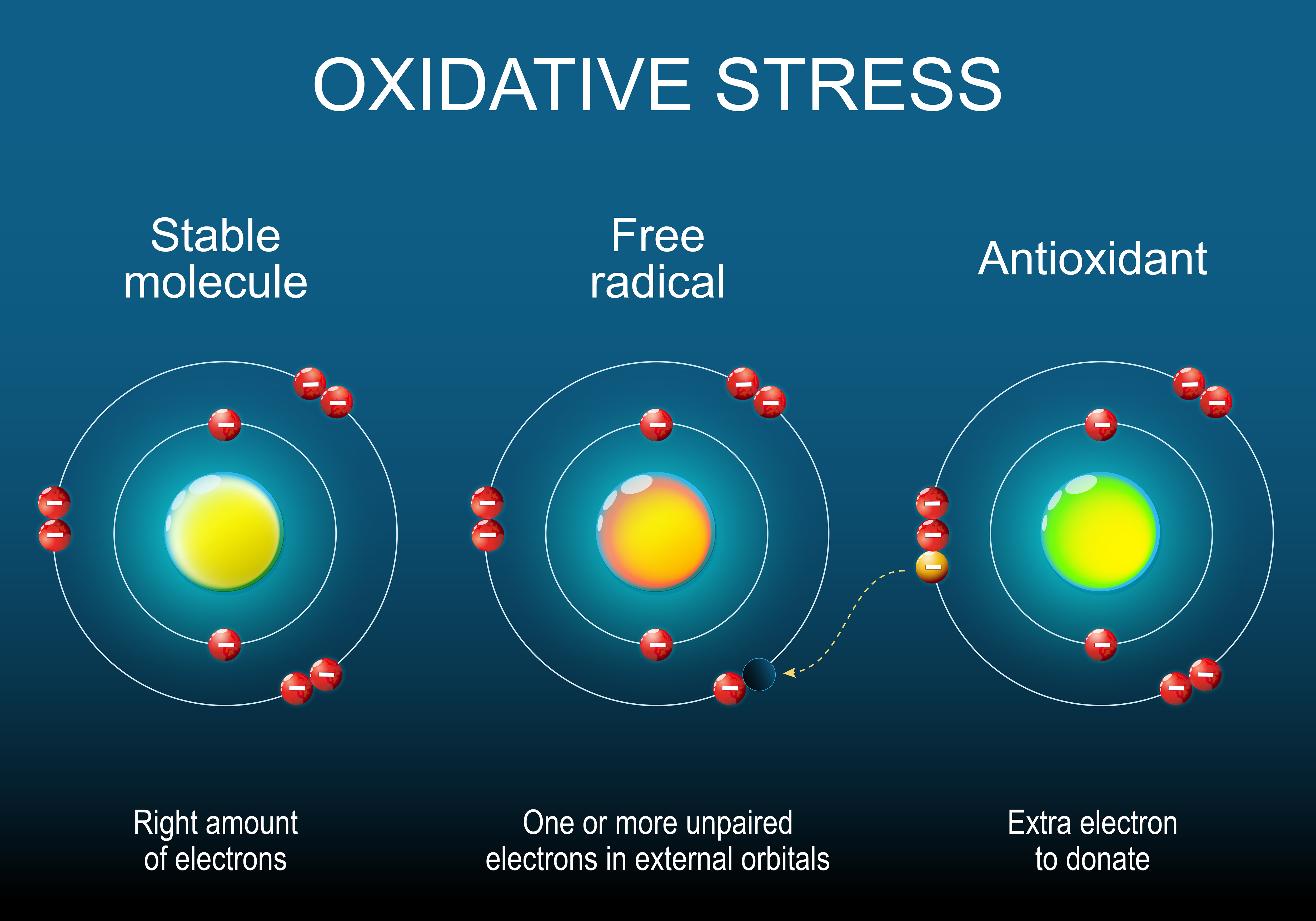
And this is not a one-off event, says Michael Murphy, a mitochondrial biologist at the University of Cambridge. “When a radical strips off an electron, it leaves behind an unpaired electron that reacts further, often resulting in nasty chain reactions.”
However, this problematic potential can also be exploited by the body under controlled circumstances. The immune system deploys radicals to attack pathogens and protect against disease, while other single-electron species, such as nitric oxide (NO), are used as signaling molecules for communication between different cells.
“Some enzymes use free radical chemistry within their active site because it gives them the ability to do more difficult chemistry,” Murphy told Live Science. As a result, many of the body’s fundamental reactions, from respiration to oxygen transport, rely on radical intermediates that enable chemical reactions.
In fact, most of the radicals in the body (about 90%) are produced by mitochondria, the cellular machinery responsible for respiration, said Michael Ristow, a longevity researcher at the Faculty of Medicine at the Charité University of Berlin.
Respiration is a life-sustaining process that breaks down glucose and oxygen to release energy. The overall process involves a complex series of steps mediated by a series of proteins called the electron transport chain. These proteins pass electrons between different units during this reaction sequence, but a small amount of leakage means that some radicals are also released into the surrounding cellular environment.
“What can happen is that electrons are released from these enzymes and react with oxygen to form oxygen free radicals called superoxide, which are often proximal free radicals produced in biology,” Murphy explained. “Hydrogen peroxide (which is not a free radical) is produced and can be particularly harmful if ferrous iron (Fe2+) is present. This produces another radical called the hydroxyl radical, which reacts with anything.”
All of this is part of the normal functioning of all cells, so free radicals are only really a problem when they’re produced at high levels, Ristow said.
you may like
“The body has evolved various defense mechanisms,” he explained. A healthy diet naturally contains antioxidant molecules such as vitamins C and E that can inhibit these reactive particles. “Then we have specialized enzymes that convert free radicals into less dangerous intermediates, and we have the glutathione system.” The glutathione system is a sulfur-containing molecule that acts like a sacrificial sponge that removes free radicals before being recycled by another enzyme.
However, certain environmental factors, such as exposure to ultraviolet light or excessive alcohol intake, can cause high levels of free radical production through slightly different mechanisms. “UV can react with so-called photosensitizers. When molecules absorb energy, they become excited and often then transfer that energy to oxygen,” Murphy explained. “The chemistry is a little complicated, but it converts oxygen into more reactive oxygen, which acts on fats and other double bonds.”
Beyond a certain point (this varies from person to person), these extra radicals overload the body’s natural defense mechanisms. This results in tissue damage that, over time, can lead to diseases such as cancer.
But importantly, there is growing evidence that controlling free radical levels, part of a phenomenon known as hormesis, may actually be beneficial or even essential for health.
“The response to free radical exposure at the systemic level is usually an increase in the ability to respond to free radicals,” Ristow said. “The whole human body is therefore better prepared not only against free radicals, but also against toxic food ingredients, UV exposure, and other sources of damage.”
This effect is most clearly demonstrated in the context of exercise.
“When antioxidants are taken before or at the same time as exercise, the effects of exercise on health parameters are eliminated or significantly reduced,” Ristow said. Endurance, recovery, muscle mass gain, and insulin resistance are affected, and while there are several theories about the role radicals play in each case, there is currently no consensus in the field.
While free radicals clearly have the potential to cause harm, the answer to whether free radicals are good or bad is more nuanced, depending on both context and concentration. “It’s a balance,” Ristow said. “But if ROS were truly only harmful, evolution would have eliminated them.”
This article is for informational purposes only and does not provide medical or dietary advice.