


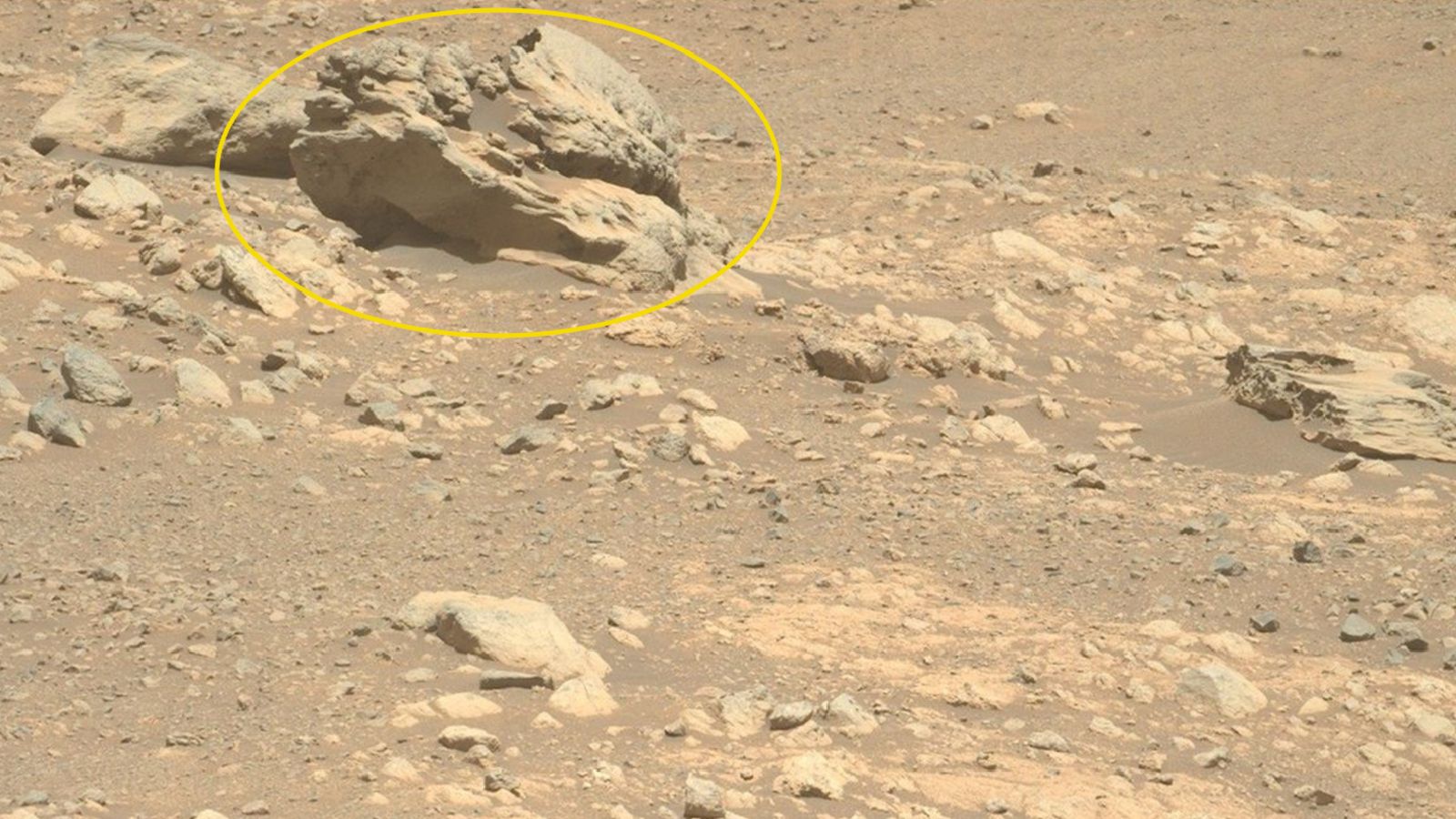
NASA’s Perseverance rover has discovered an extremely rare rock on the surface of Mars. The craggy rock has a metal-rich composition and is most likely a meteorite that crash-landed on Mars, the first meteorite discovered by Perseverance during its four-year mission to search for signs of life in Martian rocks.
Since landing inside Mars’ Jezero Crater in early 2021, Perseverance has discovered a variety of rocks, including a “spider egg” rock, an out-of-place “skull” and, most recently, a strange “turtle-shaped” formation. Some of these rocks have also yielded surprising results, such as a strange blob recently discovered in an organic-rich sample that may be the “clearest sign” of extraterrestrial life on Mars in the past.
All the rocks Perseverance has examined so far have one thing in common: they all originate from Mars. However, on September 19, the 1,629th Martian day of the rover’s mission, the wandering robot encountered a strangely shaped rock while exploring an area of Jezero called “Varnodden.” The unusual rock, about 31 inches (80 centimeters) in diameter, has since been named Phypsaxra and is unlikely to have originated from Mars.
you may like
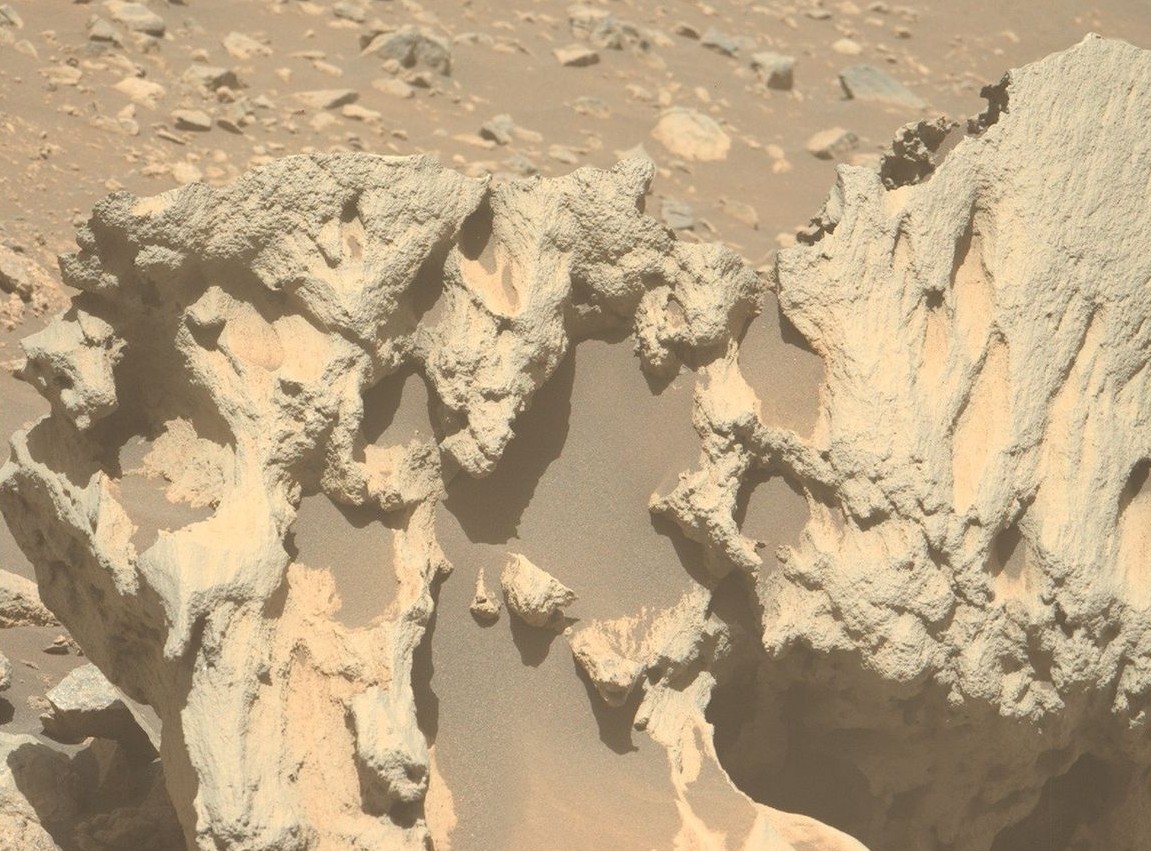
“This rock was identified as an object of interest based on its carved, elevated appearance, which is distinct from the surrounding low-lying, flat, fragmented rock,” Candice Bedford, a geochemist and mineralogist in Purdue University’s School of Planetary Sciences, said in a NASA statement.
Analysis of the rock revealed that it contained high concentrations of iron and nickel, unusual for a Martian rock. But these metals are commonly found in meteorites, “suggesting that this rock formed elsewhere in the solar system,” Bedford wrote. It’s unclear how long it’s been on Mars, but it’s probably millions, if not billions, of years old.
“This is not the first time a rover has encountered unusual rocks on Mars,” Bedford wrote. In fact, three different NASA spacecraft, Spirit, Opportunity, and Curiosity, have discovered possible meteorites during their respective missions, she added. (Of these missions, only Curiosity is still active.)
“Therefore, it was somewhat unexpected that Perseverance did not observe iron-nickel meteorites within Jezero Crater, especially given its similar age to Gale Crater.” [where Curiosity currently resides]” Bedford wrote.
Although the possible meteorite was discovered about two months ago, the discovery was only recently announced due to the recent U.S. government shutdown. NASA’s statement on FIPS was originally written on October 1, the same day the shutdown began, and was released on November 13, the day after the government reopened.
The shutdown proved to be very eventful for NASA. Live Science’s sister site Space.com recently reported that the agency likely began implementing its proposed budget cuts during this period, prior to Congressional approval. And since the shutdown ended, NASA scientists have been hard at work sharing previously unreleased images of interstellar comet 3I/ATLAS.
However, Perseverance remained online during the shutdown, along with several other “mission-critical operations.”
you may like
meteorite on mars
Although it is rare to find meteorites on Mars, many space rocks from Mars have been found here on Earth.
These Martian meteorites were brought to Mars by collisions with other large meteorites and drifted through space for thousands of years before falling to Earth. They, like Perseverance, are very popular with scientists because they can tell us a lot about Martian rocks.
In 2024, a study found that about 200 of the Martian meteorites that fell to Earth came from just five different impact craters on Mars.
And in July, a 54-pound (24.5 kilogram) Martian meteorite called NWA 16788 that crashed into the Sahara desert in 2023 was sold at auction for $5.3 million, a new record for a Martian space rock.