
How on-farm methane monitoring can unlock hidden productivity gains
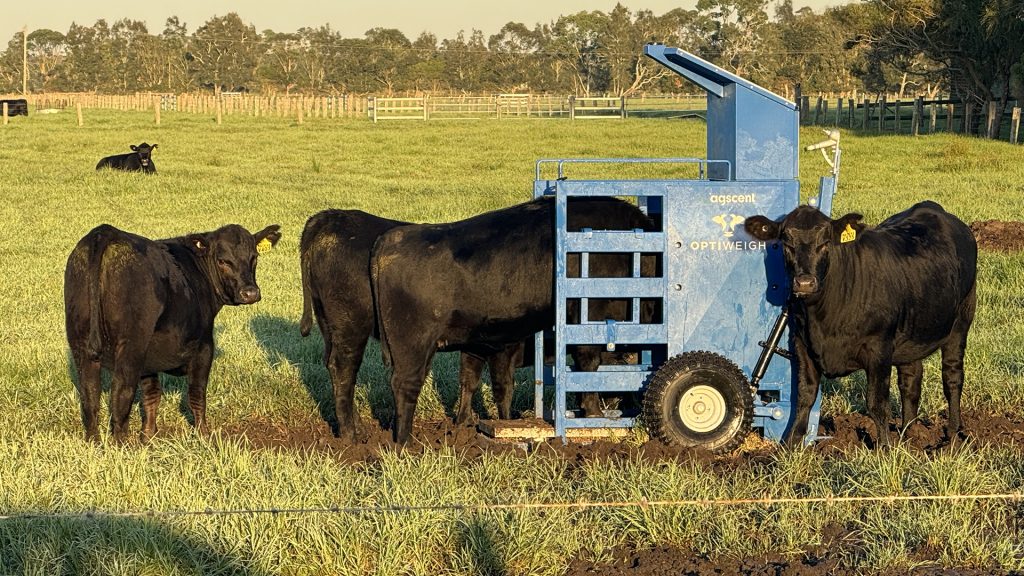
Agcent’s methane measurement technology helps beef producers turn emissions data into powerful productivity insights.
For decades, beef producers have relied on tangible performance indicators such as body condition, weight gain, and reproductive success. But one of the biggest drivers of profitability remains hidden. It is the methane emissions of individual animals and the feed efficiency that emerges from this.
Agcent Air changes that. This technology provides real-time on-farm methane measurements, allowing producers to identify the most efficient animals, validate management interventions, and build more profitable, low-emission herds.
At Macka’s Black Angus Beef, producer Robert McKenzie is proving that methane monitoring is more than an environmental compliance exercise – it’s a productivity tool with direct results on the bottom line.
Feed efficiency relationship
Methane emissions and feed efficiency are closely related. Cows with low residual feed intake (RFI), a measure of how efficiently an animal uses feed for growth and production, produce 15 to 25 percent less methane than less efficient cows. 1,2
This is no coincidence. Methane means loss of feed energy. Therefore, animals that emit less methane convert more nutrients into growth. The performance and cost implications are significant.
Cows with a feed conversion ratio (FCR) of 5.4:1 are more efficient. This means that 5.4 kg of feed is required to increase 1 kg of body weight. These efficient cows cost approximately A$115 less and are delivered to market 26 days earlier, saving an additional A$143 per head. Dairy systems also save about A$675 per year in feed costs due to efficient cow farming.
Its impact extends to the entire operation. As Robert McKenzie explains, “If you eat less, you produce less methane.” This simple principle translates to “improved feed conversion, which means lower costs, less pressure on pasture, faster growth, and higher profits.”
The challenge lies in identifying which animals possess these valuable traits, which is where methane monitoring becomes essential.
Make measurement practical
So how can producers access this important data without disrupting operations? Until recently, accurately measuring methane in livestock required expensive breathing chambers and specialized laboratories. Agcent technology eliminates those barriers. The Agcent Air GHG system uses portable sensor-based monitoring that naturally integrates into existing farm infrastructure, providing data on:
• Methane emissions of individual animals.
Variation across the herd Response to changes in feed and management Genetic differences in efficiency
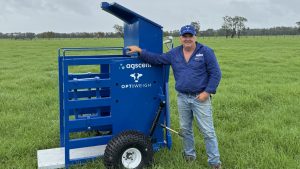
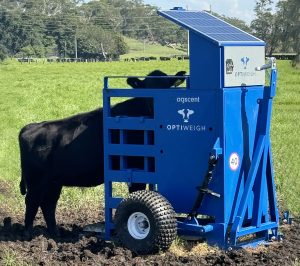
Macka’s Beef uses the Agcent X Optiweigh system to validate its mineral supplement program. “We developed a baseline using Himalayan salt and placed the animals in the Optiweigh X Agcent machine,” McKenzie explained. The system measures methane emissions before and after introducing the ECO2 feed mineral supplement. Now that reliable measurements are available, the question is, what can producers actually do with this data?
Beyond compliance: data that drives profitability
While sustainability certifications and carbon credits add value, McKenzie believes productivity insights are the real benefit. Methane data helps producers:
• Identify superior genetics within a herd.
• Validate feed additives and dietary programs
• Evaluate pasture types and management decisions.
Makkah’s Black Angus plans to integrate methane measurements into its breeding program by 2026, using validated data to select sires and cows that combine genetic strength and environmental efficiency.
This genetic information has immediate commercial value and can help enhance breeding decisions, market proven efficiency genetics, and develop long-term herd improvement strategies.
journey of measurement
For producers starting a methane monitoring initiative, McKenzie recommends starting with the basics.
1. Establish a baseline using carbon calculators and existing data
2. Identify priorities for emissions and efficiency improvements
3. Collaborate with technology partners like Agcent to implement measurements
4. Testing interventions such as feed additives and genetic selection
5. Refine successful practices and expand them across the herd.
Competitive advantage and the future of sustainable beef
Based on this foundation of measurement and improvement, early adopters are positioning themselves for a changing market environment. As consumer demand for sustainable beef continues to grow and carbon accounting becomes the norm, verified low-methane systems will have a strong competitive advantage.
Producers who adopt these technologies early will be able to:
• Optimize operations before regulations require it.
• Build a premium, data-backed market position
• Access carbon credit revenue streams
• Operate with insights other producers don’t have.
“Sustainability means leaving the land better than when we found it,” McKenzie said. “But it’s also becoming a license to produce. Whether we like it or not, we’re going to be forced to become more sustainable.”
conclusion
Macca’s experience with Black Angus beef shows that the technologies that reduce emissions are the same ones that drive profitability. Methane measurements enable smarter decision-making by identifying efficient genetics, validating feeding strategies, adjusting herd composition, and more.
“You can’t manage what you don’t measure,” McKenzie concluded. His activities prove the point. Methane measurement is not just about emissions compliance, it is about unlocking hidden productivity potential that has always been present.
The question for beef producers is not whether to measure methane. The question is whether we can afford to continue to make breeding, feeding, and management decisions without understanding this important aspect of herd performance. As sustainability requirements tighten and competition intensifies, the answer is becoming increasingly clear.
About the Agcent System:
Manage your herd efficiency and emissions today.
Agcent Air OW × Optiweigh – Portable farm methane measurement system that allows producers to identify efficient animals, validate management changes, and build a verified low-methane herd Agcent Air GHG2100 – Robust real-time greenhouse gas monitoring of methane and carbon dioxide. Flexible for different farm environments and integrates seamlessly with existing infrastructure
Contact Agsent today to start measuring and optimizing your herd’s performance.
References
Basarab, JA, Beauchemin, KA, et al. (2013). “Reducing GHG Emissions through Genetic Improvement for Feed Efficiency” Animals, 7(Supplement 2):303-15. DOI: 10.1017/s1751731113000888 Nkrumah, J.D., Okine, E.K., et al. (2006). “Selecting cows with low residual feed intake reduces daily methane production.” Journal of Animal Science, 84(6):1489-96. DOI: 10.2527/2006.8461489x
Please note that this article will also be published in the Animal Health Special Focus publication.
Source link

