

Close Menu
  • Home
  • Identity
  • Inventions
  • Future
  • Science
  • Startups
  • Spanish
What's Hot

China-linked DKnife AitM framework, routers targeted for traffic hijacking and malware distribution

Backlash over OpenAI’s decision to deprecate GPT-4o shows how dangerous AI companions can be

CISA orders removal of unsupported edge devices to reduce risk to federal networks

Facebook X (Twitter) Instagram
  • Home
  • About Us
  • Advertise with Us
  • Contact Us
  • DMCA
  • Privacy Policy
  • Terms & Conditions
  • User-Submitted Posts
Facebook X (Twitter) Instagram
Fyself News
  • Home
  • Identity
  • Inventions
  • Future
  • Science
  • Startups
  • Spanish
Fyself News
Home » Three “black mesas”, remnants of the Paleozoic era, create unusual sand dunes in the Sahara Desert — Earth seen from space
Science

Three “black mesas”, remnants of the Paleozoic era, create unusual sand dunes in the Sahara Desert — Earth seen from space

userBy userDecember 2, 2025No Comments4 Mins Read
Share Facebook Twitter Pinterest Telegram LinkedIn Tumblr Email Copy Link
Follow Us
Google News Flipboard
Share
Facebook Twitter LinkedIn Pinterest Email Copy Link

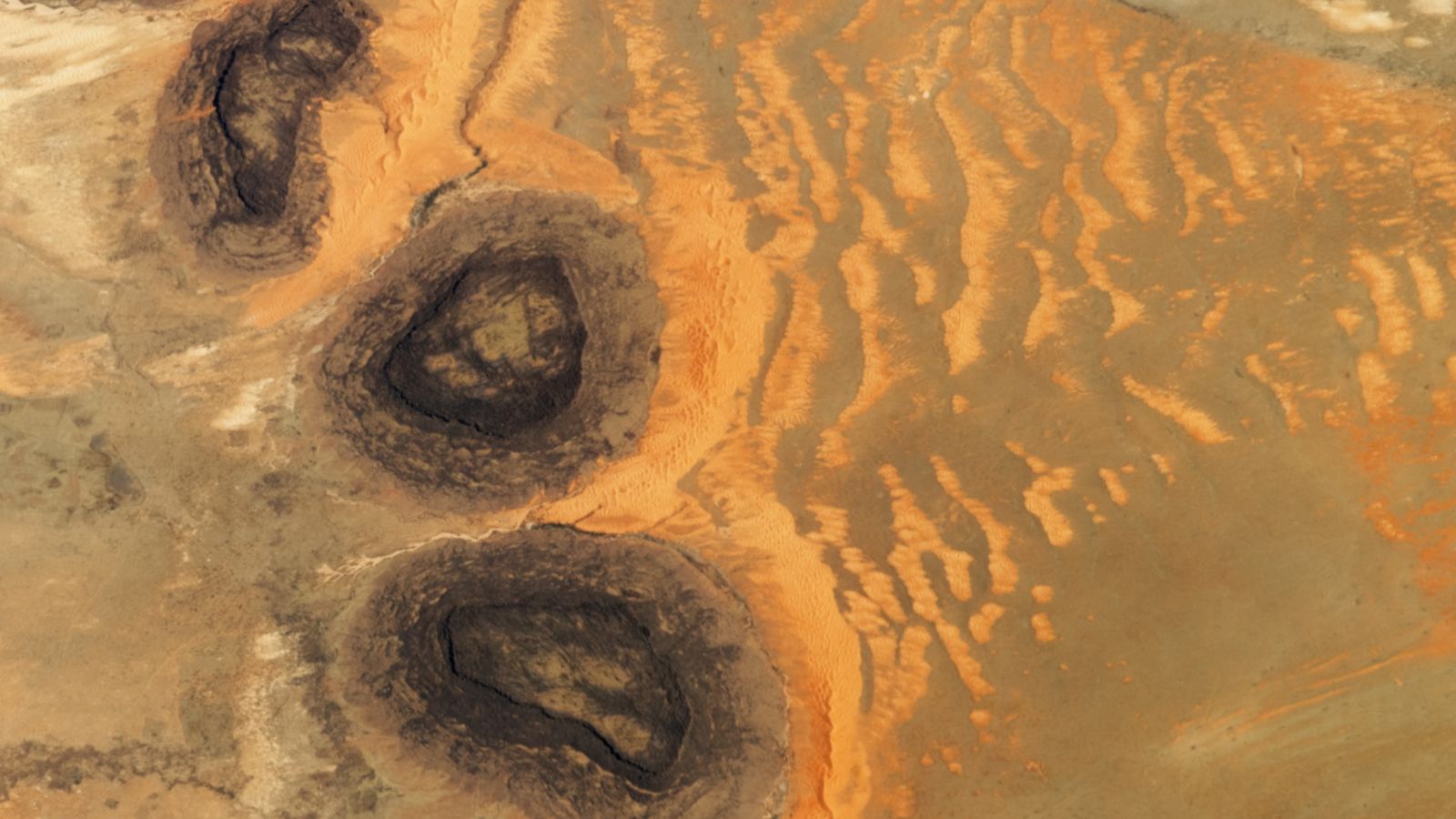
simple facts

Where is it? Gerou Island, Mauritania [16.930575400, -11.759622605]

What is in the photo? Three black mesas surrounded by rare sand dunes in the Sahara Desert

Who took the photo? An unknown astronaut aboard the International Space Station (ISS)

When was it taken? May 3, 2023

This interesting astronaut photo shows three ancient “black mesas” sitting side by side in the Sahara Desert. The dark structure created a series of unusual dunes around it, as well as a surprising “dune-free zone.”

The three mesas, or flat-topped hills, are located about 8 miles (13 km) northwest of the town of Gerou in southern Mauritania, home to about 22,000 people. Mesas are made of sandstone and rise steeply from the surrounding plains, reaching heights of 300 to 400 meters (1,000 to 1,300 feet) above the ground. The largest of the trio is about 6 miles (9.5 km) in diameter at its widest point, while a fourth mesa lies just north of the trio, but just outside the frame.

According to NASA Earth Observatory, the dark color of these circular hills is the result of “rock varnish.” This is a black, clay-based coating rich in manganese and iron oxides that forms over thousands of years on exposed, dry rock. The coating is likely partially fixed by microorganisms and consists of multiple micrometer-thick layers, according to Science Direct.

you may like

To the west of the mesa (to the left of the photo) is a barren, rocky plain, surprisingly devoid of sand dunes. But to the east of the flattened hills, several large sand dunes can be seen that appear to flow out of the black rock like undulating tails.

Two main types of dunes are visible in the images. The first type is the unusual “climbing dune,” a larger ridge-like pile of sand built up along the east wall of the mesa. The second type is the “Balchan dune”, which is more common and forms the striped tail of the mesa. In both cases, the dunes have a distinctive reddish-yellow hue.
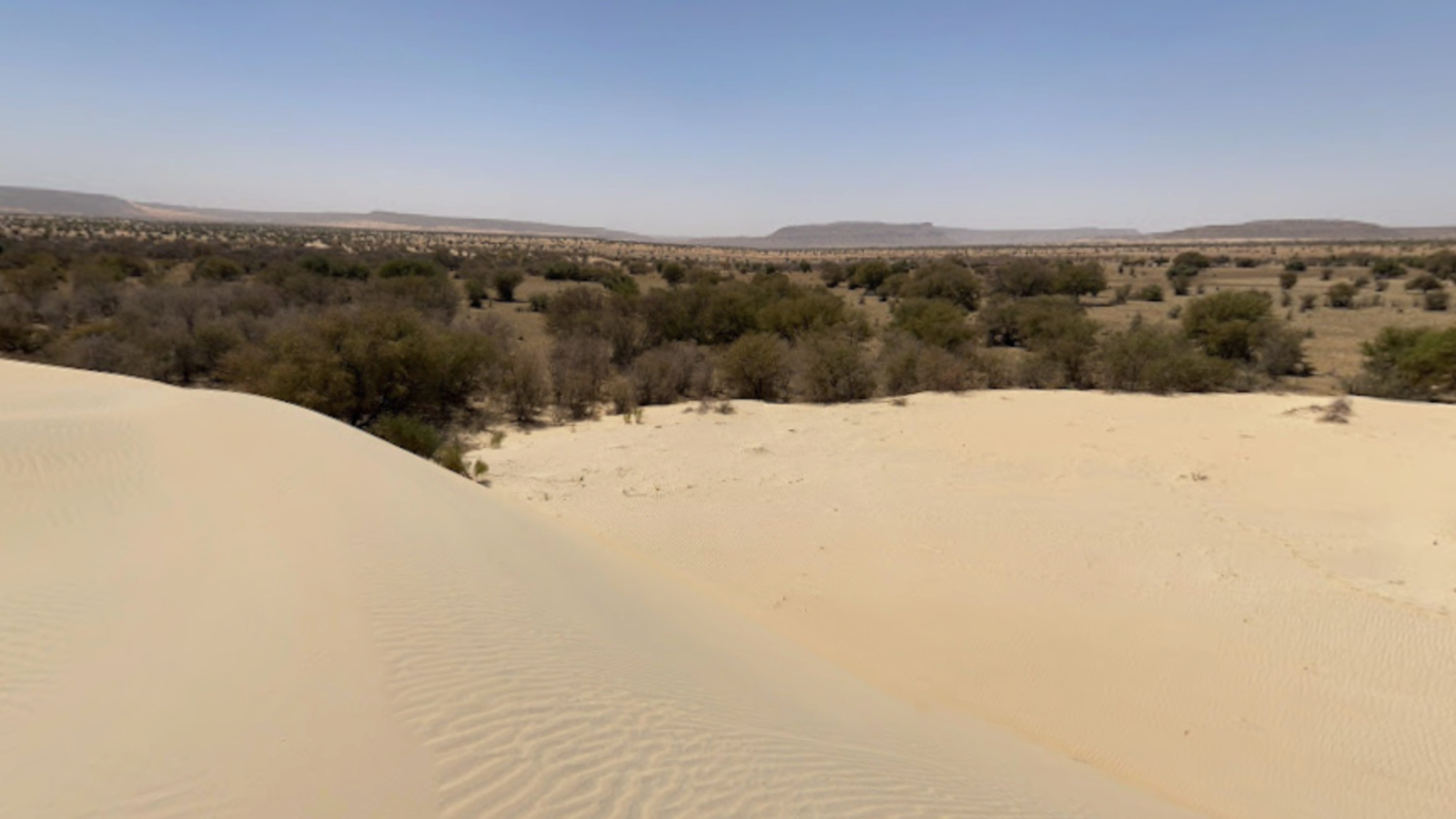
Photo of a mesa rising from the dunes to the horizon

The three mesas in the astronaut photo are lined up with a fourth mesa (on the left) that is not included in the aerial photo. This photo shows all four from the west side of the mesa, across the dune-free zone they created. (Image source: Google Maps/Street View)

Dunes form only on the eastern side of the mesa. This is because the wind mainly blows from that direction, carrying the sand and causing it to wind up on the slopes surrounding the black rock.

According to the Earth Observatory, the lack of sand accumulation on the mesa’s west side is due to a phenomenon known as a “wind scar.” The phenomenon is caused by superfast vortices in the wind that are forced between mesas, blowing sand away from flattened hills.

Get the world’s most fascinating discoveries delivered straight to your inbox.

Another astronaut photo taken in 2014 shows this strange effect extensively (see below). In this shot, you can see the Vulcan Dunes stretching far away from the mesa in the photo, as well as another large mesa further east.

According to the Earth Observatory, all of these mesas were likely part of a single giant rock formation during the Paleozoic Era, which lasted from 541 million years ago to 251.9 million years ago, before being destroyed by thousands of years of water and wind erosion.
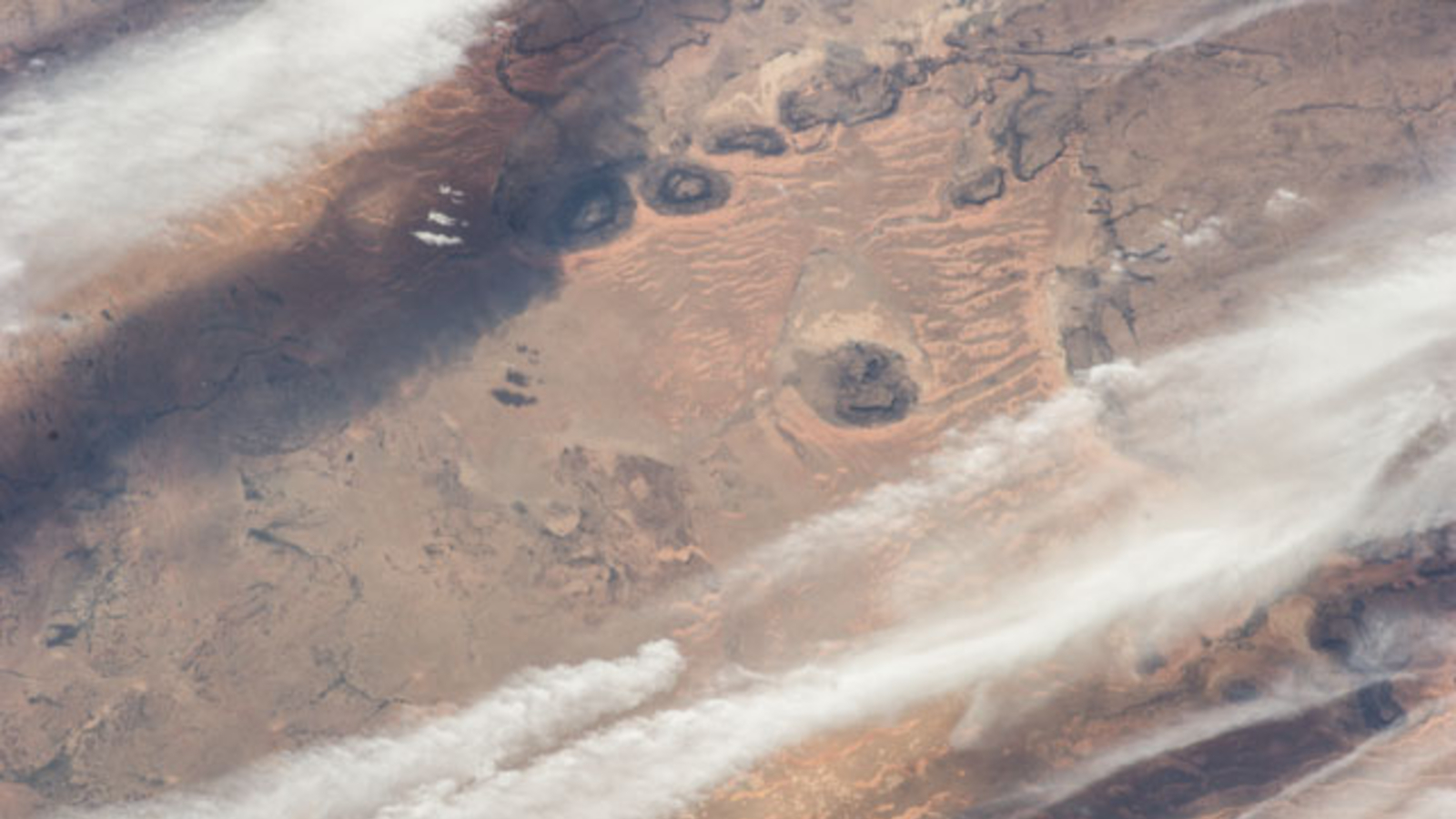
Astronaut photo showing a mesa in the middle of the Sahara desert

This astronaut photo taken in 2014 shows that the three mesas and their dunes are part of a much larger system left over from ancient Paleozoic features. (Image credit: NASA/ISS Program)

The formation may have been similar to the Richa Structure, a giant concentric rock formation also known as the “Eye of the Sahara” located about 460 km (285 miles) north of Gerou in Mauritania.

According to the National Park Service, mesas are found all over the world, but are particularly concentrated in the Sahara Desert and other parts of the United States, including Colorado, New Mexico, Utah, and Arizona.

Elsewhere in the solar system, mesas are prominent geological features on Mars, carved out of the red planet by billions of years of wind erosion, according to Live Science’s sister site Space.com.

For more amazing satellite photos and astronaut images, check out Earth from the Space Archives.


Source link

#Biotechnology #ClimateScience #Health #Science #ScientificAdvances #ScientificResearch
Follow on Google News Follow on Flipboard
Share. Facebook Twitter Pinterest LinkedIn Tumblr Email Copy Link
Previous ArticleGoogle patches 107 Android flaws, including two framework bugs that were exploited in the wild
Next Article How on-farm methane monitoring can unlock hidden productivity gains
user
  • Website

Related Posts

7,500-year-old deer headdress discovered in Germany shows hunter-gatherers shared sacred objects and ideas with the region’s first farmers

February 5, 2026

How well can AI and humans work together? Scientists are looking to Dungeons & Dragons to find out.

February 5, 2026

Saltwater crocodiles crossed the Indian Ocean to the Seychelles before humans arrived and made them extinct.

February 5, 2026
Add A Comment
Leave A Reply Cancel Reply

Latest Posts

China-linked DKnife AitM framework, routers targeted for traffic hijacking and malware distribution

Backlash over OpenAI’s decision to deprecate GPT-4o shows how dangerous AI companions can be

CISA orders removal of unsupported edge devices to reduce risk to federal networks

Combat antimicrobial resistance with McGill rapid tests

Trending Posts

Subscribe to News

Subscribe to our newsletter and never miss our latest news

Please enable JavaScript in your browser to complete this form.
Loading

Welcome to Fyself News, your go-to platform for the latest in tech, startups, inventions, sustainability, and fintech! We are a passionate team of enthusiasts committed to bringing you timely, insightful, and accurate information on the most pressing developments across these industries. Whether you’re an entrepreneur, investor, or just someone curious about the future of technology and innovation, Fyself News has something for you.

Castilla-La Mancha Ignites Innovation: fiveclmsummit Redefines Tech Future

Local Power, Health Innovation: Alcolea de Calatrava Boosts FiveCLM PoC with Community Engagement

The Future of Digital Twins in Healthcare: From Virtual Replicas to Personalized Medical Models

Human Digital Twins: The Next Tech Frontier Set to Transform Healthcare and Beyond

Facebook X (Twitter) Instagram Pinterest YouTube
  • Home
  • About Us
  • Advertise with Us
  • Contact Us
  • DMCA
  • Privacy Policy
  • Terms & Conditions
  • User-Submitted Posts
© 2026 news.fyself. Designed by by fyself.

Type above and press Enter to search. Press Esc to cancel.