
McMaster University trains the next generation of nuclear experts
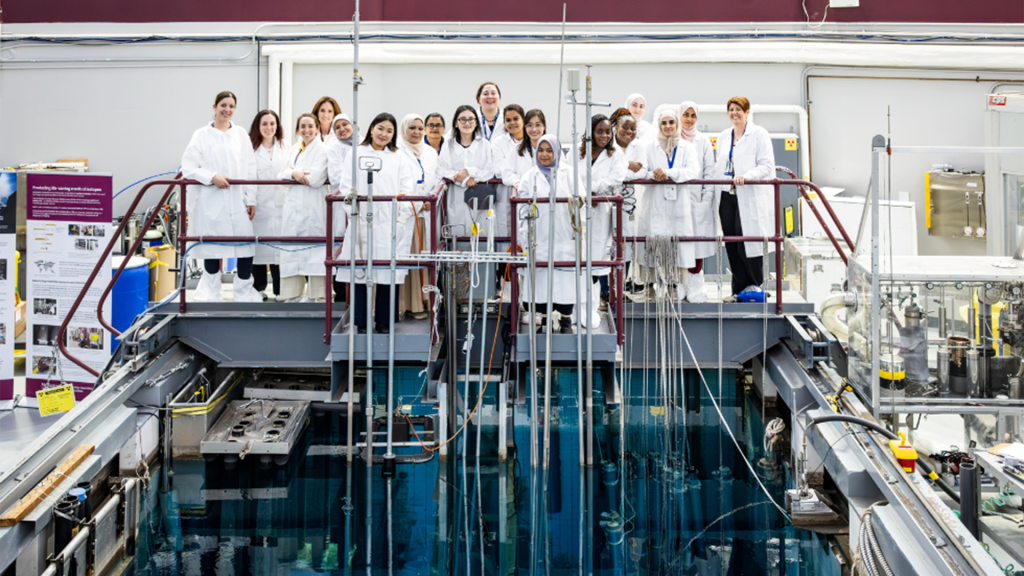
One of Canada’s most research-intensive universities and home to the country’s most powerful nuclear research reactor, McMaster University is committed to preparing tomorrow’s nuclear engineers, scientists and medical leaders.
McMaster University is preparing the next generation of nuclear professionals for careers in the evolving nuclear industry. The University’s world-class nuclear research facility, centered around the 5MW McMaster reactor, provides a unique hands-on learning experience for students at the graduate and undergraduate levels, as well as early and mid-career professionals from Canada and around the world looking to expand their skill sets.
World Center for Nuclear Education and Training
A group of 15 women from around the world received hands-on experience at McMaster’s nuclear research facility as part of the Liese Meitner Program (LMP), the International Atomic Energy Agency’s (IAEA) prestigious program for women in nuclear power.
The 2025 LMP cohort visiting Canada spent a week at McMaster in July, participating in interactive training experiences in areas such as radiation safety and emergency preparedness, neutron activation analysis, and hot cell operations.
The world’s nuclear capacity is expected to more than double by 2050, according to IAEA projections, and the agency estimates that 4 million new professionals will be needed to meet nuclear demand as the existing workforce retires. That makes programs like LMP and nuclear research and training centers like McMaster even more important, said Karin Stevenson, director of nuclear research and education support.
“We need more women in the nuclear field, and career development opportunities like the IAEA LMP give women professionals the practical experience they need to make a difference in the nuclear field,” Stevenson said.
This year’s LMP cohort built on the experience and skills gained at McMaster during the second week of the program, held at the Canadian Nuclear Laboratory (CNL) facility northwest of Ottawa on the Chalk River.
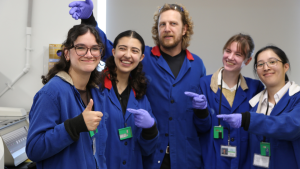
Mr. McMaster has a long history of collaboration with CNL. Launched in 2023, the CNL Nuclear Undergraduate Research Experience Program allows McMaster students enrolled in Level II or higher in the School of Engineering and Science to gain valuable research and technical skills in the nuclear field. Three groups of McMaster undergraduate students are currently participating in this experiential learning opportunity, with a record 175 students applying in 2025.
CNL and Atomic Energy of Canada Limited (AECL) recently announced a five-year extension of their partnership with McMaster as part of the Academic Partnership Program (APP). The extension will provide McMaster students with continued access to a unique nuclear education program, said John Preston, McMaster’s acting vice president for nuclear energy.
“This program has provided important learning, research and teaching opportunities for some of McMaster’s brightest and most passionate students in nuclear science and engineering. We are extremely impressed by their accomplishments and proud of the example they set as future leaders in this field,” Preston said.
As a leading supplier of medical isotopes used in cancer diagnosis and treatment, McMaster is uniquely positioned to develop experts in the field of nuclear medicine.
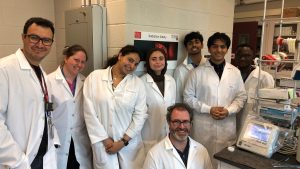
In spring 2025, a total of 27 graduate students and early career professionals gathered at McMaster for the second Nuclear Medicine Next Generation Workshop, held in partnership with King’s College London.
The three-day workshop will help participants strengthen their academic, technical, and professional skills in the evolving field of nuclear medicine and molecular imaging.
The workshop will feature lectures and hands-on activities led by McMaster and Kings nuclear experts and will be held at McMaster’s nuclear facility. McMaster’s nuclear facility produces and processes medical isotopes for more than 70,000 patients each year.
As demand for radiopharmaceuticals rapidly increases around the world, the next generation of innovators will advance the discovery and production of potentially life-saving nuclear medicine, said Larca Petoria, McMaster’s manager of nuclear power outreach and education.
“We are honored to welcome so many talented young leaders to McMaster for this year’s workshop, where they built skills in radiation safety, isotope production, radiopharmaceuticals and more, and discovered first-hand the role they can play in addressing important challenges that will shape the future of nuclear medicine,” said Petria.
Increasing student interest in nuclear science
While research and innovation are moving forward strongly, the future of nuclear power in Canada faces the critical challenge of a talent shortage. John Preston says a lack of qualified professionals risks inhibiting industry growth.
“McMaster is stepping in to meet a need,” Preston said. “We can work with our partners to ensure Canada’s nuclear future is driven by both innovation and talent.”
To develop the next generation of nuclear talent, Professor McMaster has initiated a multi-layered approach, including expanding enrollment in the engineering physics program and introducing a new interdisciplinary minor in nuclear research and society, with all 150 seats filled in the first week, a clear sign of student enthusiasm and the relevance of the field, Preston said.
Equipped with state-of-the-art infrastructure and expertise, the university not only advances its unique capabilities in medical isotope production, materials and energy research, but also has a broader mission.
“We are proud to take on this national responsibility,” Preston said. “By collaborating with universities across Canada and abroad, we are accelerating experiential education and helping to develop this country’s nuclear workforce.”
This article will also be published in the quarterly magazine issue 24.
Source link

