

Close Menu
  • Home
  • Identity
  • Inventions
  • Future
  • Science
  • Startups
  • Spanish
What's Hot

Benchmark raises $225 million in special funding to double Cerebras

From Svedka to Anthropic, brands are boldly leveraging AI in their Super Bowl ads

Prince Andrew’s advisor encouraged Jeffrey Epstein to invest in EV startups like Lucid Motors

Facebook X (Twitter) Instagram
  • Home
  • About Us
  • Advertise with Us
  • Contact Us
  • DMCA
  • Privacy Policy
  • Terms & Conditions
  • User-Submitted Posts
Facebook X (Twitter) Instagram
Fyself News
  • Home
  • Identity
  • Inventions
  • Future
  • Science
  • Startups
  • Spanish
Fyself News
Home » ‘Extreme state of human genetic diversity’: Ancient humans were isolated for nearly 100,000 years in southern Africa, and their genes were astonishingly different.
Science

‘Extreme state of human genetic diversity’: Ancient humans were isolated for nearly 100,000 years in southern Africa, and their genes were astonishingly different.

userBy userDecember 3, 2025No Comments4 Mins Read
Share Facebook Twitter Pinterest Telegram LinkedIn Tumblr Email Copy Link
Follow Us
Google News Flipboard
Share
Facebook Twitter LinkedIn Pinterest Email Copy Link

Humans have been isolated in southern Africa for about 100,000 years, and thus were “out of the range of genetic variation” seen in modern humans, new genetic research has found.

This finding supports the idea that “modern” Homo sapiens can have different combinations of genetic traits, even if they deviate from the norm.

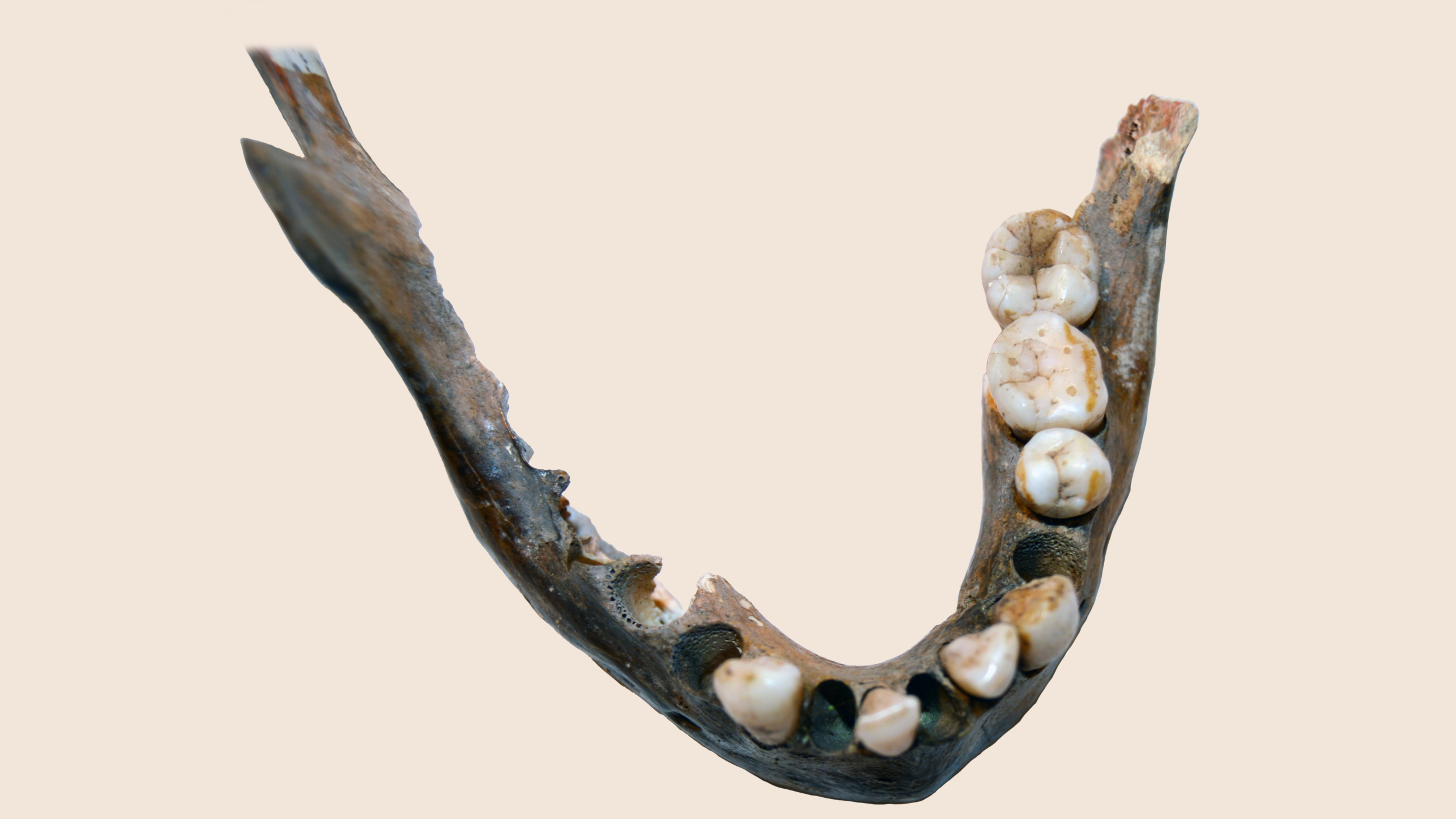
In a study published in the journal Nature on Wednesday (December 3), researchers sequenced the genomes of 28 ancient individuals whose remains ranged from 225 to 10,275 years ago from southern Africa south of the Limpopo River, which begins in South Africa and arcs east through Mozambique to the sea.

you may like

The team then compared the skeleton’s genome to publicly available data on ancient and modern Africans, Europeans, Asians, Americans, and Oceanians.

The researchers found that all the people living in southern Africa more than 1,400 years ago had a dramatically different genetic makeup than modern humans, pointing to the relative isolation of southern Africa until relatively recently.

Researchers still don’t know exactly why humans remained isolated in this region for so long.

“We can speculate that large geographic distances influence isolation, but this is not a very satisfactory speculation because humans can and often do cross large geographic areas,” study co-author Matthias Jakobsson, a human evolutionary biologist at Uppsala University in Sweden, told Live Science via email. However, the geographic area around the Zambezi River just north of this isolated group may not have been particularly suitable for ancient human habitation. “A combination of distance and unfavorable conditions may have isolated the south,” Jacobson said.

Get the world’s most fascinating discoveries delivered straight to your inbox.

Many ancient southern Africans, including those who lived about 10,200 to 1,400 years ago, are “outside the range of genetic variation among modern humans” and “form the extremes of human genetic variation,” the researchers wrote in the study.

The researchers named a previously unknown set of genetic variations the “ancient southern African ancestral component,” and found that until around 550 AD there was no clear sign of admixture, or outsiders sharing genes with the population.

“Our findings therefore contrast with linguistic, archaeological, and some earlier genetic studies suggesting common ancestry and long-term interactions between eastern, western, and southern Africa,” the researchers wrote.

you may like

Using statistical modeling, the researchers determined that the population living in southern Africa was likely very large at least 200,000 years ago. Some people may have left the south when climatic conditions were favorable and spread their genes as they moved north. Then, about 50,000 years ago, the southern African population began to decline, and by about 1,300 years ago, farmers arriving from further north met and interbreeded with southern African gatherers.
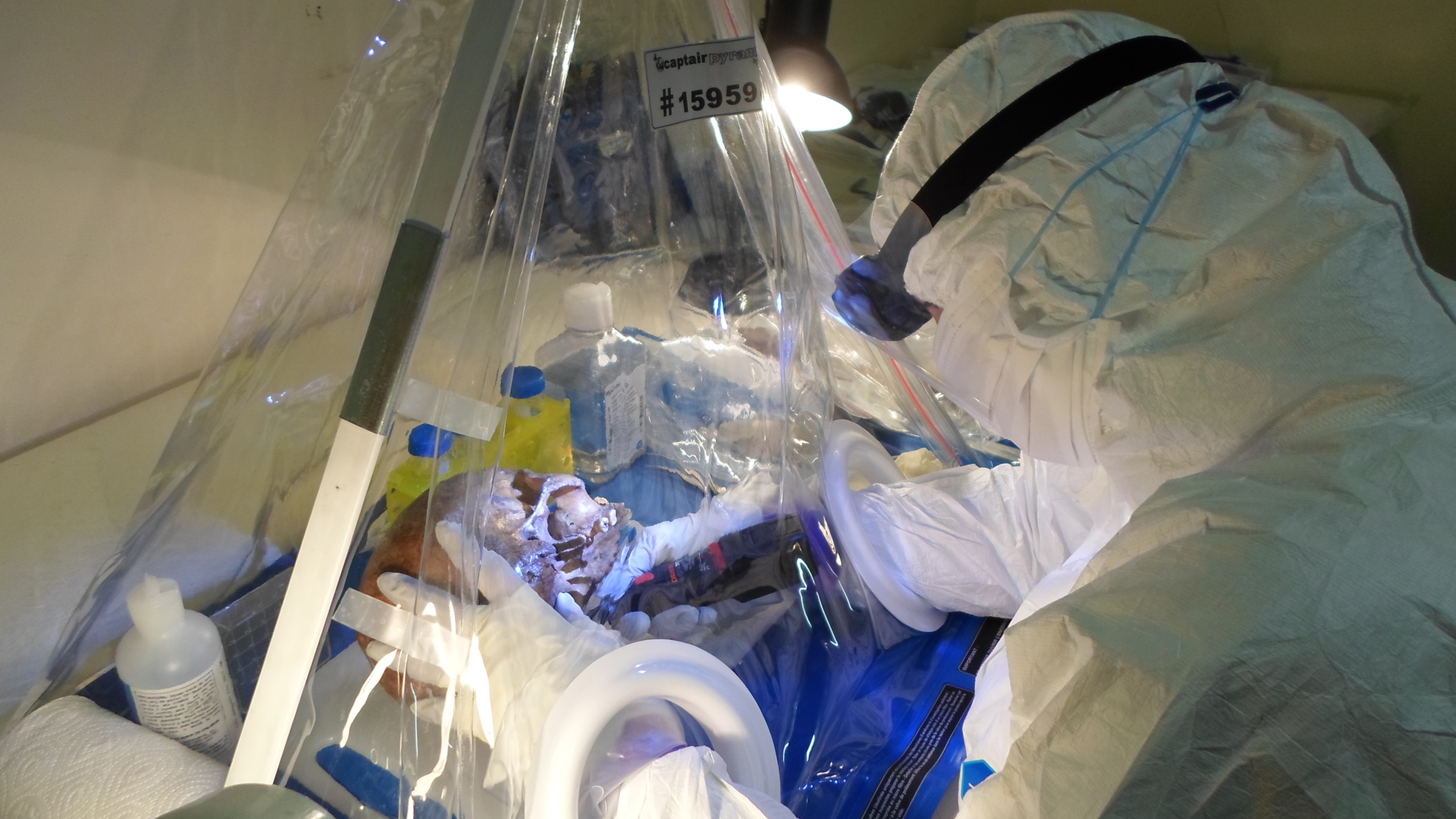
A person in a clean suit handles a human skull through a transparent plastic curtain

Study co-author Helena Malmström uses a mobile clean lab at Florisbad Research Station to sample skulls. (Image credit: Alexandra Coutinho)

“Really important” genetic mutations

The unique genetics of ancient southern Africans has given researchers further clues about human evolution and variation.

Jacobson said in a statement that prehistoric populations in southern Africa contained half of all human genetic variation, and humans spread throughout the rest of the world contained the other half. “Thus, these genomes can help us learn which genetic variations were really important for human evolution,” he said.

Researchers examined dozens of DNA variants unique to Homo sapiens, including ancient populations in southern Africa, and found that some were associated with kidney function and some with neuron growth in the brain. Mutations in the kidneys may have evolved to help humans retain and control water in the body, while mutations in neurons may be associated with attention span, suggesting humans had better mental abilities than Neanderthals and Denisovans.

A new analysis reveals that there is “vast unappreciated genetic variation in the ancient genomes of indigenous peoples around the world,” which is important for understanding the evolution of Homo sapiens, the researchers write.

In particular, the presence of human-specific variants in ancient southern Africans supports a “combinatorial” genetic model of human evolution, the researchers noted, in which many possible combinations of genetic variation ultimately led to “genetically modern” Homo sapiens.

“I think it’s certainly possible that humans evolved, at least in part, in multiple locations,” Jacobson says. “How and if such a process occurred and how genetic variation was genetically incorporated into modern humans remains an open question.”


Source link

#Biotechnology #ClimateScience #Health #Science #ScientificAdvances #ScientificResearch
Follow on Google News Follow on Flipboard
Share. Facebook Twitter Pinterest LinkedIn Tumblr Email Copy Link
Previous ArticleFyself Revolutionizes Digital Health Communication with Interactive Doctor TwinH Storymap for FiveCLM Initiative
Next Article WordPress King add-on flaw under active attack allows hackers to create administrator accounts
user
  • Website

Related Posts

All major galaxies except one are moving away from the Milky Way – and we finally know why

February 6, 2026

“Mono” viruses increase the risk of MS and cancer for some people. 22 genes suggest why.

February 5, 2026

The spotted orchid fly has invaded the United States. They may have acquired evolutionary superpowers in Chinese cities.

February 5, 2026
Add A Comment
Leave A Reply Cancel Reply

Latest Posts

Benchmark raises $225 million in special funding to double Cerebras

From Svedka to Anthropic, brands are boldly leveraging AI in their Super Bowl ads

Prince Andrew’s advisor encouraged Jeffrey Epstein to invest in EV startups like Lucid Motors

AI agents could become lawyers after all

Trending Posts

Subscribe to News

Subscribe to our newsletter and never miss our latest news

Please enable JavaScript in your browser to complete this form.
Loading

Welcome to Fyself News, your go-to platform for the latest in tech, startups, inventions, sustainability, and fintech! We are a passionate team of enthusiasts committed to bringing you timely, insightful, and accurate information on the most pressing developments across these industries. Whether you’re an entrepreneur, investor, or just someone curious about the future of technology and innovation, Fyself News has something for you.

Castilla-La Mancha Ignites Innovation: fiveclmsummit Redefines Tech Future

Local Power, Health Innovation: Alcolea de Calatrava Boosts FiveCLM PoC with Community Engagement

The Future of Digital Twins in Healthcare: From Virtual Replicas to Personalized Medical Models

Human Digital Twins: The Next Tech Frontier Set to Transform Healthcare and Beyond

Facebook X (Twitter) Instagram Pinterest YouTube
  • Home
  • About Us
  • Advertise with Us
  • Contact Us
  • DMCA
  • Privacy Policy
  • Terms & Conditions
  • User-Submitted Posts
© 2026 news.fyself. Designed by by fyself.

Type above and press Enter to search. Press Esc to cancel.