
At the forefront of PFAS research, from detection to remediation
IVL leads PFAS research and advances practical environmental solutions through advanced analysis, field-scale testing, and policy engagement.
“We don’t just want to follow the regulatory curve, we want to shape it,” said CEO John Rune Nielsen. “Our role is to ensure that science provides clear, practical answers to one of today’s most pressing environmental problems.”
The IVL Swedish Environmental Research Institute has become one of Europe’s leading centers for PFAS research and innovation. With over 20 years of experience, IVL combines advanced analytics, measurement technology, pilot-scale remediation, and policy engagement to accelerate solutions for society.
Cutting-edge analytical expertise
IVL operates state-of-the-art PFAS laboratories in Stockholm and Gothenburg, offering some of the most advanced capabilities in Scandinavia. Through high-resolution mass spectrometry, combustion ion chromatography, total oxidizing precursor (TOP) assays and extractable organofluorine (EOF) analysis, IVL can reveal both known and hidden PFAS in a variety of samples, from environmental and human samples to food, material, and product samples. PFAS experts can also assist with data interpretation and reporting.

Watch what happens next
IVL constantly develops methods and incorporates new substances, not only by adapting to the needs of our customers and research projects, but also by leveraging our experience to predict what will happen next. More recently, several very short-chain PFAS, including trifluoroacetic acid (TFA), have been added to the target list. For TFA in drinking water, the IVL method was evaluated as successful in an interlaboratory comparative study.
“We are constantly pushing the limits of detection,” said IVL environmental chemist Ioannis Liagkouridis. “Our research not only identifies known PFAS, but also reveals precursors and new compounds that escape surveillance. This is critical to building a true picture of environmental exposure.”
Breaking new ground in volatile PFAS measurement
One of IVL’s latest significant innovations is the development of sampling and analytical methods to detect volatile PFAS in flue gases. Long overlooked, these compounds can now be measured thanks to the first large-scale study at a waste incineration plant by IVL.
From modeling to risk assessment and policy planning
IVL provides advanced modeling tools to assess the environmental transport of PFAS in soil, groundwater, and surface water beyond detection by chemical analysis. IVL helps companies, regulators, and municipalities predict future concentrations in relevant matrices (e.g., groundwater aquifers) using tools like “PFAS simulators.” Ongoing research projects include developing models to help assess the impact of wastewater treatment facilities on surface water receptors such as water, sediment, and fish.

IVL maps human exposure to PFAS from workplaces, indoor environments, and consumer products. One of the studies commissioned by IVL from the Swedish Chemical Agency on PFAS in cosmetics, covering both product content and post-use emissions, was internationally recognized and provided the scientific background for the cosmetics section of the EU’s PFAS regulation proposal. Occupational exposure to PFAS is currently focused on optimizing air sampling and skin exposure strategies to facilitate correct exposure metrics and risk assessment.
Community support for detecting PFAS
In Sweden, local authorities are actively searching for PFAS sources and their prevalence. Because they are a diverse group of substances that move freely in water and air, it is difficult to determine their dispersion. Tracking requires hydrological modeling and atmospheric tracking, as natural flows and weather conditions cause unpredictable movement and accumulation. Only integrated monitoring can reveal its pathways and potential impacts. Data collected from sampling efforts is also difficult to process. IVL helps researchers improve sampling strategies and visualize datasets, revealing the story behind the results. This allows local governments to make informed decisions in terms of risk assessment and response measures.
Progressing repair technology
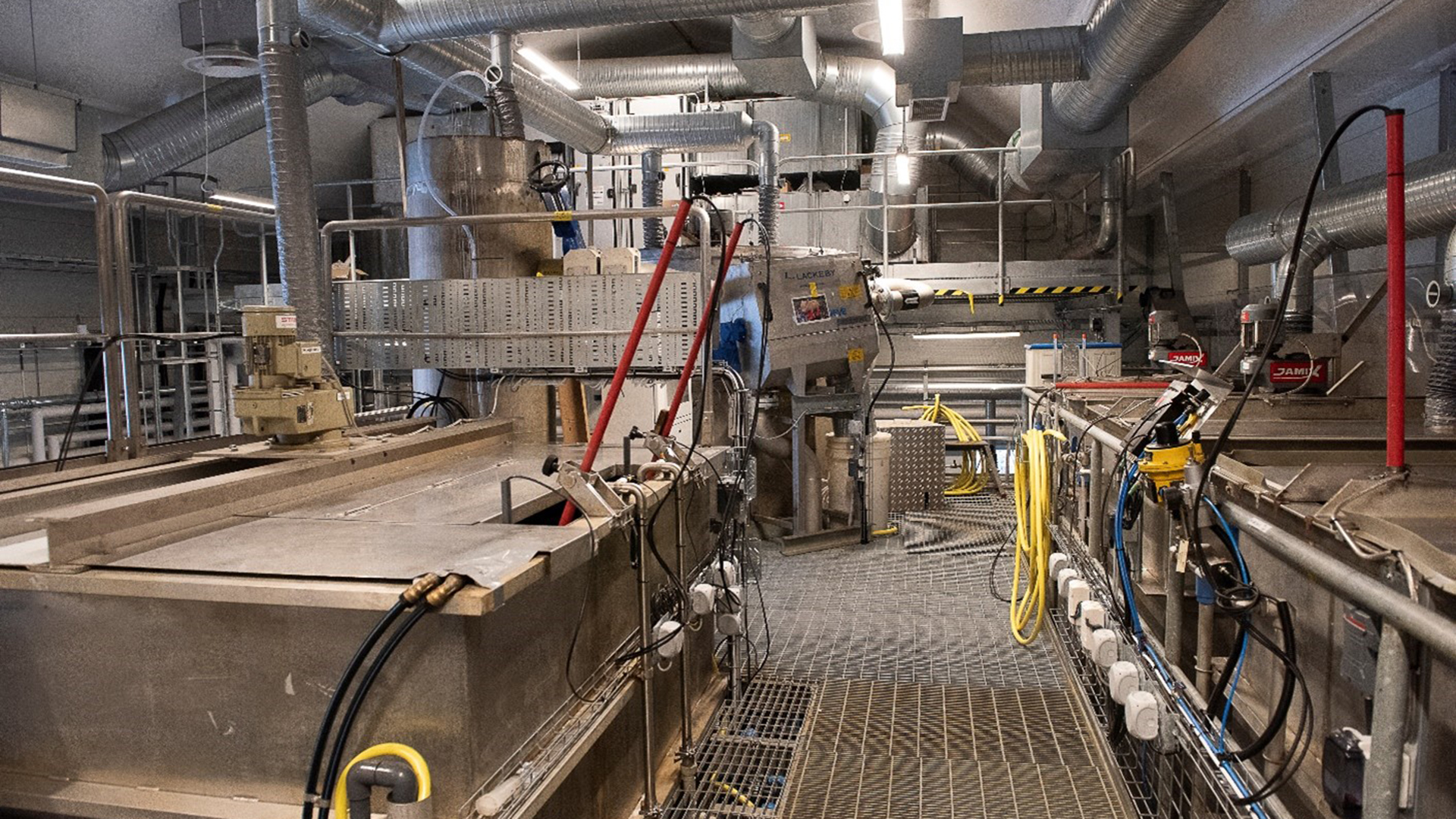
At IVL’s research and development pilot facility, the Sjöstadsberket Water Innovation Center (SWIC), the institute has been testing technologies such as granular activated carbon, ion exchange, foam fractionation, nanofiltration, and hybrid systems such as powdered activated carbon and membrane bioreactors (PAC-MBR) for the removal of micropollutants.
Pilot studies are often designed to meet the needs of industrial and municipal wastewater utilities, providing municipalities and industry with a scalable, cost-effective pathway to reduce PFAS contamination. In addition to piloting and testing treatment technologies, IVL also encourages investigating the fate of PFAS by designing projects for sampling and mapping to support informed decision-making and help stay ahead of investment requirements and treatment capabilities. ”
“Our pilot plant will allow us to evaluate treatment methods under realistic conditions,” said Christian Barresel, PFAS expert at IVL. “This is where research and application meet, and where we can support utilities and industry in selecting solutions that actually work.”
Bridging research, industry and policy
IVL’s unique strength lies in its linking of science and practice. Through projects such as Zero PFAS and PFAS Roadshows, the Institute brings together inter-institutional capabilities in this field to translate research into actionable strategies. IVL also coordinates the Baltic Sea PFAS Network, brings together stakeholders for dialogue and cooperation, and supports capacity building in the PFAS sector in Sweden and abroad. This role is particularly important as EU regulations evolve and local authorities and industry seek guidance on compliance and remediation.
Driving the next stage of innovation
Despite significant progress, a combination of approaches is required to effectively address PFAS. No single solution or single actor can address all PFAS challenges. Therefore, the Institute is investing in next-generation analytical tools, innovative processing technologies, and a robust risk framework to stay ahead of regulatory and environmental demands.
Source link

