


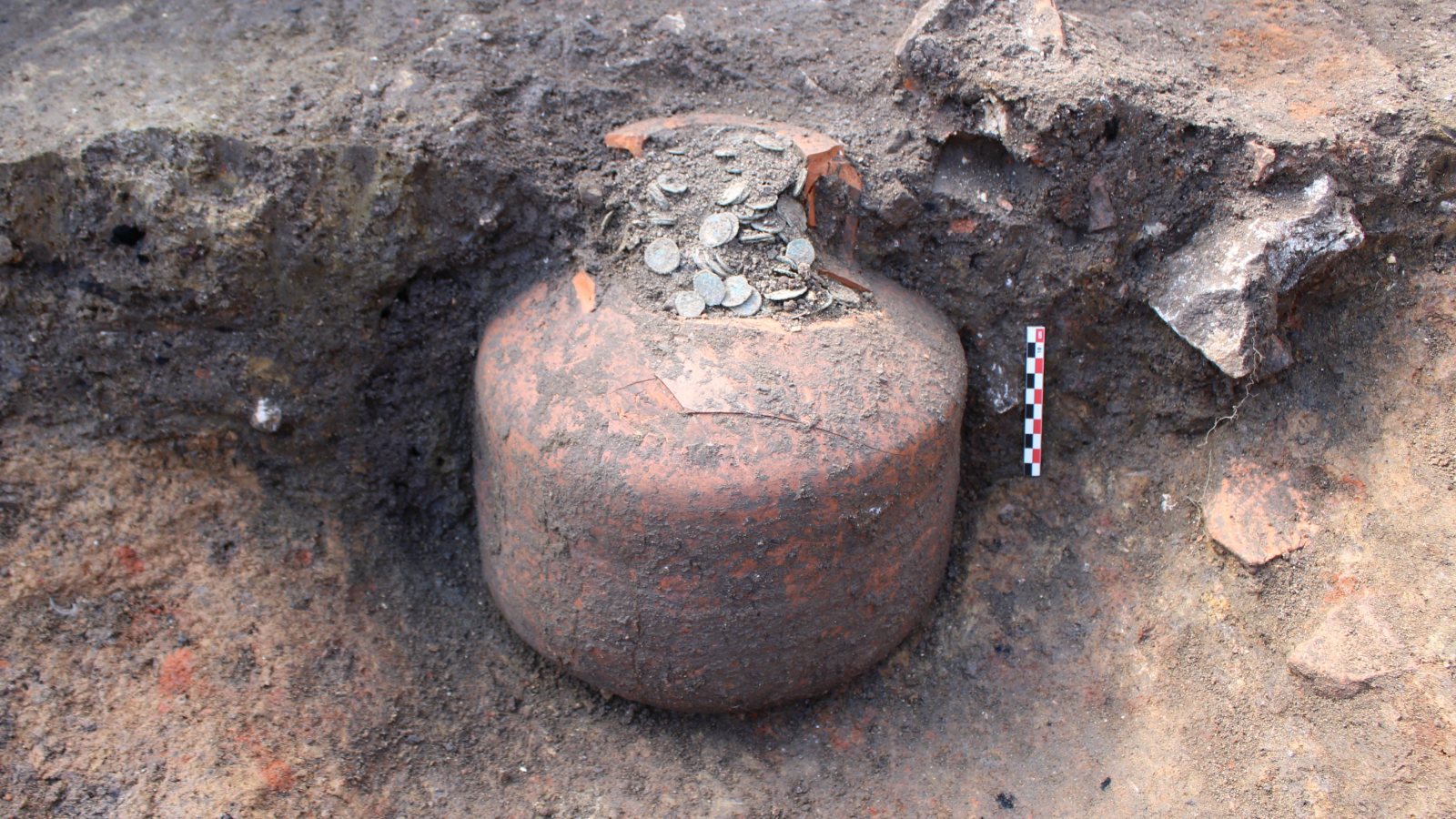
French archaeologists have discovered three ancient storage jars filled with tens of thousands of Roman coins. These containers were buried in holes in the floors of houses in ancient settlements 1,700 years ago, probably as a type of safe or piggy bank.
These three jugs, known as amphorae, were discovered during excavations carried out by the National Institute for Preventive Archeology (INRAP) in the village of Senon in northeast France, and may contain a total of more than 40,000 Roman coins.
The first vault contained an estimated 83 pounds (38 kilograms) of coins, “equivalent to approximately 23,000 to 24,000 coins,” INRAP numismatist Vincent Geneviève, who is analyzing the vault, told Live Science in an email.
you may like
The second jug and its coins weighed about 50kg and “based on the 400 coins recovered from the broken neck when it was discovered, it could have contained between 18,000 and 19,000 coins,” Genevieve said. The third jug was recovered in ancient times, and only three coins remained in the hole where the container had once been placed.
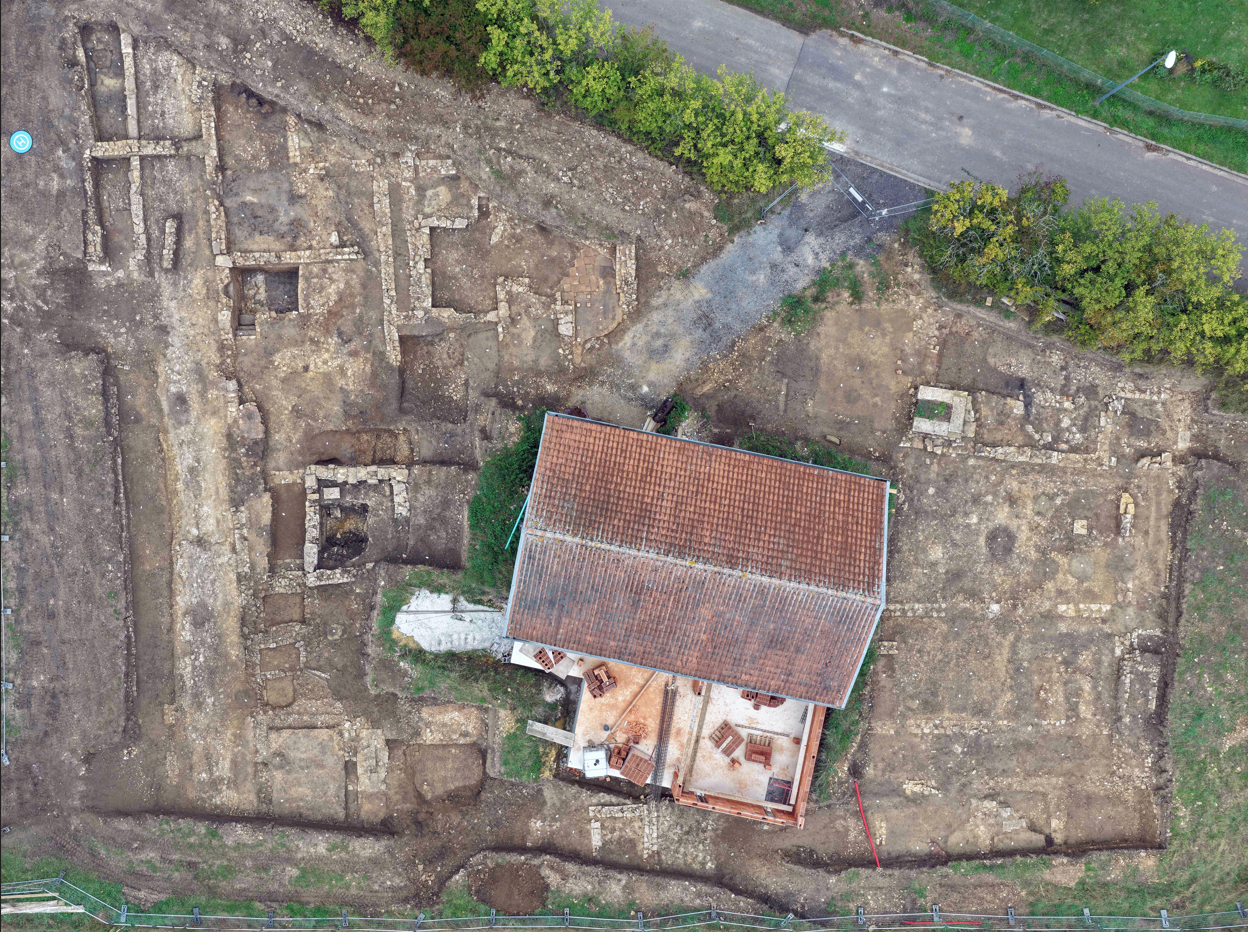
The real significance of this discovery lies not in the sheer number of coins, but in the detailed information about where the coin hoards were found, as around 30 coin hoards are already known in the region.
“It is unclear whether, contrary to what may seem at first glance, these are hidden ‘treasures’ in times of instability,” according to a translated statement from INRAP on Nov. 26. Experts believe the amphora was buried between 280 and 310 AD, based on the dates on the coins.
The treasure also includes coins with busts of Victorinus, Tetrix I, and his son Tetrix II, emperors of the so-called Gallic Empire, which ruled Gaul and its surrounding areas independent of the rest of the Roman Empire from 260 to 274, until being reunited by Emperor Aurelian in 274.
Treasure hidden away in a hurry or long-term savings?
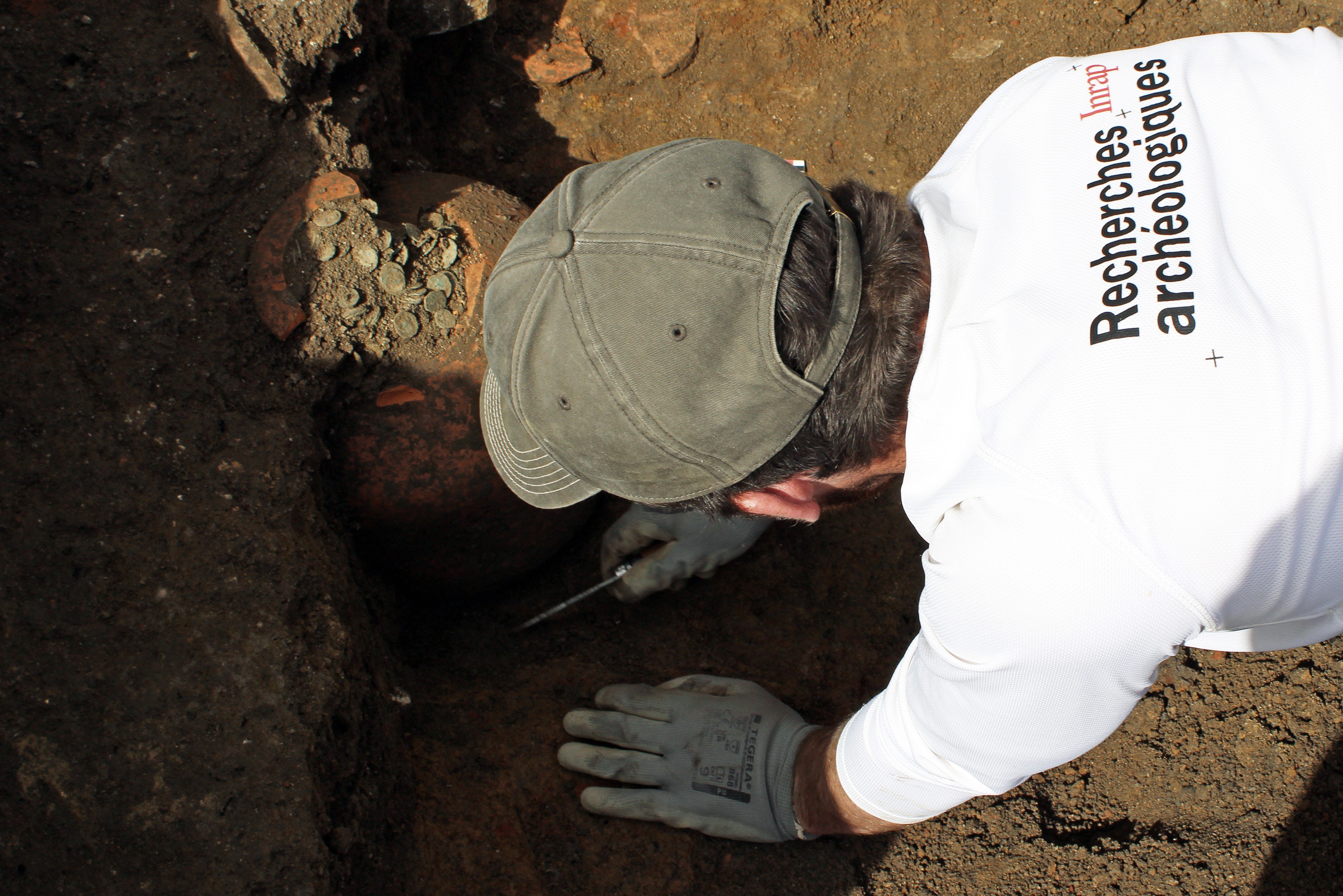
The amphora filled with coins had been carefully buried in a well-built hole in the living room of the house. The opening of the jug was at ground level, making it easily accessible, like an ancient piggy bank.
“In two cases, several coins were found attached to the rim of the vase, clearly indicating that they were deposited after the vase was buried, when the hole was not yet filled with sediment,” the statement said.
The accessible jars suggest that their owners were using them as long-term savings instruments rather than hastily hidden storage. This residential area had stone buildings with underfloor heating, a basement and a workshop with a stove. There was also a Roman fort nearby.
In the early 4th century, the village was destroyed by a great fire. The settlement was rebuilt before a second fire permanently abandoned it, but the coin deposit was lost for nearly 2000 years.