


Scientists in China have developed a first-of-its-kind artificial imaging system inspired by snakes that can ‘see’ the heat emitted by their prey in complete darkness. This sensor captures ultra-high-resolution infrared (IR) images at 4K resolution (3,840 x 2,160 pixels), comparable to the quality of the iPhone 17 Pro camera.
Objects with temperatures above absolute zero (-460 degrees Fahrenheit or -273 degrees Celsius) emit some electromagnetic radiation. At normal body temperature, this has wavelengths in the IR range. The human eye can only perceive shorter wavelengths within the visible light range.
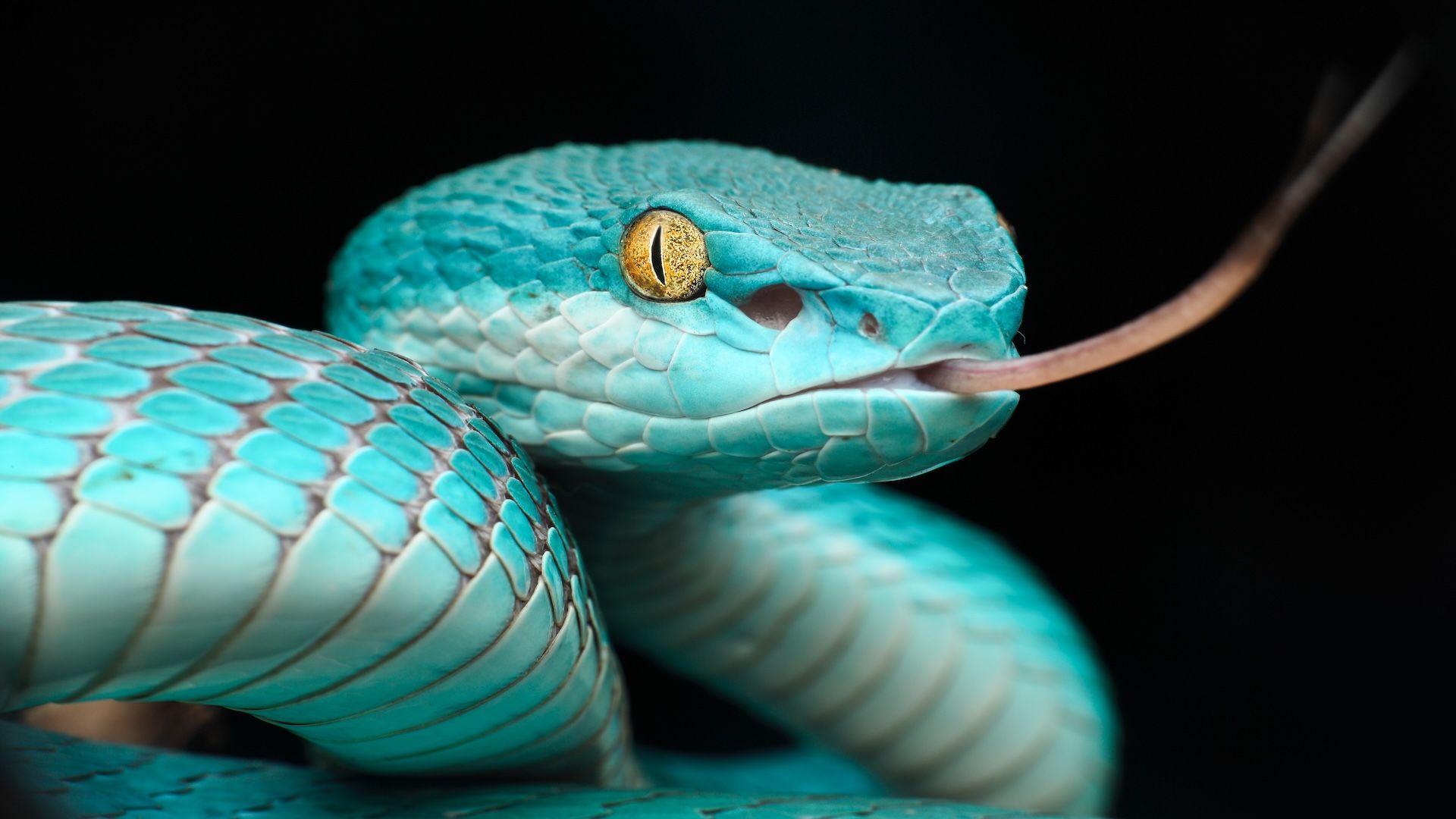
Snakes can also see visible light, but some species, such as pit vipers (Crotalinae), have special heat-sensing organs right next to their nostrils that allow them to visualize long-wavelength IR radiation.
you may like
It is called a “pit” organ because it contains a hollow chamber in which a thin membrane is suspended. When the IR waves heat specific areas of the membrane, thermal “images” are sent to the brain via attached nerves.
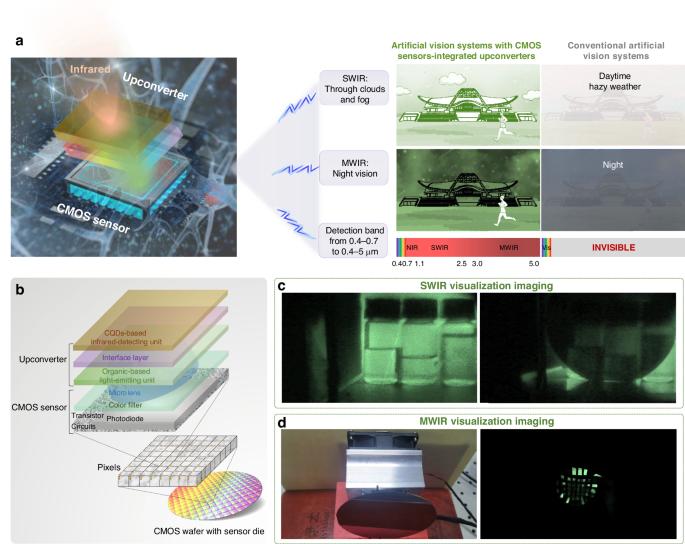
Scientists at Beijing Institute of Technology used this concept to create their own IR detection system. They stacked layers of different materials on an 8-inch disk and passed radiation through the layers until it appeared as a high-quality image visible to the human eye. The system was outlined in a study published Aug. 20 in the journal Nature, “Light: Science & Applications.”
The first layer of the imaging system is an IR-sensitive layer formed of so-called “colloidal quantum dots.” These are small nanoparticles made from mercury and tellurium atoms that release a charge when they absorb IR radiation. The charge then moves through several noise-reduction layers to an organic light-emitting diode (LED) layer known as an “upconverter.”
Here, the electron meets a “hole” (absence of an electron) and releases energy, which is converted into green visible light by the phosphorescent molecule. Finally, the visible light reaches the “complementary metal oxide semiconductor” (CMOS) layer and is converted into an image.
IR vision in future smartphones and cameras
This is the first system capable of converting shortwave and medium-wave IR (wavelengths from 1.1 to 5 micrometers) into ultra-high resolution images at room temperature. The CMOS sensor is placed directly on top of the upconverter, capturing weak IR signals before they are drowned out by noise. Other systems where the CMOS and upconverters are separated require expensive cryogenic cooling to prevent noise buildup as the signal passes between them.
Being able to see IR radiation effectively widens the range of wavelengths that humans can see by more than 14 times. Cameras equipped with this sensor technology will be able to detect warm objects even in low-light conditions, such as in fog, smoke, or at night.
“Artificial vision extended to the infrared range can operate in all weather conditions, day or night, regardless of extreme weather conditions, and could be useful in emerging fields such as industrial inspection, food safety, gas detection, agricultural science, and autonomous driving,” the researchers said in their study.
They added that tens of millions of pixels can be achieved “at extremely low cost” using their system, making the technology more likely to be implemented in consumer cameras and smartphones in the future.
In fact, these devices already use standard silicon CMOS sensors, on top of which layers can be attached.