

Close Menu
  • Home
  • Identity
  • Inventions
  • Future
  • Science
  • Startups
  • Spanish
What's Hot

Resolve AI, a startup led by former Splunk executives, reaches $1 billion Series A valuation

Establish a venture-backable company in a highly regulated field

Cursor continues acquisition spree with deal with Graphite

Facebook X (Twitter) Instagram
  • Home
  • About Us
  • Advertise with Us
  • Contact Us
  • DMCA
  • Privacy Policy
  • Terms & Conditions
  • User-Submitted Posts
Facebook X (Twitter) Instagram
Fyself News
  • Home
  • Identity
  • Inventions
  • Future
  • Science
  • Startups
  • Spanish
Fyself News
Home » Jupiter spider? Scientists have uncovered the secret origins of an arachnid “devil” lurking on the gas giant’s moon.
Science

Jupiter spider? Scientists have uncovered the secret origins of an arachnid “devil” lurking on the gas giant’s moon.

userBy userDecember 17, 2025No Comments4 Mins Read
Share Facebook Twitter Pinterest Telegram LinkedIn Tumblr Email Copy Link
Follow Us
Google News Flipboard
Share
Facebook Twitter LinkedIn Pinterest Email Copy Link

A mysterious spider-like structure lurking on Jupiter’s fourth largest moon Europa may finally have a good explanation, nearly 30 years after its discovery. The arachnid impostor has also been given a devilish new name.

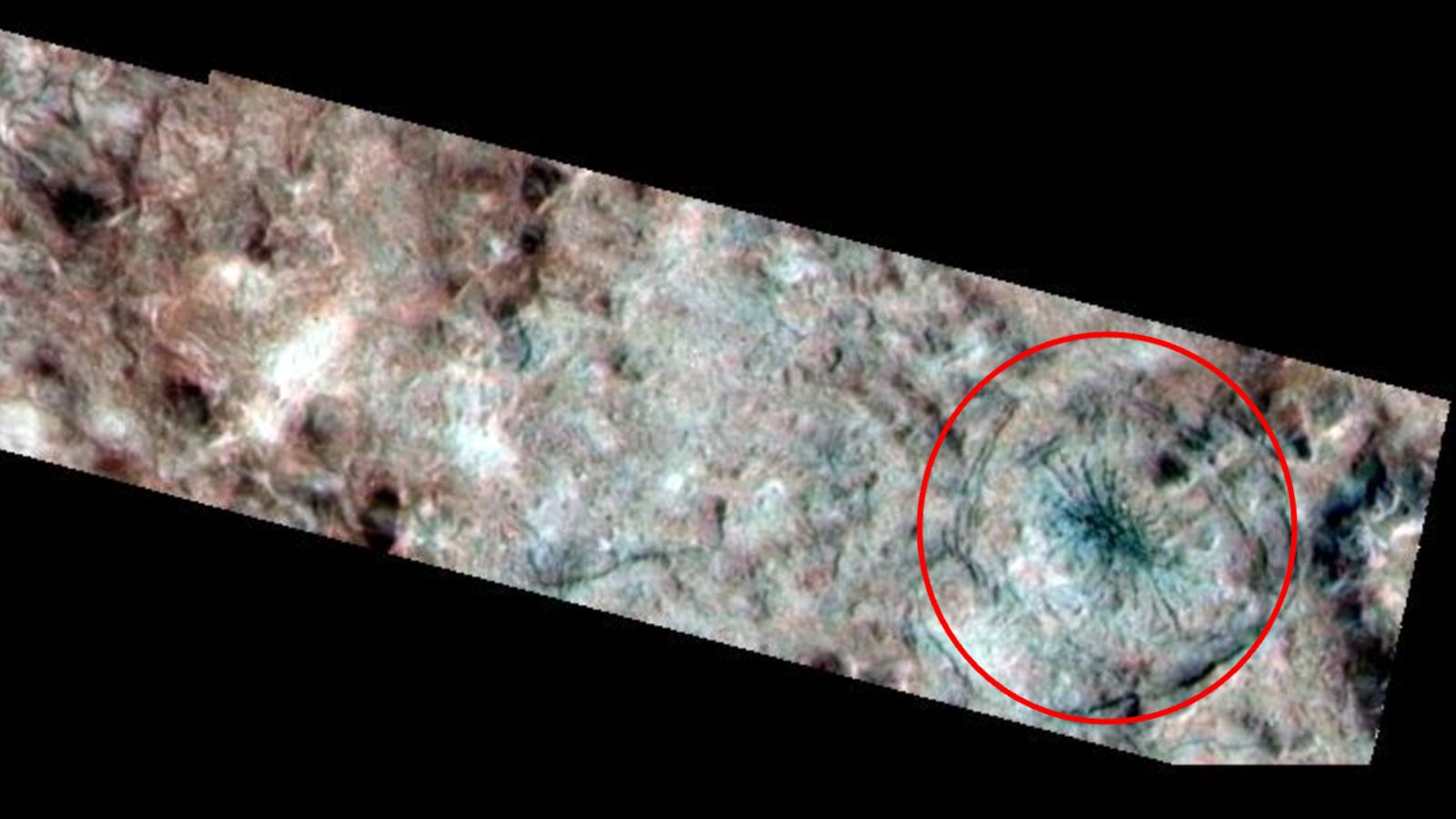
In March 1998, NASA’s Galileo spacecraft (which studied Jupiter and its major moons from 1995 to 2003) approached the frozen ocean moon Europa, considered one of the most likely locations in the solar system for extraterrestrial life. During the flight, the spacecraft mapped a 22-kilometre-wide impact structure called Manannan Crater on the moon’s icy surface, and discovered that something strange was lurking inside.

Hidden in a deep hole near the center of the crater was a vast dendritic shape. Researchers initially thought the dark features were caused by the extreme gravity exerted on Europa by Jupiter, causing multiple fracture lines to be carved into the water world’s surface. Other experts have since claimed that it was formed by an eruption from a hydrothermal vent at the bottom of Europa’s underground ocean. However, none of these explanations fully explains this unusual shape.

you may like

But in a new study published in The Planetary Science Journal on December 2, researchers proposed an alternative explanation. The idea is that Jupiter’s spiders formed in a way similar to how Earth’s dark dendritic patterns, known as “lake stars,” typically form. These features are formed when snow falls on a frozen lake and water seeps through small holes in the ice.

With this in mind, researchers used a similar technique to partially recreate Manannan Crater’s mysterious shape in the lab. The researchers ultimately named Europa’s arachnid-like asterisk Damhan Alla, which means “spider” or “wall devil” in Irish. (Manannan is a Celtic god in Irish mythology, which is part of the inspiration for the new name.)
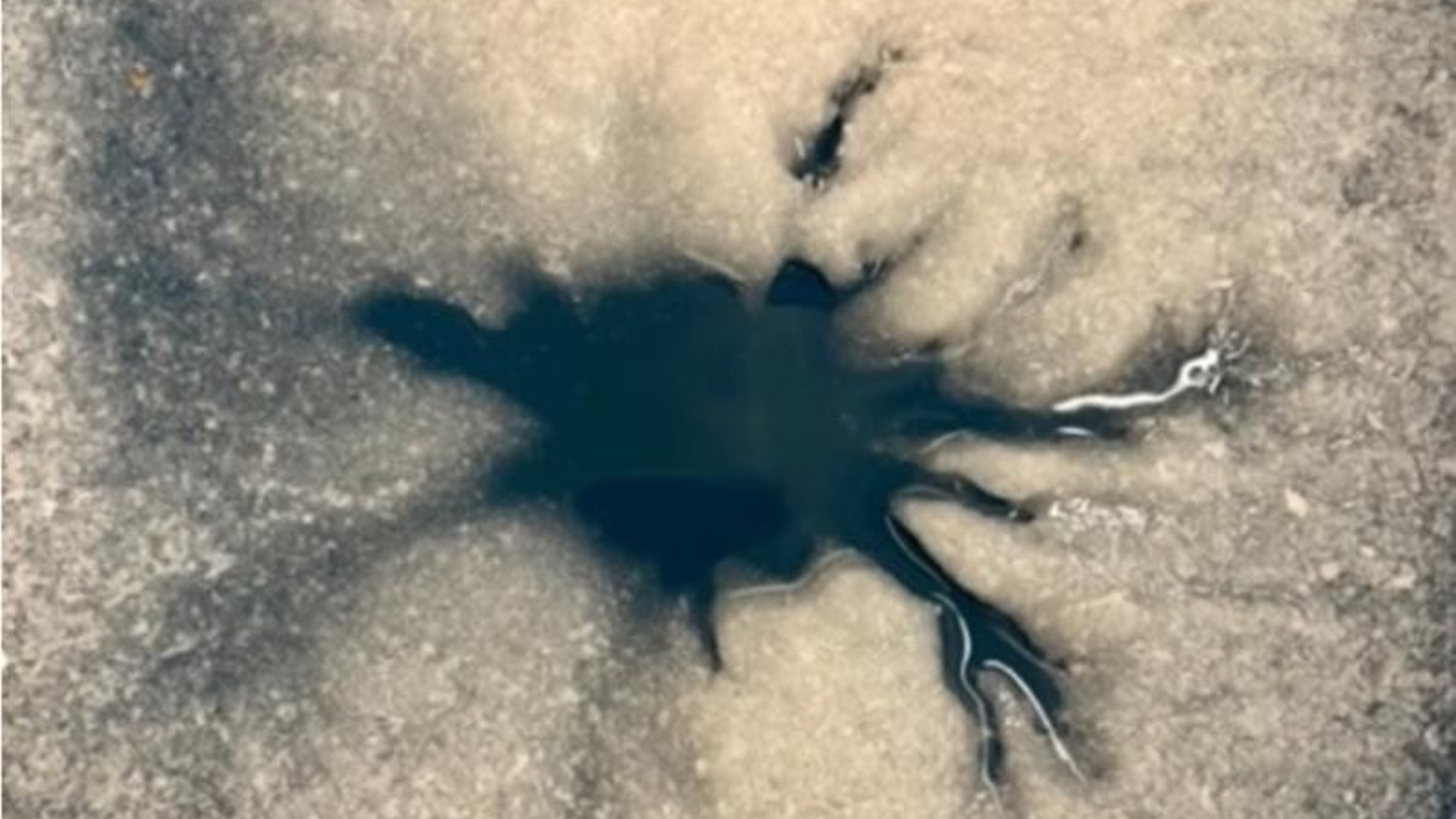
dark pictures "lake star" made in a laboratory

Researchers partially recreated the spider-like pattern in the lab using a technique that mimics how lake stars form on Earth. (Image credit: Professor Lauren McCune)

“Lake stars are truly beautiful and are common in frozen lakes and ponds that are covered in snow or slush,” study lead author Laura McCune, a planetary scientist at the University of Central Florida, said in a statement. “It’s great to think that they might provide a glimpse into the processes occurring on Europa, and even on other icy oceanic worlds in the solar system.”

But rather than water rising through a small hole, as happens when lake stars form on Earth, Damhan Alla likely formed from an asteroid impact. The asteroid’s impact caused small cracks in Europa’s icy shell, allowing salt water to seep upwards and creating spider-like patterns on the surface. (This asteroid impact likely occurred after the Manannan crater had already formed.)

Get the world’s most fascinating discoveries delivered straight to your inbox.

The researchers also noted similarities between Damhan Alla and the infamous “Martian spider.” Spiders are dust deposits on the surface of Mars that look like swarming spiders when viewed from above. These pseudoarachnids, known as arachnids, form when carbon dioxide ice submerged in water sublimates or directly turns into gas. McCune’s team has recreated these features on Earth before.
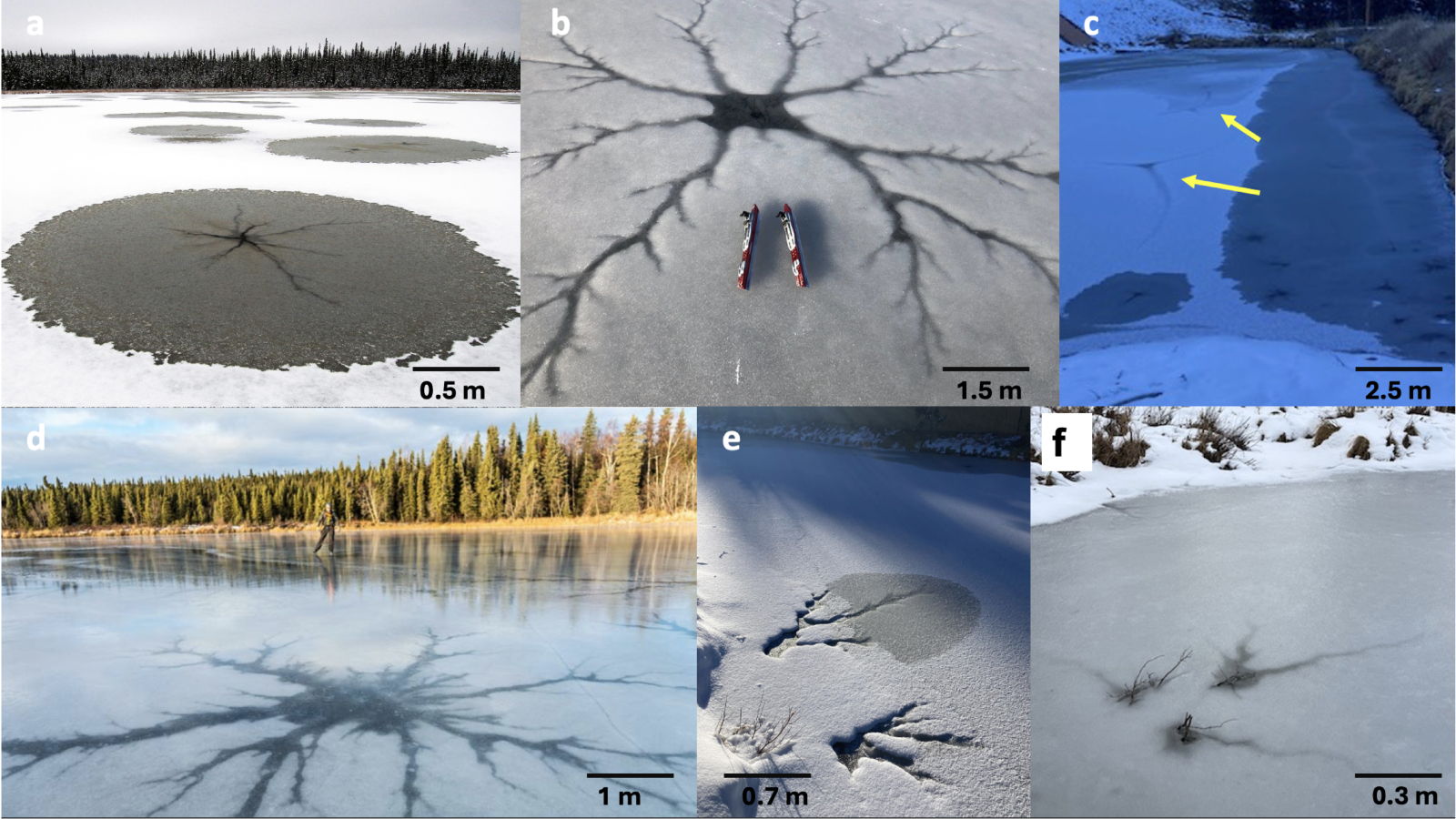
Collage of lake stars on the surface of various lakes on Earth

“Lake stars” are formed when water seeps through small holes in a lake and spreads through a layer of snow or slush on the surface. Similar processes may be occurring in icy water worlds throughout the solar system. (Image credit: Mc Keown et al. 2025)

The similarity in shape between Damhan Alla and Mars spiders is due to the way “fluids flow across porous surfaces,” McCune said. In theory, similar spider features could form on other frozen oceanic worlds, including Saturn’s moon Enceladus, Jupiter’s other moon Ganymede, and the dwarf planet Ceres in the asteroid belt beyond Mars.

Dr. McCune is currently establishing a new lab focused on studying how these different spider-like features form on different moons of the solar system. She hopes to provide valuable insights that will help inform NASA’s European Clipper mission, which will launch in October 2024 and arrive in 2030 to extensively study Jupiter’s water moons.

“The significance of our research is truly exciting,” McCune said. “Surface features like this can tell us a lot about what’s going on beneath the ice. If we can observe more features with European Clipper, it could indicate a local brine pool beneath the surface,” she added.

And these pools could be a good place to start looking for signs of extraterrestrial life.


Source link

#Biotechnology #ClimateScience #Health #Science #ScientificAdvances #ScientificResearch
Follow on Google News Follow on Flipboard
Share. Facebook Twitter Pinterest LinkedIn Tumblr Email Copy Link
Previous ArticleExplorers discover Anglo-Saxon treasure trove that may have been part of ‘ritual killings’
Next Article Rad Power Bikes files for bankruptcy and is considering selling the business
user
  • Website

Related Posts

Interstellar comet 3I/ATLAS is rapidly moving away from us. Can we ‘intercept’ it before it leaves us forever?

December 19, 2025

Japan trials 100-kilowatt laser weapon – capable of cutting metal and drones while in flight

December 19, 2025

2025 Urids meteor shower: When and where to see ‘shooting stars’ on the longest night of the year

December 19, 2025
Add A Comment
Leave A Reply Cancel Reply

Latest Posts

Resolve AI, a startup led by former Splunk executives, reaches $1 billion Series A valuation

Establish a venture-backable company in a highly regulated field

Cursor continues acquisition spree with deal with Graphite

Elon Musk’s $56 billion Tesla pay package reinstated by Delaware Supreme Court

Trending Posts

Subscribe to News

Subscribe to our newsletter and never miss our latest news

Please enable JavaScript in your browser to complete this form.
Loading

Welcome to Fyself News, your go-to platform for the latest in tech, startups, inventions, sustainability, and fintech! We are a passionate team of enthusiasts committed to bringing you timely, insightful, and accurate information on the most pressing developments across these industries. Whether you’re an entrepreneur, investor, or just someone curious about the future of technology and innovation, Fyself News has something for you.

Castilla-La Mancha Ignites Innovation: fiveclmsummit Redefines Tech Future

Local Power, Health Innovation: Alcolea de Calatrava Boosts FiveCLM PoC with Community Engagement

The Future of Digital Twins in Healthcare: From Virtual Replicas to Personalized Medical Models

Human Digital Twins: The Next Tech Frontier Set to Transform Healthcare and Beyond

Facebook X (Twitter) Instagram Pinterest YouTube
  • Home
  • About Us
  • Advertise with Us
  • Contact Us
  • DMCA
  • Privacy Policy
  • Terms & Conditions
  • User-Submitted Posts
© 2025 news.fyself. Designed by by fyself.

Type above and press Enter to search. Press Esc to cancel.