


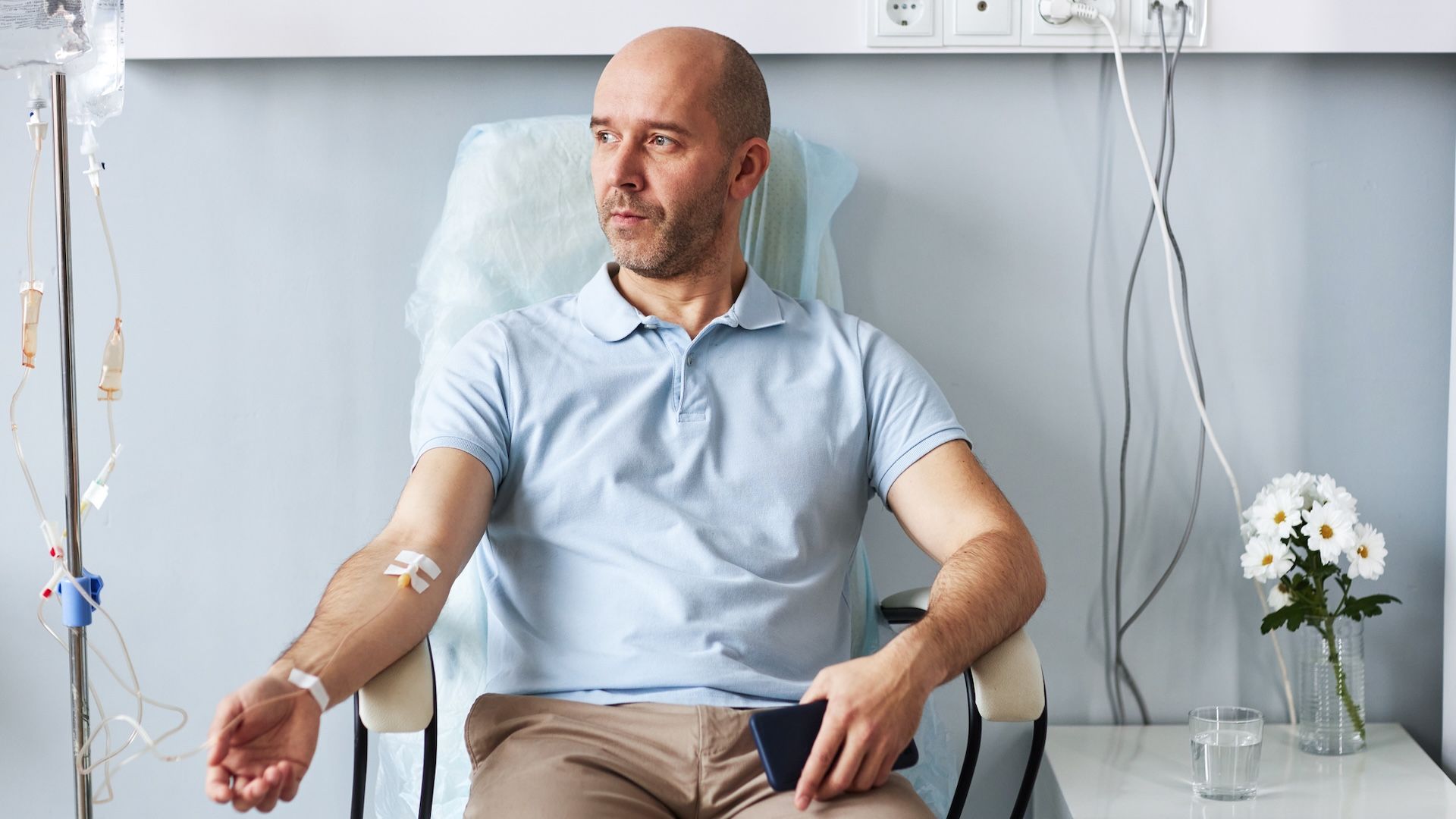
A new study suggests that chemotherapy immunotherapy given earlier in the day can extend the lifespan of patients with advanced lung cancer.
Previous research suggests that circadian rhythms, the body’s internal clock, may influence the effectiveness of immune checkpoint inhibitors. These drugs help the immune system recognize and attack cancer cells by blocking the tumor’s ability to block the immune response.
For some cancers, including kidney cancer, liver cancer, stomach cancer, esophageal cancer, head and neck cancer, and melanoma, this treatment has been shown to have better results when given in the morning than in the late afternoon or evening.
you may like
Now, this new study, published Dec. 8 in the journal Cancer, shows that the time of day the drug is given also has an impact on advanced-stage small cell lung cancer (ES-SCLC). ES-SCLC is a rapidly growing cancer that is generally associated with a poor prognosis and accounts for approximately 15% of new lung cancer cases.
The research is “very important”, said Dr Francis Levy, a medical oncologist and founder of the Chronotherapy Group at the University of Warwick, who was not involved in the study. This is an extension of previous research he conducted with the same team, which involved a different type of lung cancer and a different immune checkpoint inhibitor, but found similar results.
“Administer immune checkpoint inhibitors early in the day, either as single agents or in combination with chemotherapy or angiogenesis inhibitors. [drugs that starve tumors of blood]significantly improving treatment efficacy compared to later administration times,” Levy told Live Science.
Other experts not involved in the study agreed that the results were excellent. In a joint statement, oncologist Dr Pasquale Innominato and circadian biologist Dr Robert Dallman from the University of Warwick, and oncologist Dr Celine Ismail Sutton from Ysbyty Gwynedd Hospital in Wales, told Live Science that they were “impressed by the significant impact that the time of day of immunotherapy administration has on overall survival”, calling it a “very meaningful difference”.
Adjusting the timing of treatment “represents simple, low-cost adjustments with the potential to produce meaningful improvements in patient outcomes without adding new drugs or complex interventions,” the researchers said.
Early treatment increases survival time
In the study, researchers at the Affiliated Cancer Hospital of Xiangya Medical College, Central South University in China analyzed data from about 400 patients with ES-SCLC, a cancer with a median survival rate of 14 months. All patients received standard initial immunotherapy combined with chemotherapy from May 2019 to October 2023.
The average daily treatment time for each patient was calculated based on the first four treatment cycles. The researchers then compared survival outcomes for patients treated at different times, from 11 a.m. to 4:30 p.m. Patients were matched to confirm that the main difference between patients was the timing of treatment, rather than baseline characteristics such as age or gender.
you may like
3 p.m. was the key cut-off point. Typically, patients treated before 3 p.m. lived significantly longer without their cancer progressing. Overall survival over the subsequent five years was also longer compared with patients treated later in the day.
Even after accounting for other factors that may influence patient outcomes, this earlier treatment time remained a strong independent predictor of improved survival.
The findings are consistent with clinical research suggesting that killer T cells (immune cells that can directly kill cancer) tend to migrate into tumors in the morning, said Dr. Chi Van Dang, a professor of cancer medicine at Johns Hopkins University who was not involved in the study. Therefore, coordinating immunotherapy with this transition may work more effectively, he told Live Science.
Personalized “chronotherapy”
Although the study’s large sample size was a strength, there are several caveats to this study.
For example, Professor Levy pointed out that most of the patients are men. A significant timing effect did not seem to extend to the women who participated in the study, but this may be due to the fact that there were so few women after all, the study authors wrote, that it is therefore worth investigating in a larger study.
The study found that patients who received immunochemotherapy before 3 p.m. lived nearly twice as long as those who received treatment in the late afternoon. But the picture isn’t entirely clear, Levy said, as the study doesn’t pinpoint the optimal time to end care. “This creates uncertainty as to the most appropriate finishing time, but in practice it could be between 11:30 and 15:00,” he said.
Additionally, because this study was retrospective of historical patient data, stronger evidence would need to come from randomized clinical trials that explicitly test different treatment timings and compare them with each other. Innominato et al. said that most evidence of the benefit of early treatment “comes from retrospective studies,” and that “only one prospective trial has been completed, and additional trials are currently in development.”
Even if a trial yields positive results, there may still be logistical hurdles to overcome. “If treatment is limited to a single time of day, such as in the morning, departments can quickly become overwhelmed,” Innominato and colleagues said.
It is important to note that the “optimal duration” of treatment may not be universal among patients, they added. It may partly depend on each individual’s biorhythm and lifestyle characteristics.
The researchers suggested that chronotyping, which categorizes people as ‘morning people’ or ‘night owls’, could ‘tailor treatment to each patient’s body clock, account for individual differences, and spread treatment throughout the day, reducing pressure on clinical departments and increasing effectiveness’. “The challenge now is to develop rapid and reliable methods to identify clonotypes and extend this approach, and intense research is already underway.”
This article is for informational purposes only and does not provide medical advice.