
The dynamic duo that forms the power grid
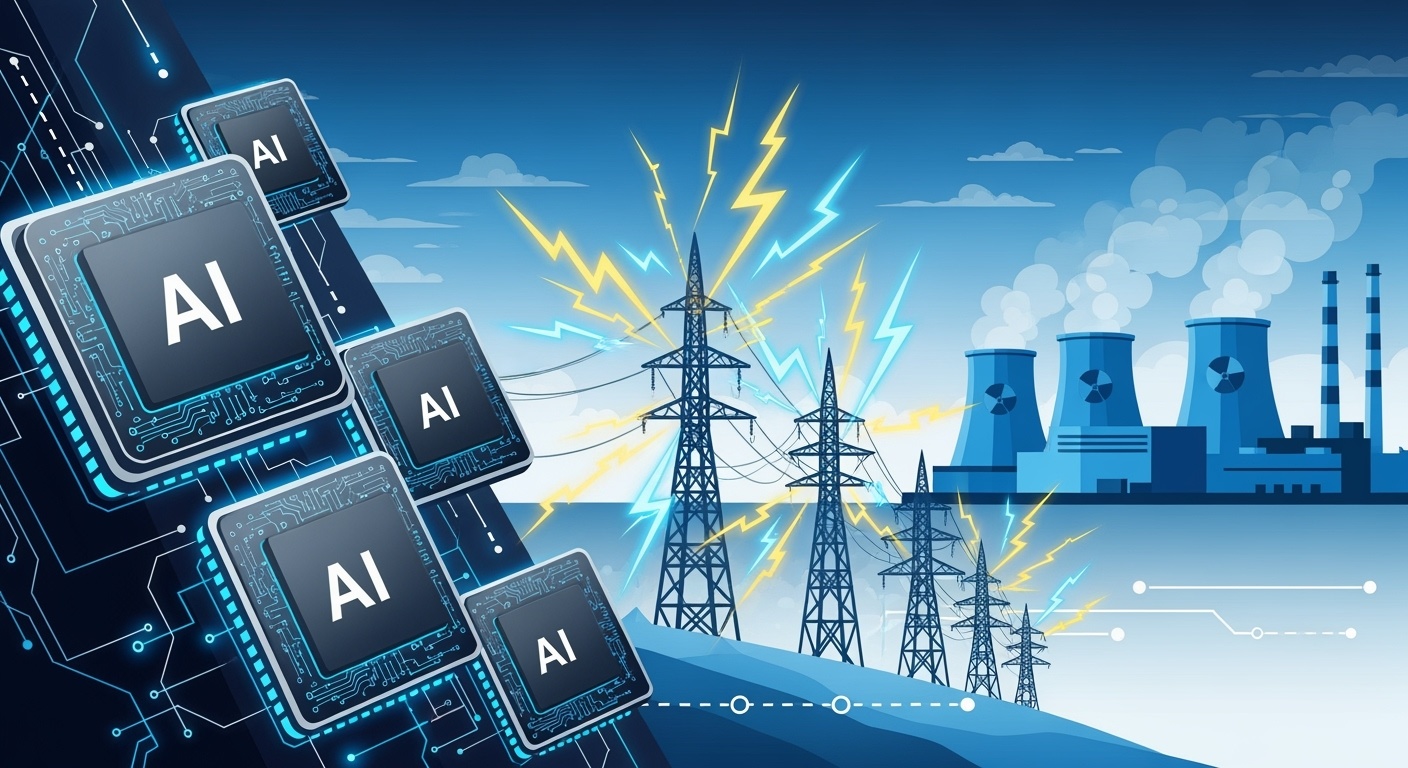
EUUSEW Young Energy Ambassador Mbuvir Burida talks about how AI can solve power grid challenges to fully integrate renewable energy into society.
Have you ever asked ChatGPT what the world’s most pressing challenges are? It ranks climate change as number one. So why not use the technology behind ChatGPT to solve that challenge?
The most important way to mitigate climate change is the transition from fossil fuels to renewable energy, or the energy transition. This involves increasing the integration of variable renewable energy sources into the power grid. Therefore, more powerful and innovative tools will be needed to plan and operate the power grid to ensure a safe and reliable power grid as the energy transition progresses.
This need comes at a time when artificial intelligence (AI) is making breakthroughs, mimicking some aspects of human intelligence through large-scale data analysis and related domain knowledge to produce results. The digitization of the grid (smart meters, sensors, digital twins, etc.) provides vast amounts of data, making AI uniquely positioned to support the energy transition. But can AI solve all power grid challenges?
More reliable power grid forecasting
The predictive capabilities of AI models are a game-changer for the energy sector, from energy generation to consumption to energy markets. One of the main applications is the prediction and optimization of solar and wind energy generation. For example, AI models use weather data in conjunction with historical measurements to predict energy production and consumption for grid planning. For example, Belgian power grid operator Elia has developed an AI-based tool that reduces prediction errors for grid imbalances by 41% as part of its efforts to keep grid frequencies stable as renewable energy integration increases. This predictive ability of AI models is also used for predictive maintenance of wind farms and power lines. Therefore, AI-based algorithms facilitate real-time monitoring and control of power transmission and distribution, enabling dynamic adjustments in response to fluctuating energy supply and demand.
Additionally, AI algorithms can automatically detect faults, generate real-time power restoration strategies, and switch to backup power sources, reducing system downtime and improving power system reliability. Therefore, AI not only facilitates grid management and renewable energy integration, but also promotes a more efficient, reliable, and secure power grid.
On the energy consumption front, AI-powered energy management systems have made significant advances. These energy management systems optimize energy usage by learning user preferences and adapting to external events such as weather conditions and electricity prices. For example, Belgian tech startup Pleevi has developed a machine learning-based algorithm to control electric vehicle charging, reducing electricity costs by up to 30% while promoting the use of predicted local energy generation. Meanwhile, Swedish-Swiss electrification and automation company ABB has developed an AI-based tool to predict and manage peak energy consumption in commercial and industrial buildings, helping these large consumers avoid peak demand charges.
Advanced technology comes with risks and obstacles
While significant progress has been made, integrating AI in the energy sector remains a challenge due to the complexity of regulatory frameworks, ethical considerations, and the multifaceted nature of energy systems. Security concerns and data privacy issues raise important questions regarding the safe use of AI in the energy sector and thus compliance with European artificial intelligence law. Additionally, the environmental impact of manufacturing AI hardware and the high consumption of energy and water in data centers highlight several obstacles that must be addressed for the sustainable use of AI. Moreover, the decision-making process of AI algorithms often remains inexplicable and unexplainable. All these aspects make the adoption of AI-based solutions difficult for users due to significant energy security and financial implications.
Will AI solve all the grid challenges associated with the energy transition?
As synergies between AI and the energy sector continue to expand, interdisciplinary collaboration and a commitment to ethical and responsible AI deployment remain essential to realizing the full potential of this intersection. However, the promise of fully autonomous systems where AI coordinates every aspect of the grid is still far from reality, given the hurdles mentioned above. In reality, integration is a continuous process, characterized by gradual achievements and new challenges.
In 2026, the European Commission will adopt a strategic roadmap for digitalization and AI in the energy sector, aiming to harness the potential of digital and AI technologies while mitigating the associated risks.
This opinion piece was produced in cooperation with European Sustainable Energy Week 2026. For the open call, please see ec.europa.eu/eusew.
Recommended links
Artificial intelligence opens up a smarter, greener energy future | Shaping Europe’s digital future Artificial intelligence in the sustainable energy industry: Current status, challenges and opportunities – ScienceDirect Advances in grid resilience: Recent innovations in AI-driven solutions – ScienceDirect DSO Technology Radar v4 https://www.iea.org/reports/energy-and-ai https://www.irena.org/Publications/2025/Oct/Digitalisation-and-AI-for-power-system-transformation-Perspectives-for-the-G7 https://www.europarl.europa.eu/thinktank/en/document/EPRS_BRI(2025)775859
Disclaimer
This article is contributed by our partners. Unauthorized reproduction is prohibited.
Neither the European Commission nor its representatives accept responsibility for the use of the information in the article. The opinions expressed are those of the authors only and should not be considered to represent the official views of the European Commission.
Source link

