


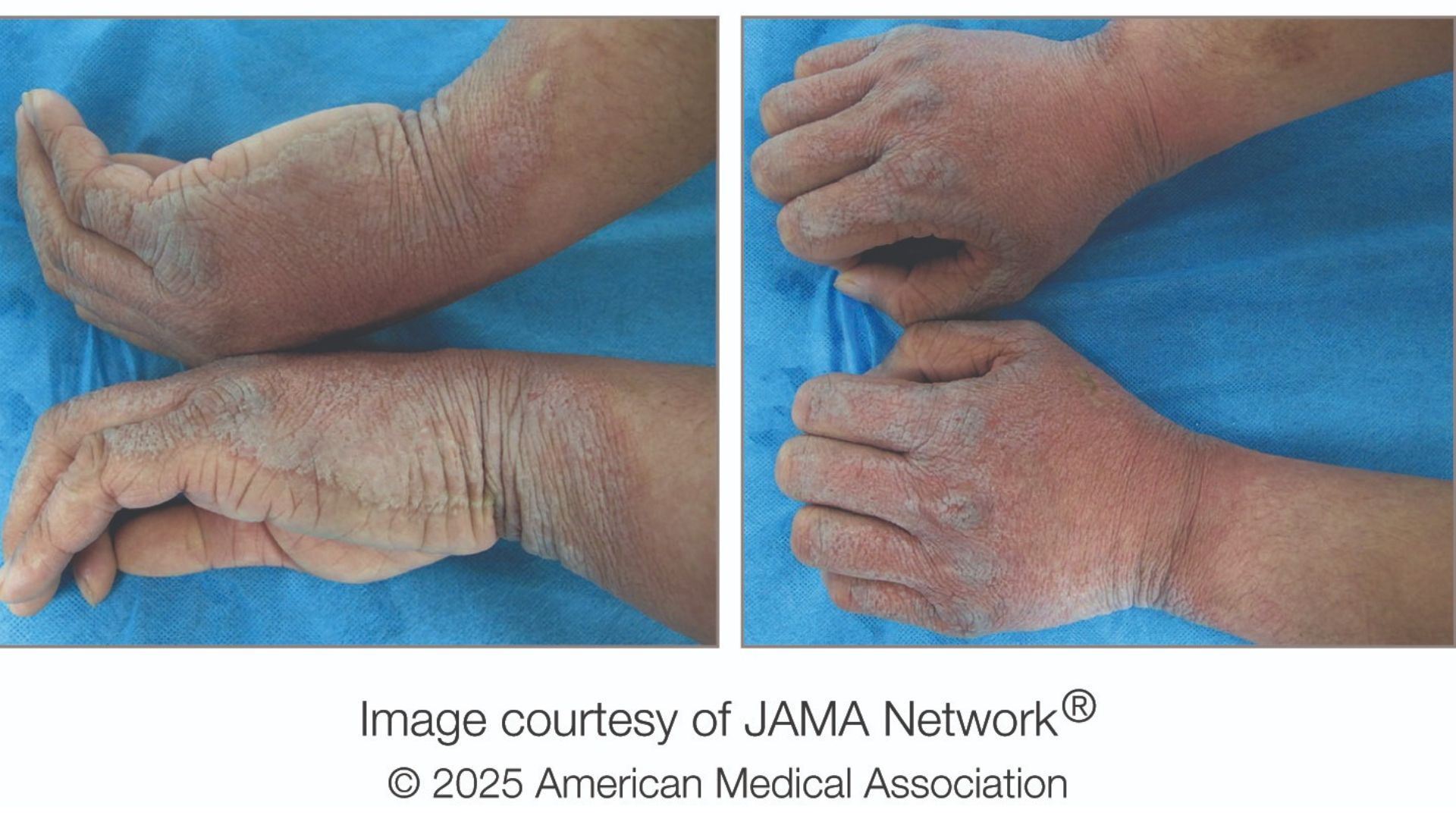
Patient: Male in his 20s living in China
Symptoms: A man visited a hospital dermatology department after experiencing various symptoms for about three years. When the man soaked his hands in water, such as when washing his hands, the skin on the back of his hands became thicker, more wrinkled, and white bumps and tumors appeared.
you may like
The man had previously sought treatment at a local clinic, where he was diagnosed with chronic eczema (which causes the skin to become dry, thick, and itchy) and was prescribed a strong retinoid ointment, which he has been using intermittently. However, this treatment was not effective and the symptoms gradually worsened. His wrists and elbows had also begun to develop skin lesions in the 18 months prior to presentation.
The patient had no family history of similar skin diseases, had no excessive sweating or allergies, and had never had a hand injury. Doctors said in a case report that the man’s symptoms worsened because he washed his hands more frequently during the COVID-19 pandemic.
What Happened Next: During a physical examination at the hospital, the man’s hands were soaked in water for 10 minutes, and immediately the tops of his hands, fingers, and wrists became red, scaly, and wrinkled with white lesions. Notably, the “excessive wrinkles” and bumps ended in a straight line on the sides of the hands, and the palms were unaffected.
Doctors took a biopsy from a white bump on his right hand and found that the sweat ducts in the top layer of his skin were dilated and contained more sweat glands than normal. The results also showed that he had hyperkeratosis. This means that his body produces too much keratin protein and the outer layer of his skin becomes thicker.
The medical team wrote that “the patient’s clinical course was very interesting,” as the skin symptoms appeared only after soaking the hands in water, and all symptoms disappeared about 30 minutes after the hands were dry.
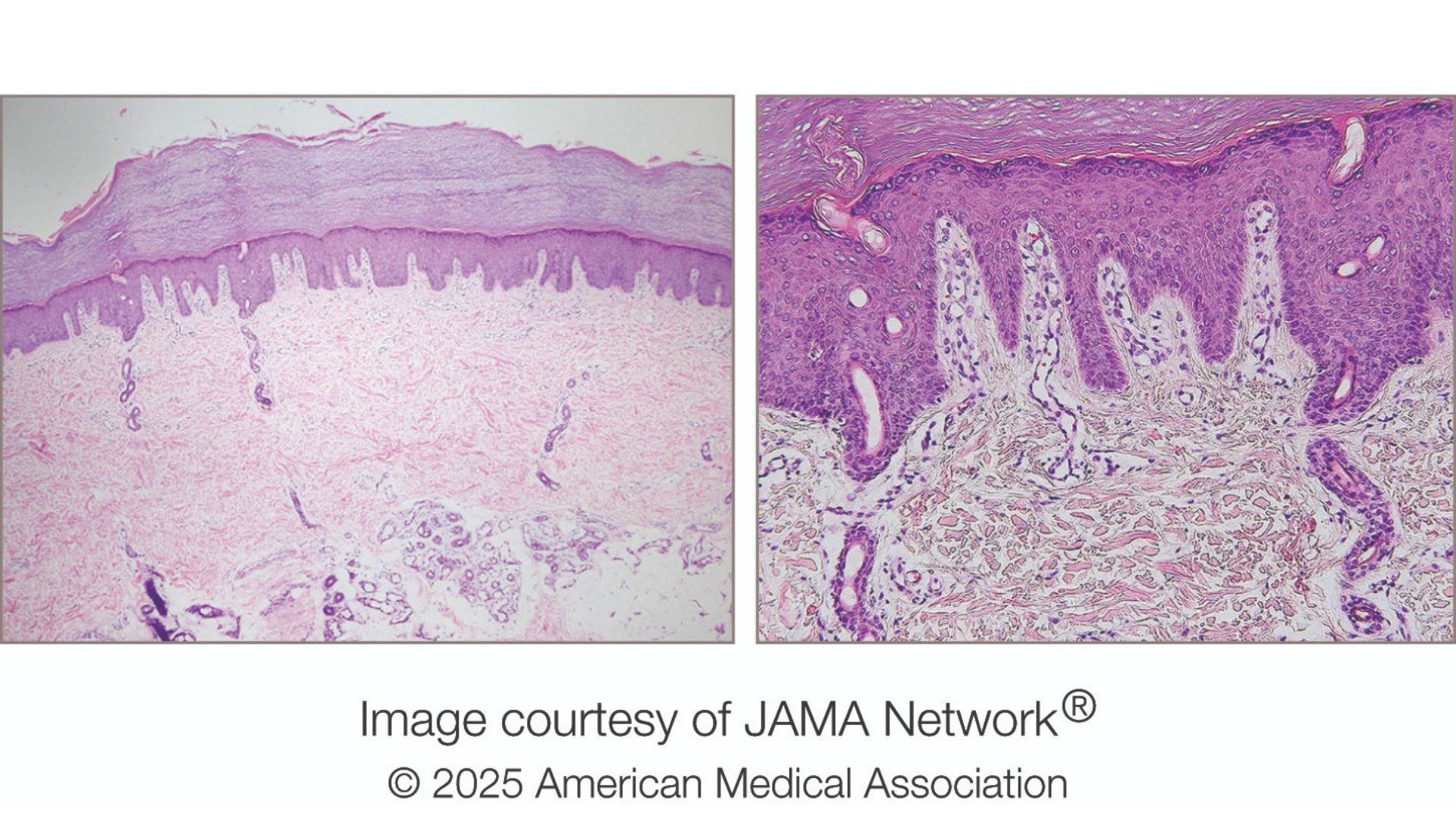
Diagnosis: Doctors diagnosed the patient with a disease called aqueous syringe acrokeratoderma (ASA), based on the presentation of the patient’s symptoms in the clinic and the results of a biopsy. However, in almost all other cases, it affects the palm of the hand rather than the back of the hand or fingers.
The short-term symptoms of this skin disease are known as the “hand in the bucket” sign because they appear after immersing the hands in water. Symptoms usually disappear within a few hours of dryness, but some people with ASA have persistent skin lesions that worsen when exposed to water, according to the Center for Genetic and Rare Disease Information (GARD).
you may like
The cause of ASA is currently unknown, but it may be related to an “acquired sweat gland abnormality” or some other trigger that causes the skin to thicken, according to a study published in the Journal of the American Academy of Dermatology.
Treatment: The patient was treated with topical hydrocortisone urea ointment, a corticosteroid and skin moisturizer that can be applied directly to the affected area. It is usually used to treat skin inflammation, swelling, and redness.
Doctors also advised patients to avoid getting their hands unnecessarily wet. The man was still attending follow-up visits when doctors reported on his case, and they noted that his symptoms had significantly reduced after just one month.
Characteristics of this case: ASA is considered to be a rare condition, but its exact prevalence is unknown.
Data suggest the condition is most common in adolescent females, the case report authors noted. According to GARD, it also occurs in about 40% to 84% of cystic fibrosis (CF) patients and carriers, or those who carry just one copy of the CF gene mutation. (Two copies are required to develop CF.) This pattern suggests that, at least in some cases, ASA is caused in part by mutations in that gene.
The patient described in this case is the first known to have ASA that does not affect the palms, doctors wrote in their report. It is unclear why his case had different symptoms than other previously reported cases.
For more interesting medical cases, check out our Diagnostic Dilemma archives.
This article is for informational purposes only and does not provide medical advice.