


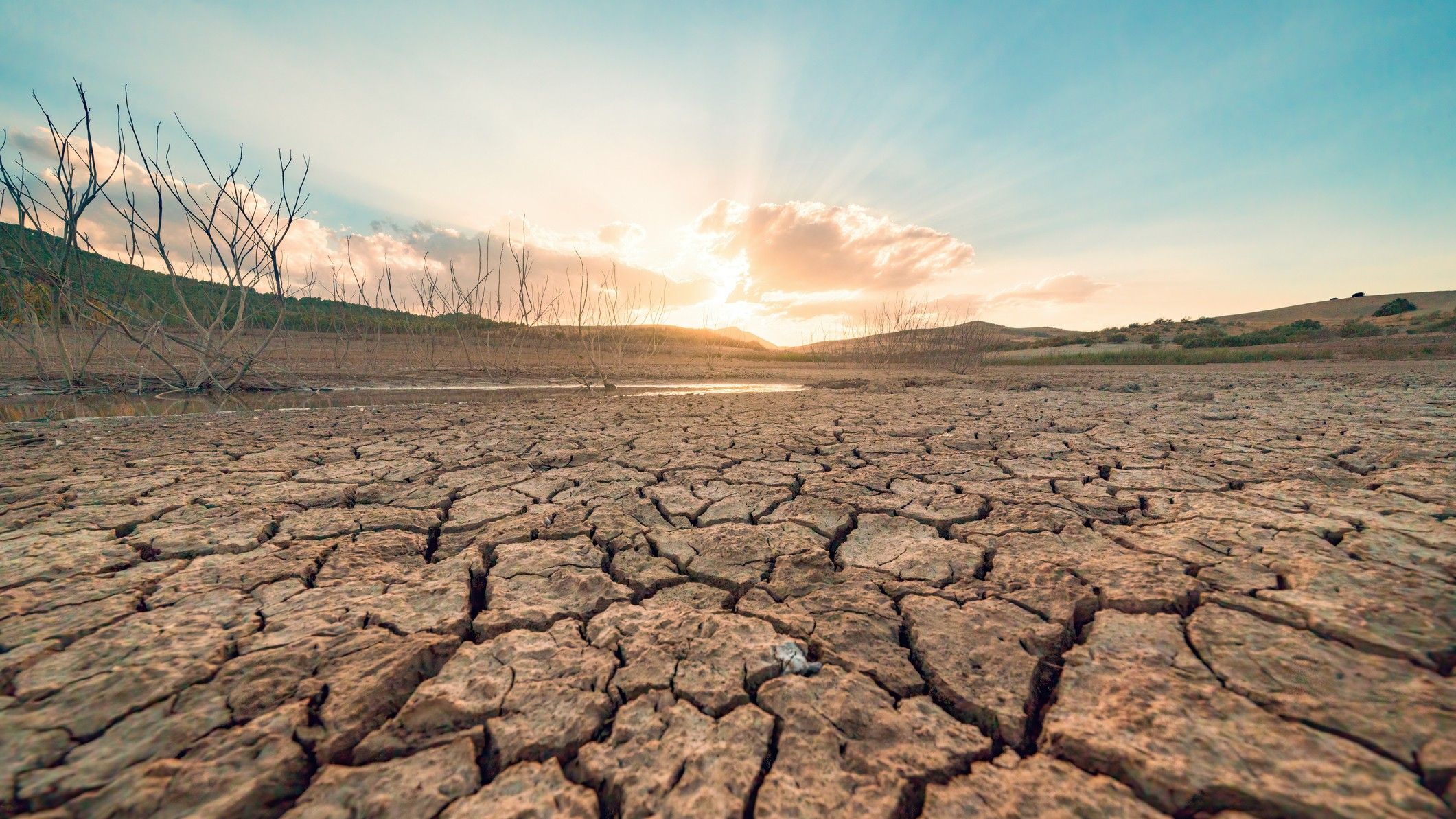
Earth’s continents are drying out at an alarming rate. Now, a new report paints the most detailed picture yet of where and why fresh water is being lost, and outlines exactly how countries can address the problem.
Continental aridity is the long-term decrease in available fresh water across large tracts of land. This is caused by snow and ice melting, permafrost thawing, water evaporation, and accelerated groundwater extraction. (The authors noted that the report’s definition does not include snowmelt from Greenland and Antarctica.)
you may like
Continents have now surpassed ice sheets and are the largest contributor to global sea level rise. That’s because, regardless of its origin, lost fresh water ends up in the ocean. According to the new report, this contribution is approximately 11.4 trillion cubic feet (324 billion cubic meters) of water each year, enough to meet the annual water needs of 280 million people.
watch on
far-reaching impact
The report was released by the World Bank on November 4th. The results are based on 22 years of data from NASA’s GRACE mission, which measures small changes in Earth’s gravity due to the movement of water. The authors also compiled 20 years of economic and land use data, which they input into hydrology and crop growth models.
The average amount of freshwater lost from continents each year is equivalent to 3% of the world’s annual net “revenue” from precipitation, according to the report. This loss jumps to 10% in arid and semi-arid regions, Zhang said, meaning continental dryness is hitting arid regions such as South Asia the hardest.
This is becoming increasingly problematic. In a study published earlier this year, Zhang, Famiglietti, and their colleagues showed that separate arid regions are rapidly merging into “megaarid” regions.
“The impact is already being felt,” Zhang said. Regions where agriculture is the largest economic sector and employs the most people, such as sub-Saharan Africa and South Asia, are particularly vulnerable. “In sub-Saharan Africa, dry shocks are costing between 600,000 and 900,000 jobs a year. If you look at who is affected, the most vulnerable groups, like landless farmers, are being hit the hardest.”
Countries without large agricultural sectors will also be affected indirectly, as most import food and goods from arid regions.
you may like
The ecological impact is also dramatic. Drier continents increase the likelihood and severity of wildfires, and this is especially true in biodiversity hotspots, the report says. At least 17 of the 36 globally recognized biodiversity hotspots, including Madagascar, parts of Southeast Asia and Brazil, are showing trends in decreasing freshwater availability, increasing the risk of wildfires.
“The implications are very deep,” Famiglietti told Live Science.
The biggest culprit is
Currently, the biggest cause of continental dryness is groundwater extraction. Famiglietti said groundwater in most parts of the world is poorly protected and poorly managed, meaning it has been pumped out “for free” for the past few decades. And as the world gets warmer and drier due to climate change, more groundwater may be extracted as soil moisture and glacial water sources begin to decline.
However, better regulation and incentives could reduce groundwater overpumping. According to the report, agriculture accounts for 98% of the world’s water footprint, and “if the water use efficiency of agriculture is improved to a certain standard, the total amount of water that can be saved will be enormous,” Zhang said.
Globally, researchers found that if the water use efficiency of 35 major crops, including wheat and rice, improved to the median value, enough water could be saved to meet the annual needs of 118 million people. There are many ways to improve water use efficiency in agriculture. For example, countries can change where certain crops are grown to match freshwater availability in different regions, or deploy technologies such as artificial intelligence to optimize the timing and amount of irrigation.
Countries can also set limits on groundwater withdrawals, incentivize farmers through subsidies, and raise the price of agricultural water. Additionally, countries with high energy prices experience slower drying rates because pumping groundwater is more expensive and water use is more efficient, the report found.
Overall, national water management is working well, according to the report. Countries with good water management plans depleted their freshwater resources two to three times slower than countries with poor water management.
virtual water trading
On a global scale, if done correctly, virtual water trading is one of the best solutions to save water, Zhang said. Virtual water trade occurs when countries exchange fresh water in the form of agricultural products and other water-intensive goods.
According to the report, global water use increased by 25% between 2000 and 2019. One-third of that increase occurred in regions that were already drying out, such as Central America, northern China, Eastern Europe, and the southwestern United States, where most of the water was used inefficiently to irrigate water-intensive crops.
There is also a global shift to more water-intensive crops such as wheat, rice, cotton, corn and sugarcane. Of the 101 dry countries, 37 have increased cultivation of these crops.
Virtual water trade can save large amounts of water by relocating some of these crops to less arid countries. For example, Jordan saved 250 billion cubic feet (7 billion cubic meters) of water between 1996 and 2005 by importing crops such as wheat from the United States and corn from Argentina.
From 2000 to 2019, virtual water trading saved the world 16.8 trillion cubic feet (475 billion cubic meters) of water each year, about 9% of the water used to grow the world’s 35 most important crops.
“When water-scarce countries import water-intensive products, they are actually importing water, which helps maintain their own water supplies,” Zhang said.
However, trading virtual water is not always easy. While it may benefit one water-scarce country, it may seriously deplete another country’s resources. As an example, Famiglietti said an arid region of the United States produces alfalfa, a water-intensive legume used to feed livestock, for export to Saudi Arabia. Saudi Arabia benefits from the exchange because it doesn’t use water to grow alfalfa, but Arizona’s aquifers are being siphoned off and depleted, he said.
Reasons for optimism
The solutions identified in the report fall into three broad categories: managing water demand, expanding water supplies through recycling and desalination, and ensuring fair and effective water allocation.
If these changes can be made, sustainable freshwater use is “definitely possible,” Zhang says. “We have reason to be optimistic.”
Famiglietti agreed that small changes can have a big impact.
“The situation is complicated because the population is growing and we need to grow more food,” he says. “I don’t know if we’re going to ‘tech’ our way out of this situation, but I think there’s reason to be optimistic if you start thinking on a decadal time scale – changes in policy, changes in financial innovation, changes in technology – and over those decades we can continue to think about how to improve our fortunes.”
Some of the views expressed in this article are not included in the World Bank report. They should not be construed as endorsed by the World Bank or its representatives.